
Fitness Club Website Development
A live schedule, a trainer showcase and memberships with online payment. A website that sells the trial visit, not just an internet presence.
Goals we set for the website
- ×2-3
- trial class inquiries
- 24/7
- membership sales without calls
- TOP
- for "gym + your district"
Sound familiar?
The site is a business card with a phone number: the schedule is a month-old PDF, booking means calling
"How much is a membership" stays secret until the call — half the leads drop right there
Trainers — the club's main asset — are a line in a list
The club is invisible for "gym near me" searches, where 90% of newcomers look
Fitness Club Website Development
What's included
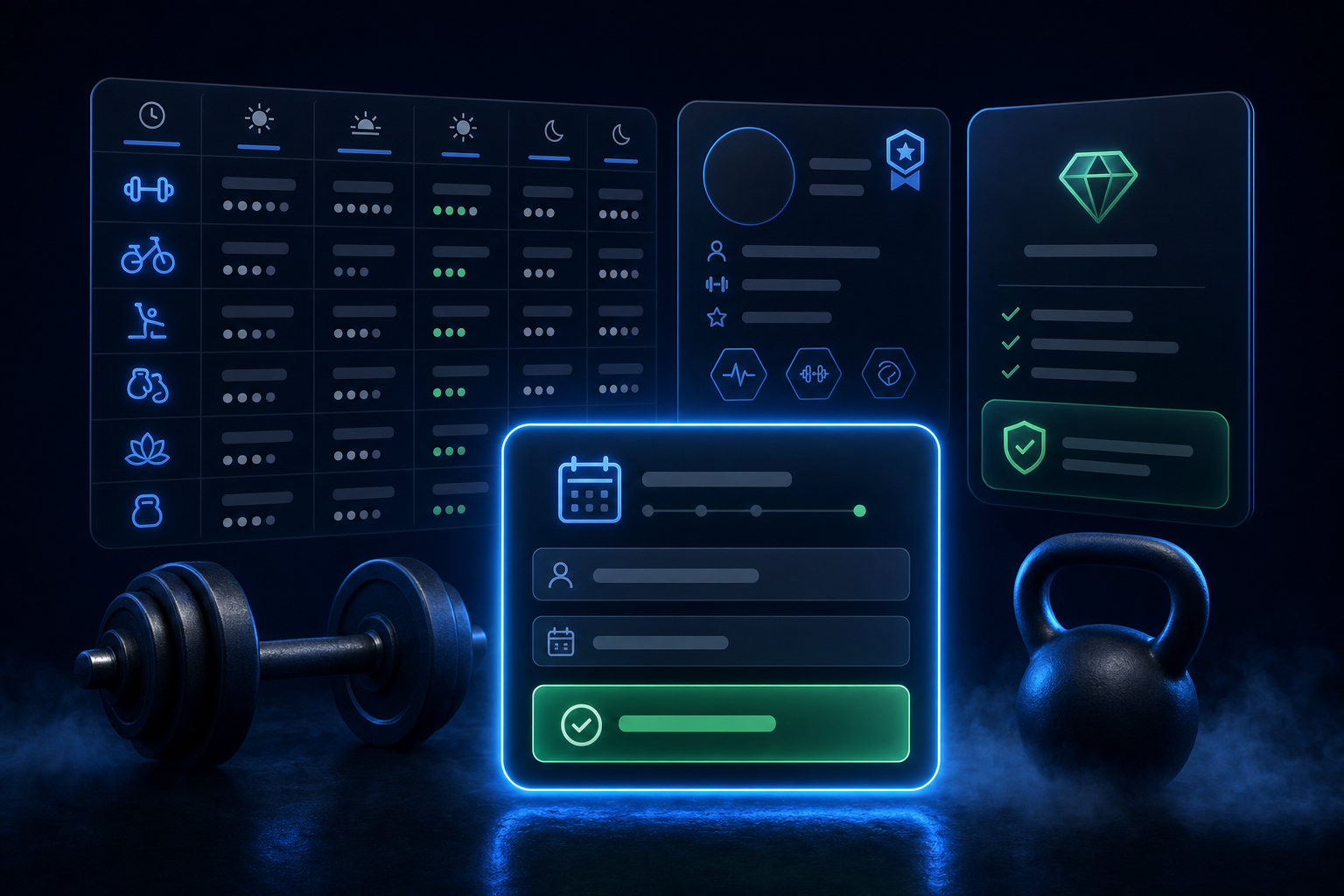
Live schedule
CRM-synced: classes and spots in real time, not last month's PDF
Trial booking
A two-field form reachable from anywhere — the trial class as the main funnel
Memberships online
Transparent prices and on-site payment: the decision happens at the motivation peak
Trainers
Personal pages with specialties and booking to a specific person — people come to people
Club tour
Rooms, equipment, locker rooms — a visual answer to "what's inside"
SEO foundation
"Gym + district", class types and trainers as landing pages — visible where people search
How the project runs
How the project runs
- 1-3 days
Brief & estimate
We dig into the task and give a precise price and timeline
- 1-2 weeks
Prototype & design
Structure, mockups and visual sign-off
- 2-6 weeks
Development
Weekly sprint demos — progress is always visible
- 3-5 days
Launch & support
Testing, production deploy, 6-month warranty
A fitness club website sells one action — the trial visit
A newcomer doesn’t buy an annual membership from a website. They buy the resolve to come once. So the club’s site is built around one conversion: a two-click trial booking from anywhere on the site. Everything else works to remove the barriers before that step. Does the time fit. Who will I get. Can I afford it. Is it scary in there. A business-card site with a phone number answers all of that with call-us. And loses the majority.
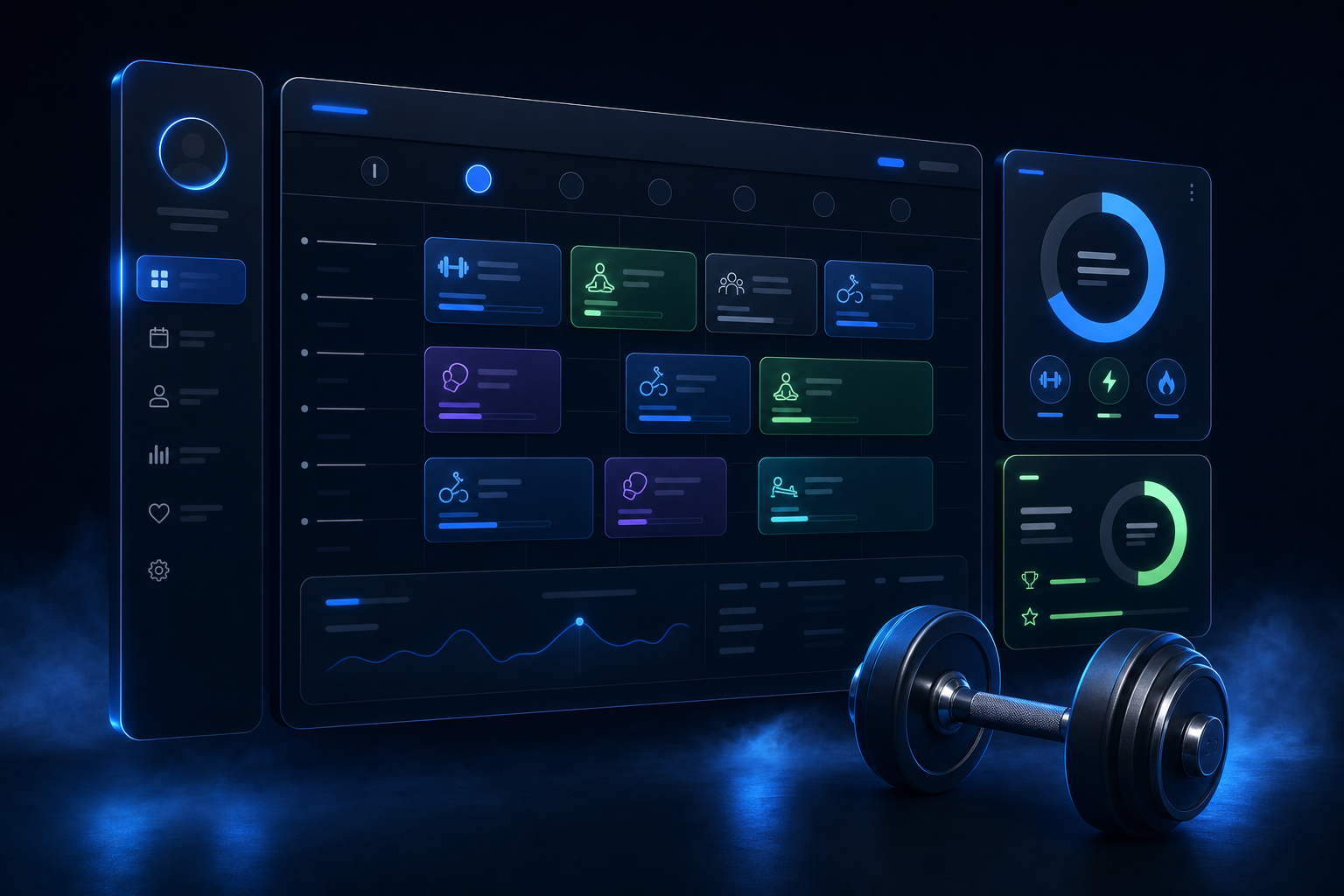
A live schedule: the end of last month’s PDF
The schedule is a club site’s most visited section and its most neglected. Usually it’s a month-old PDF or a messenger screenshot. We connect the schedule to the club’s CRM. Groups, trainers and free spots in real time, with filters by program and time. Booking happens right from the schedule cell. The front desk stops answering are-there-evening-spots, and the client plans the week without calls.
Prices and payment: selling at the moment of motivation
Price-by-phone is a ritual that filters out not the poor but the impatient. A transparent price list with online payment flips the funnel. The decision happens at the moment of motivation, and by our clubs’ data its peak falls late in the evening, when calling is no longer an option. The membership gets bought on the site at 11 pm instead of an I’ll-call-tomorrow and a cooldown. Complex plan grids get packed into a configurator: assemble your membership and see the price.
Trainers: people go to people
In fitness, people choose trainers, not gyms. A club hiding its main asset in a list row loses that choice. Personal trainer pages with a specialization, certificates, live photos and booking with a specific person work three ways. They convert the hesitant. They catch search queries by names and programs. And they level the load: newcomers distribute themselves deliberately. In the club director’s review, half the trials come to a trainer, not to a club.
The site’s place in the fitness stack
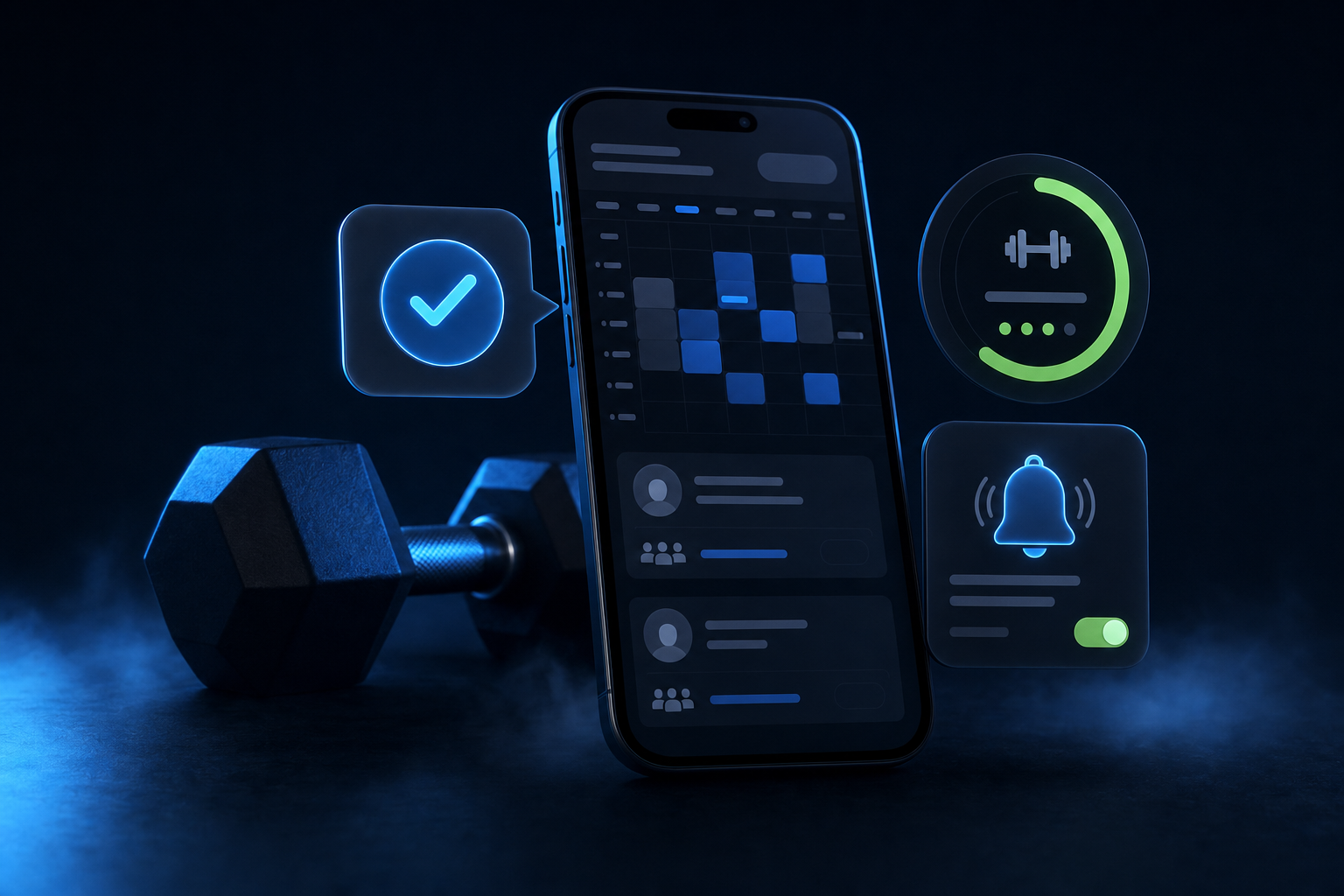
The roles are split. The site attracts the new: search, ads, trials. The app retains the base: booking, memberships, pushes. The CRM runs everything from inside. We build the whole stack, and the site sits on the same system as the app. The schedule and memberships are shared, with no double bookkeeping. Nearby sit the fitness cases: the studio chain’s CRM and the app with −45% no-shows. The site joins that combination as the third element.
Related case study

Client reviews
Client reviews
The main change is prices on the site. How-much used to eat half the calls, now people arrive already decided. Trial requests tripled. And that's without a cent on ads, the site simply stopped losing the ready ones.
The live schedule noticeably unloaded the front desk. Nobody calls about evening-class availability anymore, it's visible on the site. And the trainer pages became a magnet: half the newcomers at a trial name the specific trainer they came to.
Online membership purchase is an underrated thing. Our payment peak is at 10-11 pm, when a person has decided after work. That used to be an I'll-call-tomorrow and a cooldown. Now it's a payment in the moment.
Related solutions
Related solutions
Dental Clinic Website Development
Online booking, doctors, prices and credentials. A website patients trust before their first visit.
E-commerce Website Development
A fast catalog, payments, ERP and shipping sync. A store that works as a sales channel, not a showcase.
Auto Repair Shop Website Development
Online bay booking, prices by make and service pages. A website that books customers while the front desk is busy.
FAQ
FAQ about web development
01How much does a fitness club website cost?
From $6,000 for 5-8 weeks. That covers the schedule, trial booking, memberships with payment, trainers and the SEO structure. The range depends on the number of programs and CRM integration depth. The quote is free after a briefing.
02Will the schedule really be live, not updated by hand?
Yes, that's the point. The schedule flows from the club's CRM. Changes, cancellations and group occupancy reflect on the site by themselves. Running two schedules by hand breeds errors and angry clients. We exclude it by architecture.
03Should membership prices be shown on the site?
They should. Prices-by-phone filter out not the poor but the impatient, and that's the majority. A transparent price list with online payment sells at the moment of motivation, and its peak falls late in the evening. For complex plans we build a configurator: the client assembles their membership and sees the price.
04How does the site bring clients from search?
With a structure built for local demand. Fitness-plus-district, program pages like pilates or stretching, trainer pages. Each catches its own query. Plus map listings. Full promotion is a separate service, but the foundation is laid during development.
05We already run a CRM and an app — will the site get along with them?
Perfectly. The site becomes a storefront of the same system: the schedule, memberships and bookings are shared. We build the whole fitness stack — CRM, app, site, ads. The combination assembles without seams between vendors.
Let’s discuss your project
Free estimate and a proposed solution within one day.