
CRM Platform Integration
Every lead into the pipeline with its source and no duplicates. The site, calls, messengers and the ERP in one circuit around your CRM.

Goals we set for the website
- 100%
- of leads reach the CRM
- 0
- duplicate clients in the base
- < 1 min
- from lead to deal in the pipeline
Sound familiar?
Leads arrive by email, messengers and phone — half of them reach the CRM
Duplicate leads: one client wrote in three channels — the CRM holds three cards and three managers
The manager sees the deal but not the context: orders and payments live in the ERP
Marketing doesn't know which ads produce deals: CRM leads carry no sources
CRM Platform Integration
What's included
All channels → pipeline
Website, calls, messengers, email — every lead becomes a deal with its source
Deduplication
Matching by phone and email: one client — one card, full history
Telephony in the CRM
A call raises the card, the recording is saved, missed calls become tasks with auto-callback
ERP in the deal card
Orders, payments, shipments — the manager sees the money context without asking accounting
Digital triggers
Auto-tasks, nurture sequences, stage changes on events — the pipeline runs itself
End-to-end analytics
From click to revenue: marketing sees which channels bring deals, not just leads
How the project runs
How the project runs
- 1-2 weeks
Systems analysis
Studying configurations, both APIs, data structures and exchange scenarios
- 1-2 weeks
Exchange design
Data mapping, sync directions and schedule, conflict handling
- 2-6 weeks
Build & testing
Connectors, queues with retries, runs on both systems' staging circuits
- ongoing
Launch & monitoring
Production launch, error alerts, support through system updates
A CRM without integrations is a notebook, not a sales system
A CRM’s strength is the pipeline and the automations. But on its own it sees only what managers typed in by hand. The real client flow lives outside: site forms, calls, messengers, email. Until the channels are wired into the CRM, the sales team works with a leaky bucket. Part of the leads sinks without a trace. The first thing an integration shows: there were more leads than you thought. For one of our clients — a third more.
Every channel into the pipeline, with a source and context
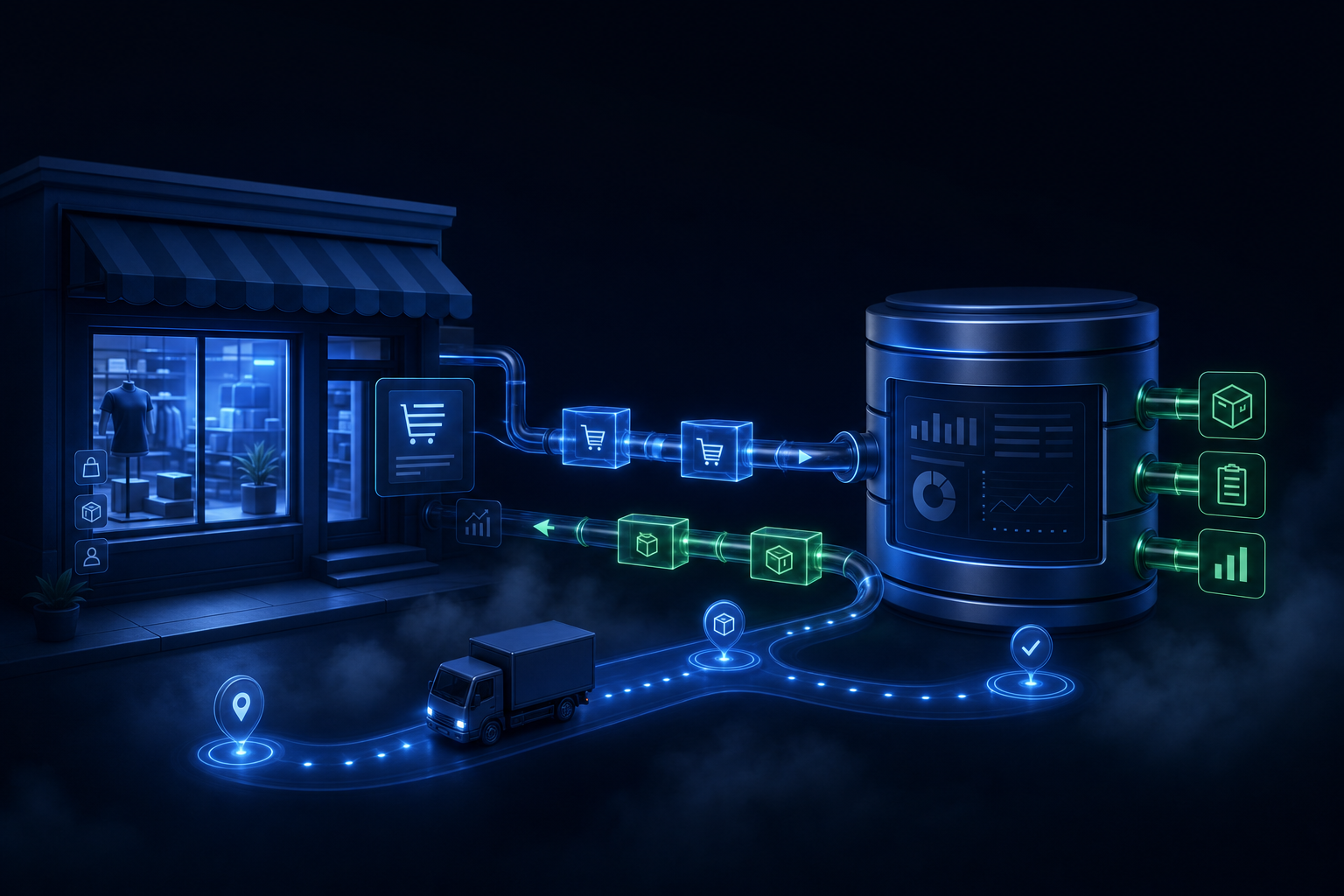
We build the circuit around the CRM. Site forms and the quiz create a deal instantly, with UTM tags down to the keyword. A call raises the client’s card, the recording attaches to the deal, a missed one becomes a task with an auto-callback. WhatsApp and Telegram get wired in: the conversation runs from the card and stays in the history. The manager works in one window, not five tabs. Not a single client touch disappears.
Deduplication: one client — one history
A persistent client writes into three channels — and without merging gets three cards, three managers and, sometimes, three different prices. Deduplication solves it at creation. An incoming inquiry gets matched by phone and email. A found client receives the inquiry into the existing card. We clean the current base at rollout: merge the accumulated duplicates while preserving the whole history. A trifle in labor. A giant in its effect on the base’s quality.
The ERP in the deal: the manager sees the money
The classic gap: the deal sits in the CRM, while orders, payments and shipments sit in the ERP. The manager runs to accounting asking did-Ivanov-pay. The exchange closes the gap. The client’s financial context pulls right into the deal card. Payment statuses move the pipeline stages automatically. Sales and accounting stop living in parallel realities. And the client stops hearing let-me-check on simple questions.
End-to-end analytics: revenue instead of leads
Marketing that sees only leads optimizes the wrong thing. Cheap leads can be the least deal-prone. The link of ad accounts, the CRM and payments gives the end-to-end picture. Click → lead → deal → revenue per channel and campaign. Budgets get redistributed by money, not lead cost. In the review above, that cut the deal cost by a quarter. Plus the circuit’s reliability: queues, retries and monitoring. Leads don’t get lost even at failures and API limits.
Related case study


Client reviews
Client reviews
Before the integration we lost leads literally physically: email, three messengers, the phone — something always sank. Now everything sits in one pipeline with a source. The very first month showed we'd had a third more leads than we thought.
Deduplication turned out the invisible hero. A persistent client writing into three channels used to get three managers with different prices. Now there's one card, and the shame of different offers to one person ended.
For the first time I see revenue by ad channel, not just leads. Turned out the channel with the cheapest leads produced the fewest deals. We recut the budget by the data, and the deal cost fell by a quarter.
Related solutions
Related solutions
Bitrix24 Integration
Assembling the portal for the company's processes. Lead channels, the ERP, smart processes and the deal-to-project link — Bitrix24 starts working.
Marketplace Integration
Stock without fines, FBS by process and to-the-cent financial reconciliation. A marketplace integration where the system controls the deadlines.
Telephony-CRM Integration
A call raises the card, the recording lands in the deal, a missed one becomes a task. The phone stops being sales' black hole.
FAQ
FAQ about integrations
01How much does a CRM integration cost?
The site + telephony + deduplication stack — from $3,500, in 3-6 weeks. The price grows with the number of channels, the ERP exchange and custom widgets. The quote is free after an analysis of your channels.
02What exactly do you connect to the CRM?
Everything clients come from and data lives in. Site forms and quizzes, telephony with recordings, WhatsApp and Telegram, email, the ERP — orders and payments into the deal card, ad accounts for end-to-end analytics. The set is assembled for your process.
03How is the duplicate lead problem solved?
By merging at creation. An incoming lead gets checked by phone and email. If the client is found, the inquiry lands in their card instead of spawning a new one. We clean the existing base at rollout: find and merge accumulated duplicates while preserving the history.
04Can you build a custom widget for our process?
Yes. Widgets inside the CRM — calculators, document generation, custom panels in the card — and server-side integrations with your systems. The platform extends well. We use that when standard fields and automations aren't enough.
05How reliable is the stack — won't leads get lost?
A queue-based architecture. If the CRM is down or API limits are hit, leads accumulate and get delivered after, with the order and tags preserved. Monitoring with alerts sees a failure before the managers do. Losing a lead is exactly what this integration doesn't allow by construction.
Let’s discuss your project
Free estimate and a proposed solution within one day.