
USDT Payment Integration
An invoice with a QR, auto-confirmation from the network and funds straight to your wallet. USDT acceptance that works like regular online payment.

Goals we set for the website
- 100%
- of payments confirmed automatically
- 0
- manual explorer reconciliations
- 3-5 weeks
- to accepting USDT
Sound familiar?
International clients can't pay: cards don't pass, and send-to-this-wallet-with-a-screenshot isn't a process
Manual reconciliation of incoming funds: the accountant hunts transactions in the explorer by amounts and prays
Underpayments from network fees: the client sent exactly-the-sum, less arrived, the order hung
Funds sit on an exchange or at a processor: an account freeze is a freeze of your money
USDT Payment Integration
What's included
An invoice like a PSP's
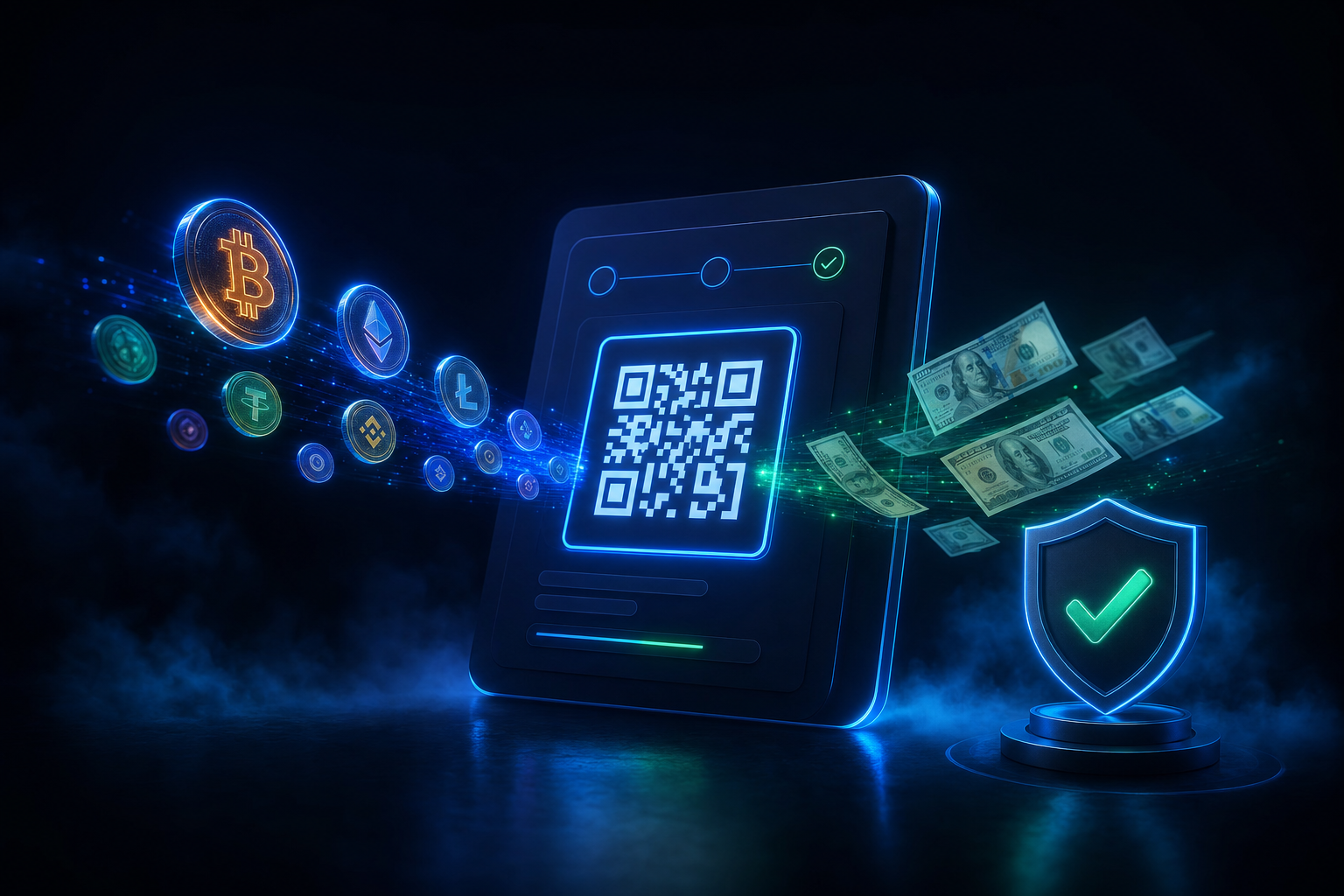
The client sees a familiar payment screen: the USDT sum, a QR, a timer. The blockchain's complexity is hidden
Two networks
TRC-20 with a penny fee and ERC-20 for ether holders: the choice right on the payment screen
Confirmation from the network
Blockchain monitoring catches the payment itself and moves the order: no screenshots or manual checks
An underpayment isn't a dead end
2% less arrived over the wallet's fee — the client gets a top-up link, the order doesn't hang
Your keys
Non-custodial: the USDT arrives at your wallets, nobody can freeze your funds
Books and reconciliation
A payment panel with statuses and exports: accounting works with a report, not the explorer
How the project runs
How the project runs
- 1-2 weeks
Systems analysis
Studying configurations, both APIs, data structures and exchange scenarios
- 1-2 weeks
Exchange design
Data mapping, sync directions and schedule, conflict handling
- 2-6 weeks
Build & testing
Connectors, queues with retries, runs on both systems' staging circuits
- ongoing
Launch & monitoring
Production launch, error alerts, support through system updates
USDT is a way to get money from clients who have nothing to pay with
An online business’s geography is wider than card payments’ geography. Clients in dozens of countries are ready to pay, but their cards don’t pass. USDT closes the gap with one instrument: a stablecoin without rate risk, familiar to the whole crypto audience, with a penny fee on TRC-20. In our trading SaaS case, a third of subscriptions moved to USDT within a month of launch — revenue that simply hadn’t existed before.
Payment like a regular PSP’s: the complexity is hidden
The client shouldn’t have to understand blockchains. The payment screen looks familiar: the USDT sum, the address, a QR code, a rate-lock timer, the network choice. They pay from any wallet — blockchain monitoring catches the transaction itself, waits for confirmations and moves the order via a webhook. The subscription activated, the goods shipped, the access opened — without screenshots, manual checks or support involvement. For the client it’s no harder than a card.
Edge cases: an underpayment stops being a hung order
Crypto payments’ reality lives at the edges. The client’s wallet withheld a fee — 2% less arrived. The client paid twice. The transaction landed after the timer expired. Without ready scenarios, every such case is a hung order and support correspondence. Our scenarios are sewn in: an underpayment births a top-up link, an overpayment gets credited or returned, a late payment follows your policy. In the platform founder’s review, every tenth payment arrived short — and not one order gets stuck anymore.
Non-custodial: your keys, your money
Funds arrive at your wallets directly, bypassing middlemen. No processor holds your USDT or can freeze it along with an account. The management panel gives the operational layer: payments with statuses, per-wallet reconciliation, exports for the books. In the CFO’s review, the accountant’s daily hour in the explorer turned into five minutes with a report. The legal scheme you build with your lawyers — we deliver flawless technology and transparent data for it.
A launch within a month and the road to more
USDT acceptance is the fastest entry into crypto payments: 3-5 weeks from the review to the first invoice. Connection to your site and books, network and confirmation setup, edge case tests, a monitored launch. When you want more — BTC, ETH, auto-conversion, an extended panel — the architecture grows into full crypto payments without a rebuild: that’s our neighboring service, the cases are in the trio below. Start with the coin everyone pays with.
Related case study


Client reviews
Client reviews
The audience is crypto-native, but they had nothing to pay with: half the countries' cards didn't pass. USDT closed the question within a month. A third of subscriptions now get paid in TRC-20, activation is instant, support isn't involved.
Before the integration, reconciling crypto receipts took the accountant an hour a day: the explorer, the amounts, guesswork. Now there's a panel with statuses and an export into the books. The hour turned into five minutes over a report.
The underpayment scenario proved more important than we thought. Every tenth payment arrived short over wallet fees. It used to mean a hung order and correspondence, now the client automatically gets a top-up link. Orders don't get stuck.
Related solutions
Related solutions
Crypto Payment Gateway for Websites
An invoice with a QR and a rate timer, auto-conversion to stablecoins and a non-custodial scheme. Crypto payments with the edge cases engineered before launch.
Crypto Exchanger Development
A rate engine with spreads, auto-payouts and an AML circuit. An exchanger as a risk management system, not a site with an exchange form.
Crypto Wallet Development
A non-custodial core, multichain from birth and seed phrase onboarding against fund loss. A wallet audited before release.
FAQ
FAQ about crypto payments
01How much does USDT acceptance cost?
From $4,000, launched in 3-5 weeks. That covers invoices with a QR and timer, the TRC-20 and ERC-20 networks, auto-confirmation with webhooks, edge case handling and the reconciliation panel. The quote follows a free task review.
02How does this differ from your crypto payments service?
In focus and budget. USDT acceptance is a fast launch of one stablecoin: a smaller scope, a lower price, a start within a month. Full crypto payments is the complete circuit with a coin set, auto-conversion of the volatile ones and an extended panel. Starting with USDT and growing is a normal path — the architecture allows it.
03Why USDT, and which networks to choose?
USDT is the most widespread stablecoin: most of the crypto audience pays with it, and rate risk is absent by definition. Networks: TRC-20 as the base — the fees are pennies. ERC-20 gets added for holders of funds in ether. Both show to the client on the payment screen.
04How is the legality of acceptance solved?
Honestly: regulation depends on your entity's jurisdiction, and you define the working scheme with your lawyers. We're the technical side: flawless acceptance, transparent reports and exports for your accounting scheme. The panel gives accounting all the data for correct processing.
05What if the client sends the wrong sum or pays late?
The scenarios are ready. An underpayment gets an automatic top-up link. An overpayment gets credited or returned to the sender's wallet. A payment after the timer follows your chosen policy: credit at the current rate or return. Edge cases are what separates working acceptance from stuck-orders-in-support.
Let’s discuss your project
Free estimate and a proposed solution within one day.