
Crypto Wallet Development
A non-custodial core, multichain from birth and seed phrase onboarding against fund loss. A wallet audited before release.
Goals we set for the website
- 0
- key access for anyone but the owner
- weeks
- to connect a new chain
- 100%
- of critical code audited
Sound familiar?
The product needs a wallet, and a team without blockchain expertise estimates it by gut
Custodial storage means licenses, risk and responsibility for other people's money
Users lose seed phrases — and carry away the product's reputation together with the coins
Every new supported chain costs months, if the architecture wasn't multichain from birth
Crypto Wallet Development
What's included
The non-custodial core
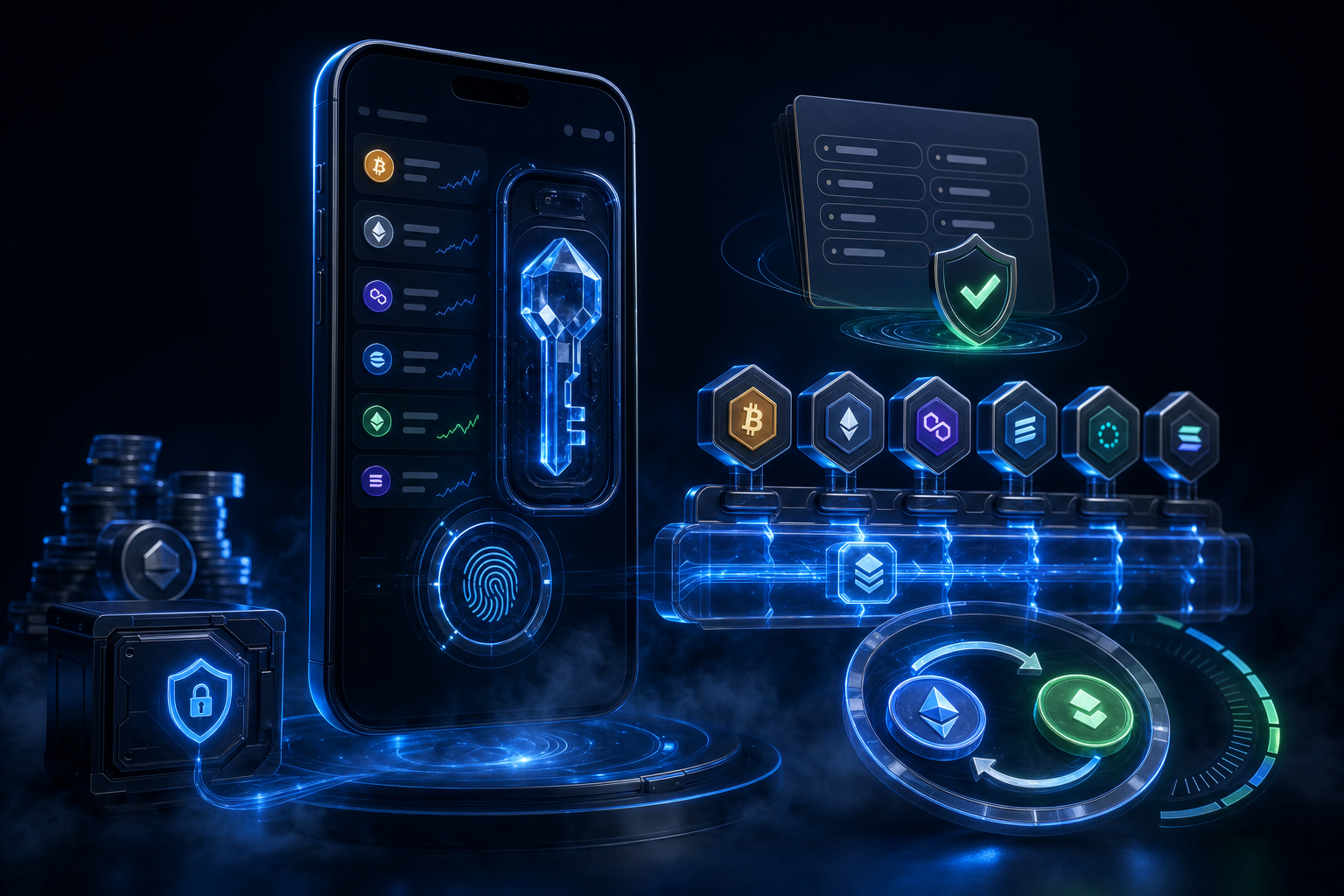
Keys generated and encrypted on-device: nobody but the owner can touch the funds
The multichain layer
An abstraction over networks: a new chain takes weeks to connect, not a core rewrite
Swaps & liquidity
In-wallet exchange via aggregators: the rate, route and fee transparent before confirmation
Seed & recovery
A clear phrase onboarding, write-down verification, warnings — design against losing funds
Network fees
Gas estimation with speed choices, stuck-transaction protection, acceleration
On/off-ramp
Card purchases via licensed providers — the entry threshold for newcomers drops
How the project runs
How the project runs
- 1-2 weeks
Systems analysis
Studying configurations, both APIs, data structures and exchange scenarios
- 1-2 weeks
Exchange design
Data mapping, sync directions and schedule, conflict handling
- 2-6 weeks
Build & testing
Connectors, queues with retries, runs on both systems' staging circuits
- ongoing
Launch & monitoring
Production launch, error alerts, support through system updates
A wallet is a product where the error’s price is measured in other people’s money
A crypto wallet doesn’t forgive ship-and-fix. A vulnerability means users’ funds. A crooked seed phrase onboarding means coins lost forever and the reputation with them. So our process is inverted relative to regular mobile development. First the security architecture and the key storage model, then everything else. The adjacent experience sits in the cases: our own wallet in the portfolio, a team in blockchain development for years.
Non-custodial: the keys with the user — the risks not with you
The first architectural decision defines the product’s fate. A custodial wallet means storing others’ funds with all the licensing and operational consequences. The non-custodial model flips the picture. Keys are generated and encrypted on the user’s device. Nobody has access to the funds, you included. In the founder’s review that’s called removing the “licensing hell”. For most products it’s the right choice, which we break down honestly at the briefing.
Multichain from birth: networks as modules
We’ll-add-other-networks-later is a decision that costs little at the start and a quarter of development in hindsight. We build the multichain layer at once. An abstraction over the networks, unified transaction and balance interfaces. Bitcoin, the EVM family, TRON, TON connect as modules. In the review above, the third network was added in three weeks. In-wallet swaps run through liquidity aggregators. The rate, the route and the fee are transparent before confirmation.
Design against fund loss
Wallets’ main plague isn’t hackers but lost seed phrases. The user loses access and blames the product. We design the phrase onboarding as a critical feature. A clear explanation without crypto jargon. A write-down check. Warnings at the dangerous spots. Recovery scenarios. Network fee estimation with a speed choice and protection from stuck transactions closes the second most frequent pain. UX here isn’t decoration but a security layer.
The audit, the stores and the launch
The critical modules — key generation, signing, swaps — pass an audit before release. In the CTO’s review, the two found vulnerabilities “would’ve cost everything in production”. We run the publication mindful of the stores’ heightened attention to crypto apps. The requirements get prepared in advance, not sorted after a rejection. An on-ramp through licensed providers lowers the entry bar for newcomers. Launch in 16-24 weeks, with a foundation that survives both growth and an investor’s audit.
Related case study



Client reviews
Client reviews
The main thing we got besides the code was the architectural decisions. Non-custodial removed the licensing hell of custodial storage from us. And the multichain layer let us add a third network in three weeks instead of a quarter.
We redid the seed phrase onboarding three times, and it was worth it. Support almost never gets I-lost-access, though that's wallets' main plague. Design against fund loss turned out more important than any feature.
The pre-release audit of the critical modules found two vulnerabilities that would've cost us everything in production. A team that itself insists on auditing its own code is a rarity in this niche.
Related solutions
Related solutions
Crypto Payment Gateway for Websites
An invoice with a QR and a rate timer, auto-conversion to stablecoins and a non-custodial scheme. Crypto payments with the edge cases engineered before launch.
Crypto Exchanger Development
A rate engine with spreads, auto-payouts and an AML circuit. An exchanger as a risk management system, not a site with an exchange form.
Smart Contract Development
Tokens, vesting, staking and DeFi logic with an audit before deployment. Smart contracts where code truly is law — and has no right to a bug.
FAQ
FAQ about crypto payments
01How much does crypto wallet development cost?
From $35,000 for 16-24 weeks. That covers the non-custodial core, 2-3 networks at the start, swaps and security with an audit. The range depends on the number of networks, the on-ramp and custom features. The quote follows an NDA briefing.
02Custodial or non-custodial — which to choose?
For most products — non-custodial. The keys stay with the user, you don't store others' funds, so you carry no custodial risks or licensing load. The custodial model is justified in specific scenarios — exchanges, corporate treasuries — and that's a separate conversation with lawyers. At the briefing we'll break your model down honestly.
03Which networks do you support?
The starting set is usually Bitcoin, the EVM family — Ethereum, BSC, Polygon — TRON, TON, by your audience. The architecture is multichain from birth. A new network is weeks of connection through the abstraction layer, not a core rewrite. It's the key decision that's cheap at the start and expensive in hindsight.
04How are the keys and seed phrases protected?
Keys are generated and encrypted on the device, never leaving it in the open. Entry by biometrics or a PIN. The seed phrase onboarding is designed against loss: a write-down check, warnings, clear recovery scenarios. The critical modules pass an audit before release.
05Will you carry us through App Store and Google Play publication?
Yes, including crypto apps' specifics. The stores watch them closely: the functionality, regional restrictions, on-ramp requirements. We prepare the app and the materials for the requirements in advance. Rejections in this niche get cured by preparation, not surprise.
Let’s discuss your project
Free estimate and a proposed solution within one day.