
Food Delivery Website Development
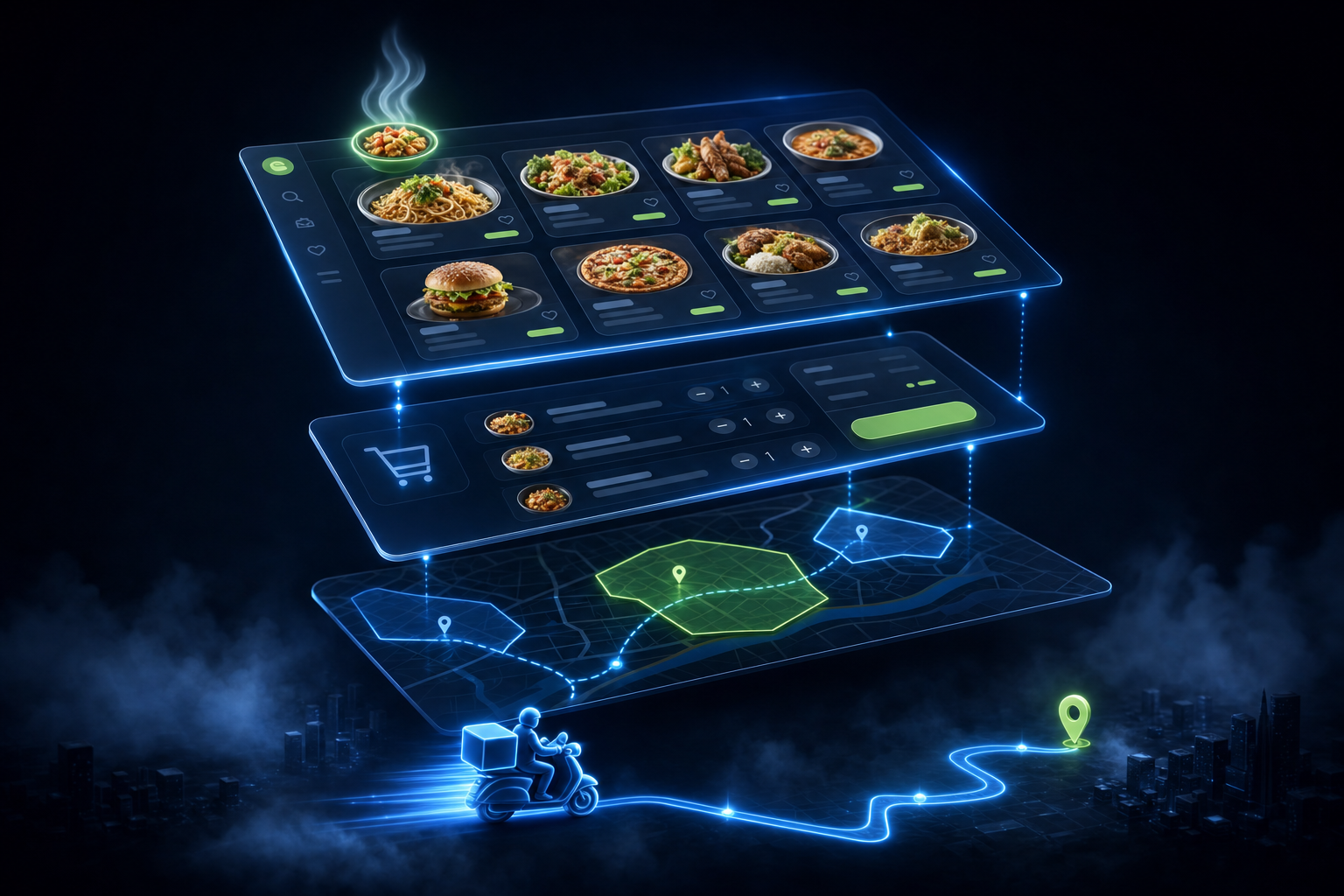
An owned order channel instead of aggregator fees. A POS-synced menu, a cart, delivery zones and bonuses for direct orders.
Goals we set for the website
- 30-50%
- of orders through the owned channel
- −20%+
- commission spend
- 2 clicks
- to a repeat order
Sound familiar?
Aggregators take up to a third of the check — delivery margin lives on the edge of zero
The customer base belongs to the aggregator: you don't know your buyers and can't win them back
The menu and stop-lists update by hand — customers order what's out of stock
Phone orders get lost at peak hours: the operator is busy, the customer orders from a competitor
Food Delivery Website Development
What's included
Menu from the POS
Sync with your POS system: prices, ingredients, stop-lists — no manual edits
Cart & checkout
Two screens to payment: address, time, payment. Fewer steps, fewer abandoned carts
Delivery zones
Polygons on the map: each zone gets its own fee, minimum check and timing
Loyalty
Bonuses, promo codes, a haven't-ordered-lately reactivation — the base works for returns
Order statuses
Accepted → cooking → on the way: the customer sees it and doesn't call the operator
The SEO storefront
Category and dish pages for local demand — traffic without ads
How the project runs
How the project runs
- 1-3 days
Brief & estimate
We dig into the task and give a precise price and timeline
- 1-2 weeks
Prototype & design
Structure, mockups and visual sign-off
- 2-6 weeks
Development
Weekly sprint demos — progress is always visible
- 3-5 days
Launch & support
Testing, production deploy, 6-month warranty
The economics: why an owned channel is a survival question
Delivery is a thin-margin business. An aggregator’s 25-35% commission often eats the margin whole: orders exist, profit doesn’t. Your own website changes the equation. Every order moved to the owned channel returns the commission to your till. Even for a small chain that’s serious money a year. And that money funds the bonuses you use to keep pulling customers over.
The second currency is data. On an aggregator the customer base belongs to the platform. You don’t know who orders and can’t bring back the lapsed. Your own site hands the base to you: order history, frequency, favorite dishes. That’s fuel for repeat sales, which aggregator traffic simply doesn’t have.
A storefront that keeps up with the kitchen
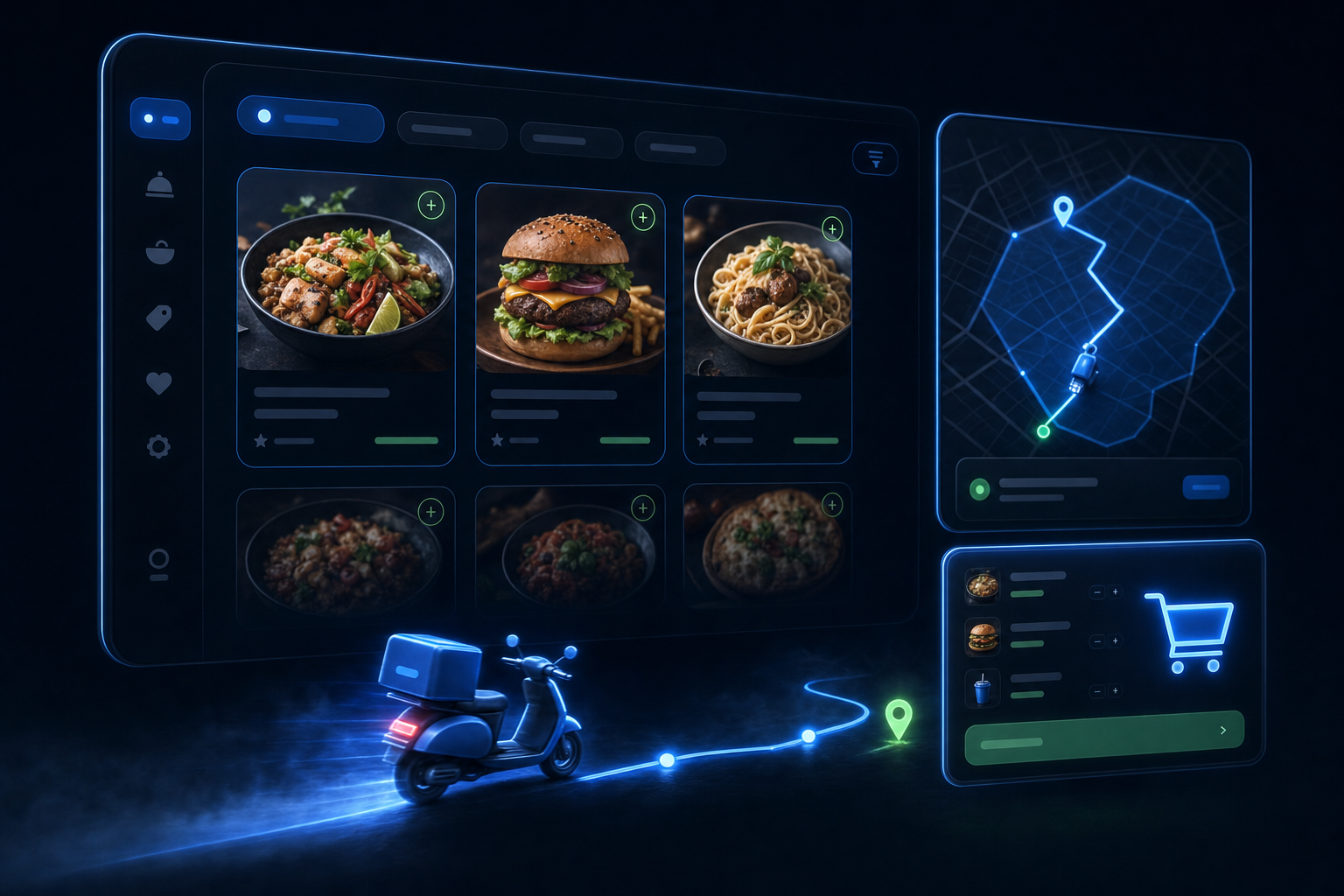
The menu syncs with your POS. Prices, ingredients and stop-lists update automatically. An item ran out — it vanished from the storefront within a minute, not after an angry customer’s call. Website orders land straight in the kitchen’s usual system. The operator turns from a bottleneck into a supervisor.
Checkout is compressed to two screens: an address with suggestions, the time, the payment. Delivery zones are drawn as polygons on the map, each with its own fee, minimum check and timing. Saved addresses and a two-click repeat order do what people love aggregators for. Only now it’s yours.
Winning customers back — where the aggregator is powerless
A loyalty program on the owned channel has real economics. There’s no commission, so there’s room for bonuses. Points for orders, promo codes in the packaging, automatic haven’t-ordered-lately reactivation. The base turns into a steady stream of repeat orders. In our delivery case, returns delivered 31% of repeat orders and the main margin gain.
Launch and traffic migration
We launch in 5-8 weeks: the POS integration, the storefront, zones, payments, loyalty. Then the aggregator-migration mechanics kick in. Promo-code inserts in orders, site prices below the aggregator’s, a bonus for the first direct order. The path is proven. The chain in our case moved 40% of orders to its own channel in four months and cut commission spend by 22%.
Related case study
Client reviews
Client reviews
In half a year we moved 40% of orders to our own site. We ran the numbers before launch and the payback looked optimistic. In fact it came faster: the aggregator's commission on those orders now stays with us.
For the first time we own a base: who orders, what and how often. Reactivation emails with a bonus deliver a third of our repeat orders. An aggregator will never give you that — those are its customers, not yours.
Stop-lists finally live on their own. Salmon ran out — the items vanished from the site within a minute. The why-did-you-accept-an-order-you-don't-have calls stopped completely.
Related solutions
Related solutions
Dental Clinic Website Development
Online booking, doctors, prices and credentials. A website patients trust before their first visit.
E-commerce Website Development
A fast catalog, payments, ERP and shipping sync. A store that works as a sales channel, not a showcase.
Auto Repair Shop Website Development
Online bay booking, prices by make and service pages. A website that books customers while the front desk is busy.
FAQ
FAQ about web development
01How much does a food delivery website cost?
A storefront with a cart, zones and online payment starts at $4,000. The price depends on integrations with the POS, payments and courier services, plus the loyalty program. The quote is free after a briefing.
02Do you integrate with POS systems?
Yes, it's the project's core. The menu, prices, ingredients and stop-lists flow from your POS, orders fall back to the kitchen. No manual transfer and no mismatches.
03Can we compete with aggregators on convenience?
On ordering convenience — yes. Two screens to payment, saved addresses, a two-click repeat. And on price you beat them. With no commission you can offer bonuses and prices lower than your own aggregator listing. Customers figure that out fast.
04How do we move customers from aggregators to our own site?
Package inserts with a promo code, site prices below the aggregator's by part of the commission, a bonus for the first direct order. The mechanics are proven. In our case they produced 40% of orders on the owned channel within four months.
05What do you need from us to launch in 5-8 weeks?
Access to the POS, the menu with photos, delivery zones and their terms, payment credentials. We handle the copy, the structure and the integration setup.
Let’s discuss your project
Free estimate and a proposed solution within one day.