
Logistics Company Website Development
A shipping calculator as the main funnel, route pages for demand and cargo tracking in the dashboard. A website that computes and answers on its own.

Goals we set for the website
- a minute
- from the route to a price
- −70%
- "where's my cargo" calls
- TOP
- for "[city]—[city]" routes
Sound familiar?
"Send an inquiry, a manager will quote" — the B2B client doesn't wait and goes to whoever quotes instantly
For "freight [city]—[city]" queries the site is invisible: route pages don't exist
"Where's my cargo?" eats the dispatcher's day — tracking lives in phone calls
Invoices and waybills go out by email on request: documents take longer to find than cargo takes to travel
Logistics Company Website Development
What's included
The calculator funnel
Your directions' tariff logic: the client gets a price and timing within a minute — the inquiry arrives warm
The route matrix
Direction pages with prices and timing: "freight [cities]" caught across hundreds of pairs
Cargo specializations
Oversized, refrigerated, hazardous — each type gets its page, requirements and quote
The tracking account
Cargo status, history, documents — the client checks alone, the dispatcher runs shipments
Document flow
Invoices, acts and waybills in the account: the client's accounting serves itself
The tender circuit
The fleet, licenses, geography, cases — the page attached to a tender bid
How the project runs
How the project runs
- 1-3 days
Brief & estimate
We dig into the task and give a precise price and timeline
- 1-2 weeks
Prototype & design
Structure, mockups and visual sign-off
- 2-6 weeks
Development
Weekly sprint demos — progress is always visible
- 3-5 days
Launch & support
Testing, production deploy, 6-month warranty
Logistics is bought fast: whoever computed first wins
A B2B client with cargo compares three to five carriers. Send-a-request-and-a-manager-will-reply always loses to a calculator. While your logistician computes by hand, a competitor has already shown the price and the timeline. A carrier’s website is built around response speed. A calculator with your tariff logic returns the quote within a minute. Complex cases go to a manager with the parameters collected. In the owner’s review, inquiries grew, and “they’re hotter: the person has already seen the price”.
The route matrix: hundreds of doors for demand
Freight is searched in pairs. City-to-city shipping. Groupage to a specific city. Oversize across a region. A generic services page is invisible to that demand. The matrix works instead: route pages with prices, timelines and transport types, cargo-type pages with requirements and a quote. In the commercial director’s review, the SEO tedium of route pages started bringing clients more reliably than the sales managers. Two hundred pages are two hundred entry points working around the clock.
The dashboard: “where’s the cargo?” stops being the dispatcher’s job
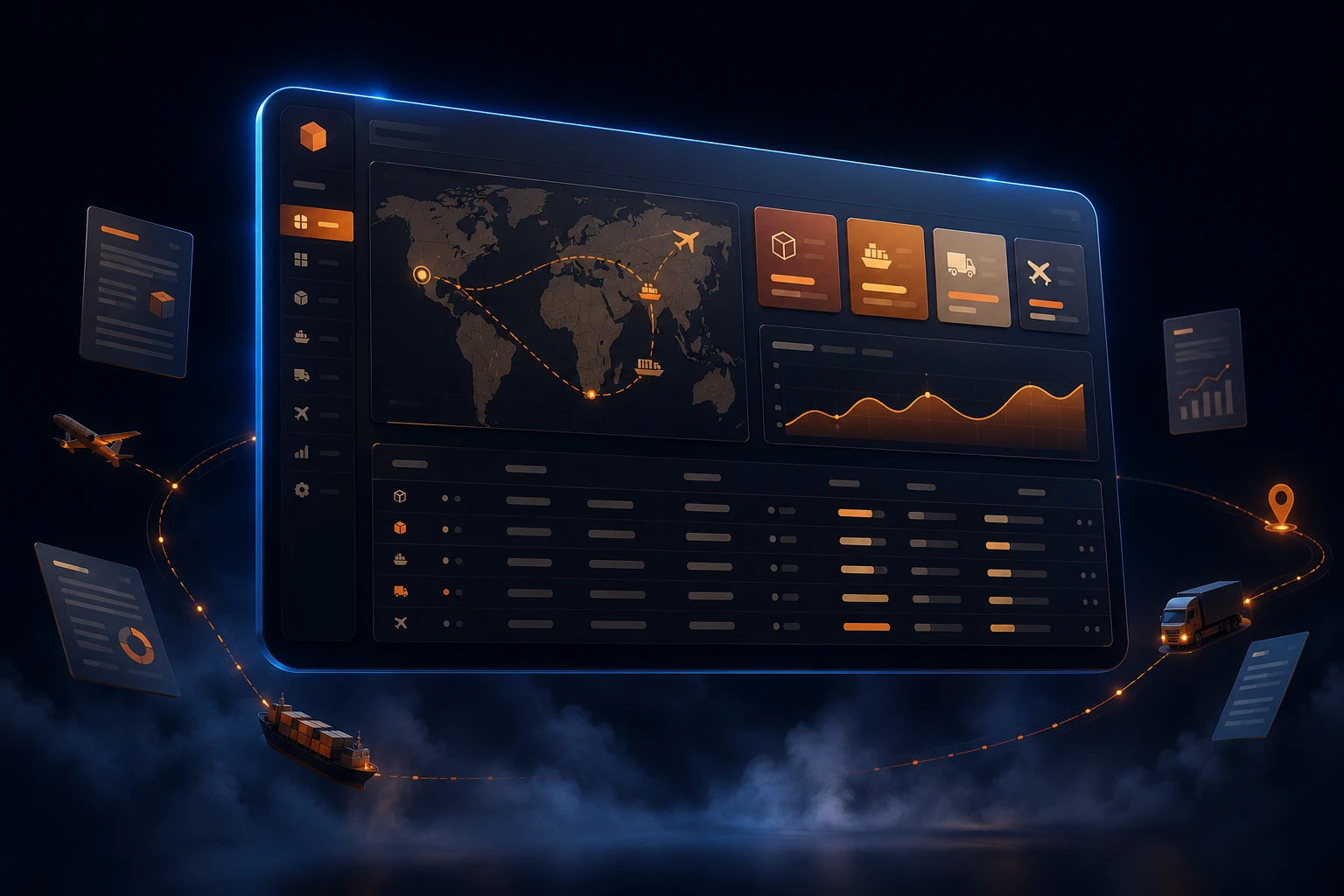
Half of a carrier’s inbound calls are where-is-the-truck. Tracking lives on the phone, the dispatcher works as a help desk. A client dashboard flips the picture. Cargo statuses from your TMS or ERP, notifications at key points, the shipment history. The second quiet win is documents. Invoices, acts and waybills get downloaded by the client’s accountants on their own. In the director’s review, that’s what gets “specifically praised at renewals”. A service detail that retains contracts.
Specializations and the tender circuit
Oversize, refrigerated, hazardous cargo — specializations with different requirements, permits and clients. Each gets its own page with a quote, and the company gets the reputation of a specialist rather than a we-haul-everything. For the corporate channel we build the tender circuit. The fleet with photos, licenses and permits, geography, cases with numbers. A page that gets attached to a tender bid. It earns trust points before the envelopes open.
Integrations and the combinations
A carrier’s website is strong through its links. The TMS and ERP feed the tracking and documents. The CRM catches calculator requests with the source. Telephony records the rate negotiations. All of these are our profile services, and the circuit assembles without seams between vendors. Nearby sit the B2B cases: the manufacturing company, the wholesale CRM, the ERP sync. The compute-fast-show-status-hand-over-documents mechanic is honed in the adjacent niches.
Related case study
Client reviews
Client reviews
The calculator changed the quality of inquiries. Compute-me-20-routes used to eat a logistician's day. Now the client computes it themselves and arrives with a ready route. More inquiries, and hotter ones: the person has already seen the price.
Route pages looked like SEO tedium until a city-to-city groupage query started bringing clients more reliably than the sales managers. Two hundred such pages are two hundred entry doors.
The tracking dashboard killed the where-is-the-truck question. Clients check the status themselves, dispatchers went back to work. And clients' accountants download the closing documents without emails. A small thing we get specifically praised for at renewals.
Related solutions
Related solutions
Dental Clinic Website Development
Online booking, doctors, prices and credentials. A website patients trust before their first visit.
E-commerce Website Development
A fast catalog, payments, ERP and shipping sync. A store that works as a sales channel, not a showcase.
Auto Repair Shop Website Development
Online bay booking, prices by make and service pages. A website that books customers while the front desk is busy.
FAQ
FAQ about web development
01How much does a transport company website cost?
From $6,000 for 5-8 weeks. That covers the calculator, route pages, the tracking dashboard and documents. The range depends on the tariff logic's complexity and integrations with your TMS or ERP. The quote is free after a briefing.
02Will the calculator handle our tariff logic?
Yes, we build it around it. Zones and routes, weight and volume, cargo type, surcharges for oversize, temperature and hazardous cargo, groupage or dedicated transport. Complex cases the calculator honestly hands to a manager. But with the request parameters already collected.
03Where do the tracking statuses come from?
From your systems. A TMS or ERP integration, or a dispatcher status panel if there's neither. The client sees the cargo's path in the dashboard and gets notifications at key points. Integrations are our profile, see the neighboring service.
04Why separate pages for every route?
That's how people search. City-to-city freight, groupage to a specific city — hundreds of route and type combinations. A generic our-services page is invisible to that demand. A route matrix with prices and timelines catches every phrasing. In the review above it's two hundred entry doors.
05B2B clients come through tenders — what's the site got to do with it?
The tender committee vets the contractor by the site. The fleet, licenses, geography, experience, reviews. A weak site costs trust points before the envelopes open. We build the corporate circuit as a page you're not ashamed to attach to a bid. And it collects inbound long-term contract inquiries on its own.
Let’s discuss your project
Free estimate and a proposed solution within one day.