
Website-to-ERP Integration
Four exchange flows, mapping before code and queues with monitoring. A website-to-ERP integration that survives updates and loses no orders.
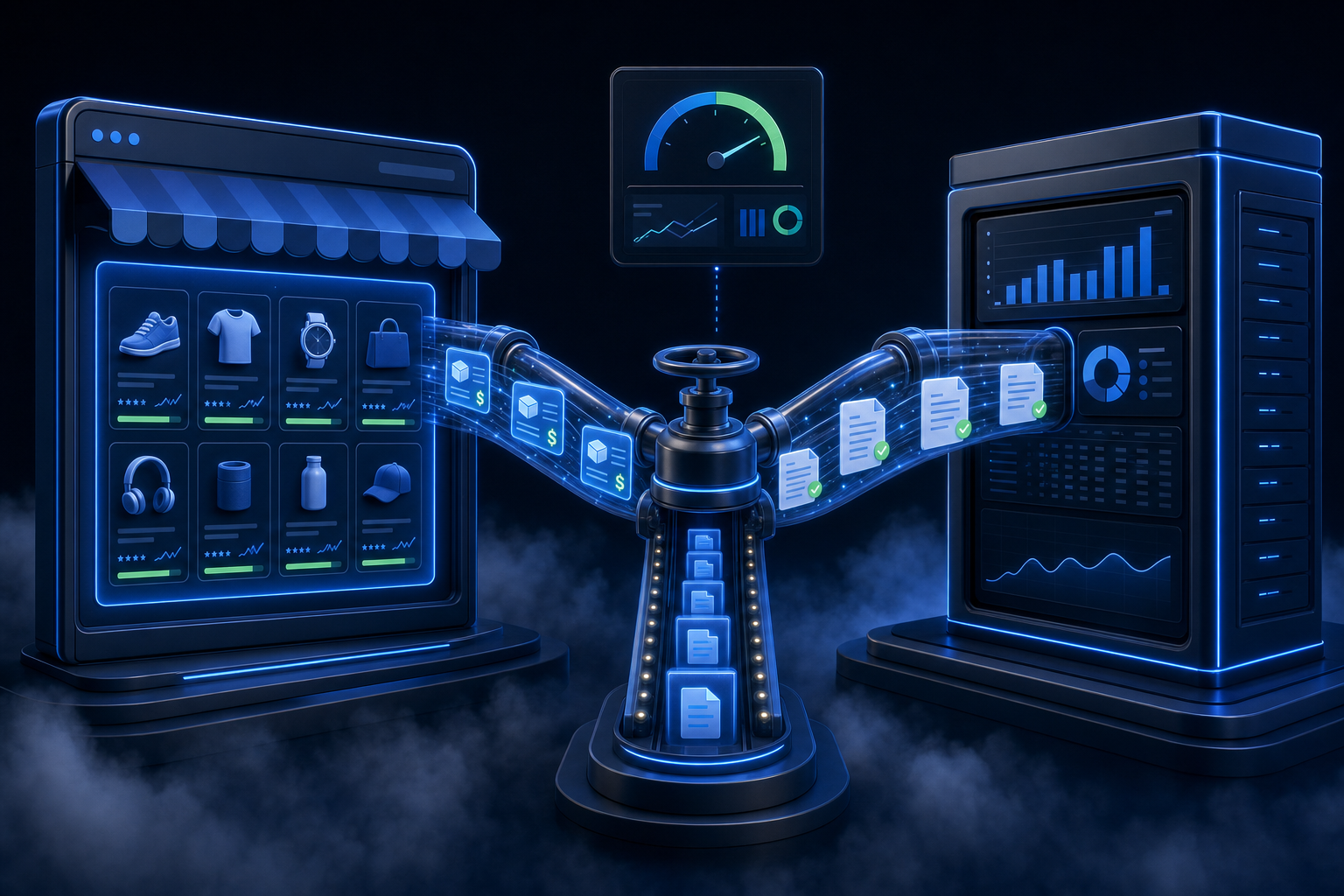
Цели, которые ставим сайту
- 0
- manual order transfer
- ≤ 15 min
- stock and price freshness
- 0
- data lost to outages
Знакомые проблемы?
Site stock updates once a day by hand — customers order sold-out items
An operator re-keys orders into the ERP: an hour per order and line-item errors
The nightly export failed — and the site trades on yesterday's prices for half a day before anyone notices
The ERP is heavily customized — off-the-shelf exchange modules don't fit, integrators shrug
Website-to-ERP Integration
Что входит в разработку
Stock & prices
Sync on a schedule down to 15 minutes or on events — the storefront never lies
Orders & payments
A website order lands in the ERP as a document; payments reconcile automatically
Statuses
Assembled, shipped, tracking number — customers watch the order without calling
Data mapping
Items with variants, price types, units — the correspondence is configured once
Queues & retries
Connection drops and ERP updates lose no data — delivery is guaranteed
Monitoring
An exchange journal, instant alerts, a discrepancy report — the exchange under watch
Как проходит проект
Как проходит проект
- 1-2 недели
Анализ систем
Изучаем конфигурацию 1С, API сторон, структуру данных и сценарии обмена
- 1-2 недели
Проектирование обмена
Маппинг данных, направления и расписание синхронизации, обработка конфликтов
- 2-6 недель
Разработка и тесты
Коннекторы, очереди с повторами, прогон на тестовых контурах обеих систем
- постоянно
Запуск и мониторинг
Боевой запуск, алерты об ошибках, поддержка при обновлениях систем
The gap between the website and the ERP costs money daily
While the site and the books live apart, the business pays a triple price. An operator moves orders by hand: an hour of work and line-item mistakes. Clients order the sold-out: cancellations and a reputation hit. Storefront prices lag the books: trading at a loss or past the promos. None of that is an inconvenience — it’s daily measurable losses. A proper exchange removes them architecturally. In our store case, stock-related cancellations fell 92%, and the order-mover position disappeared.
What flows where: the four exchange streams
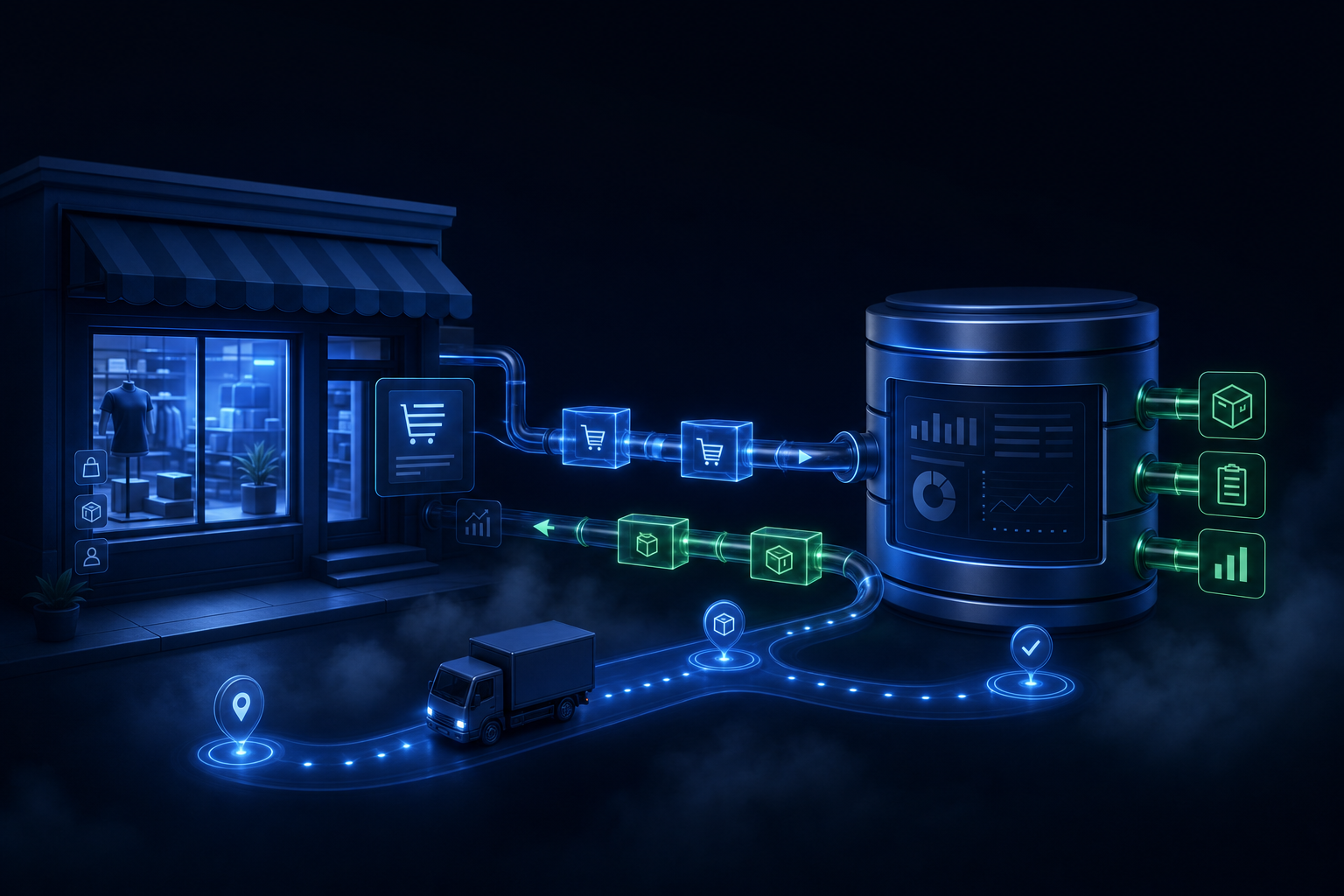
A healthy integration is four streams. Stock and prices go from the ERP to the site by schedule, within 15 minutes, or on a change event — the storefront doesn’t lie. Site orders land in the ERP as structured documents instantly. Statuses and tracking numbers return to the site and reach the client as notifications. Payments reconcile with orders automatically. Each stream is configured separately. You don’t need everything at once: we start with what hurts most.
Mapping: the project’s most underrated part
Failed integrations break not on code but on data. The catalog with its attributes doesn’t match the site’s cards. Units of measure diverge. Price types tangle. We start with mapping — a correspondence table agreed with your ERP specialist. What equals what, how attributes unfold, where each segment’s price comes from. A boring stage that saves months of pain after launch.
Reliability: queues, retries, monitoring
An ERP is a living system. Updates, maintenance windows, locks. An exchange that falls from that with data loss is worse than its absence. Our architecture is built on queues. If the receiver is down, data accumulates and gets delivered after recovery, guaranteed and in the right order. Monitoring with alerts reports a failure before the managers notice it. The exchange journal answers the eternal did-everything-really-sync question.
A customized ERP is not a verdict
Our-system-is-customized-standard-modules-don’t-fit is the phrase half of this service’s clients arrive with. A non-typical base means one thing: the exchange gets designed for your configuration rather than stretched from a box. We analyze the customizations. Pick the mechanics: HTTP services, REST, exchange plans. Build in resilience to future updates. And keep the integration under support, because APIs and configurations change while the exchange must live for years.
Кейс по теме

Отзывы клиентов
Отзывы клиентов
Before the integration we had a person who spent the whole day moving orders into the ERP and statuses back. That position is gone. Not fired — moved to purchasing. The exchange just works, I only recall it from the report.
Our ERP is customized beyond recognition, two integrators refused. Here they figured out the configuration and wrote the exchange for it. It has already survived three platform updates without a single data loss.
What I value most is the monitoring. Any exchange failure arrives as an alert before the managers notice it. Two incidents in a year, both closed before they affected orders.
Смежные решения
Смежные решения
Интеграция сайта с 1С
Четыре потока обмена, маппинг до кода и очереди с мониторингом. Интеграция сайта с 1С, которая переживает обновления и не теряет заказы.
Интеграция с amoCRM
Каждая заявка в воронку с источником и без дублей. Сайт, звонки, мессенджеры и 1С в одном контуре вокруг amoCRM.
Интеграция с Битрикс24
Сборка портала под процессы компании. Каналы заявок, 1С, смарт-процессы и связка «сделка → проект» — Битрикс24 начинает работать.
FAQ
Вопросы про интеграции
01How much does a website-to-ERP integration cost?
A typical two-way exchange from $4,500, in 4-8 weeks. The price depends on the ERP configuration, the catalog volume, the exchange directions and your base's customization depth. The quote follows a free analysis.
02Which ERP configurations do you work with?
The popular trade and manufacturing configurations and their customized versions. We build the exchange through HTTP services, REST or exchange plans. The choice follows your configuration and the speed requirements.
03Our ERP is heavily customized — is that a problem?
That's our typical situation. First a configuration analysis, then designing the exchange for it. Customized bases require care with updates. We build the exchange to survive them and keep it under monitoring.
04How often does the data sync?
By the task. Stock and prices by schedule, from 5-15 minutes, or on a change event. Orders instantly. Real-time everywhere isn't always needed. We pick modes that don't load the ERP during working hours.
05What happens if the ERP goes down or into maintenance?
Nothing terrible. The exchange is built on queues with retries. Orders accumulate and arrive after recovery, the site keeps taking payments. The failure shows in monitoring at once, with an alert to us and to you.
Обсудим ваш проект?
Бесплатно оценим задачу и предложим решение в течение дня.