
CRM for Medical Clinics
The PMS stores the medicine — the CRM runs the flow. Bookings and reminders, treatment plans under control, patients recalled for check-ups.
Goals we set for the website
- −40%
- no-shows with the cascade
- 100%
- of treatment plans under control
- +25%
- repeat visits with the recall machine
Sound familiar?
The front desk lives in a paper journal and memory: double bookings, lost calls
No-shows eat the doctors' schedules: reminders go out by hand, when anyone has time
A patient abandons the treatment plan halfway — and nobody notices
The patient base doesn't work: nobody says "time for a check-up", LTV doesn't exist
CRM for Medical Clinics
What's included
The schedule core
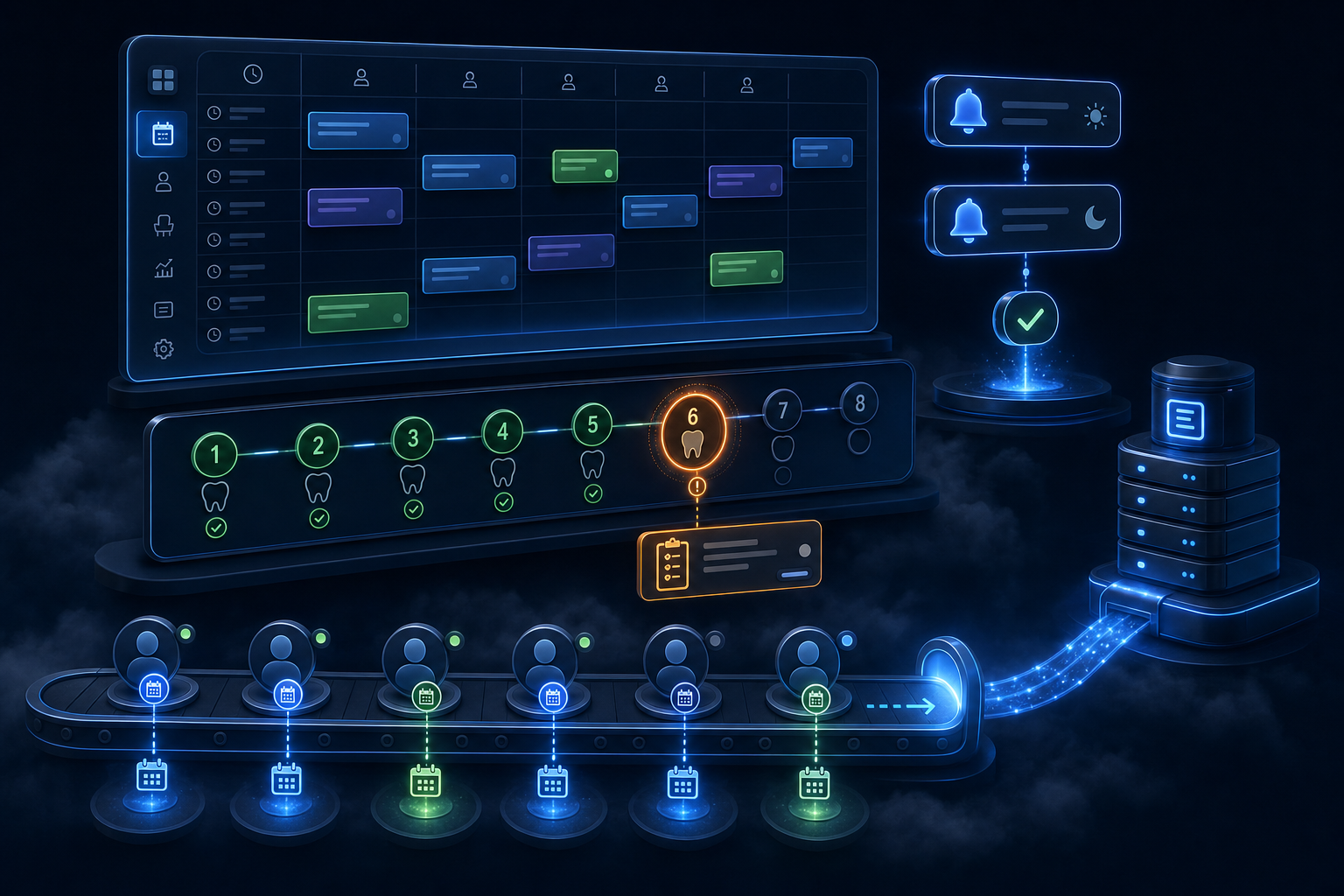
Doctors, rooms, equipment — one grid with appointment durations and zero double bookings
The reminder cascade
A day and 2 hours before, a confirm button — no-shows melt, freed slots go to the waitlist
Treatment plans
An 8-visit plan visible as a funnel: who's at which stage, who stalled — a front-desk task fires
The recall machine
Check-ups and follow-ups on schedule: the system itself invites the patient in the right month
The front-desk workspace
Calls, bookings, confirmations, tasks — one screen instead of a journal and sticky notes
Integrations
PMS, telephony, the website and messengers — the CRM gathers the flow from every channel
How the project runs
How the project runs
- 1-2 weeks
Process audit
How the business really runs: bookings, sales, accounting, bottlenecks
- 2-3 weeks
System design
Architecture, role scenarios, data migration and integration plan
- 4-10 weeks
Build & configure
System assembly, integrations, data transfer — alongside the old process
- 1-2 weeks
Launch & training
Team training, playbooks, staged rollout and launch support
The PMS stores medicine — but it doesn’t manage patient flow
Nearly every clinic runs a PMS. Records, protocols, compliance. And nearly every one runs a front desk with a paper journal, manual reminders and a base that doesn’t work. There’s no contradiction. The PMS was built to store medicine, not to manage flow. The CRM covers the second half. Bookings from every channel, the reminder cascade, treatment plan control, recall for check-ups. The clinic’s money lives exactly there. Integration ties the two systems: medicine in the PMS, flow and revenue in the CRM.
Treatment plans: money lying underfoot
An eight-visit treatment plan is revenue stretched over time and controlled by no one. The patient completes two stages and disappears. Not from dissatisfaction — life happened. In a journal that’s invisible. In the CRM the plan is a funnel: stages, visits, sums, with stalled ones lighting up by themselves. A gentle shall-we-continue-treatment from the front desk returns half. In the chief physician’s review it’s called money lying underfoot: a third of patients had been abandoning plans unnoticed.
The recall machine: load from existing patients
A check-up in six months, a follow-up after treatment, the annual exam — reasons to bring back a patient whose acquisition is already paid. Manually, nobody does it. The system works by dates from the history. It builds the month’s recall list itself, sends a message, and queues a call task if silent. In the network director’s review, the recall machine lifted doctor load by a quarter. And it beats any advertising, because it invites people who already trust you.
The front desk: one screen instead of a journal and stickies
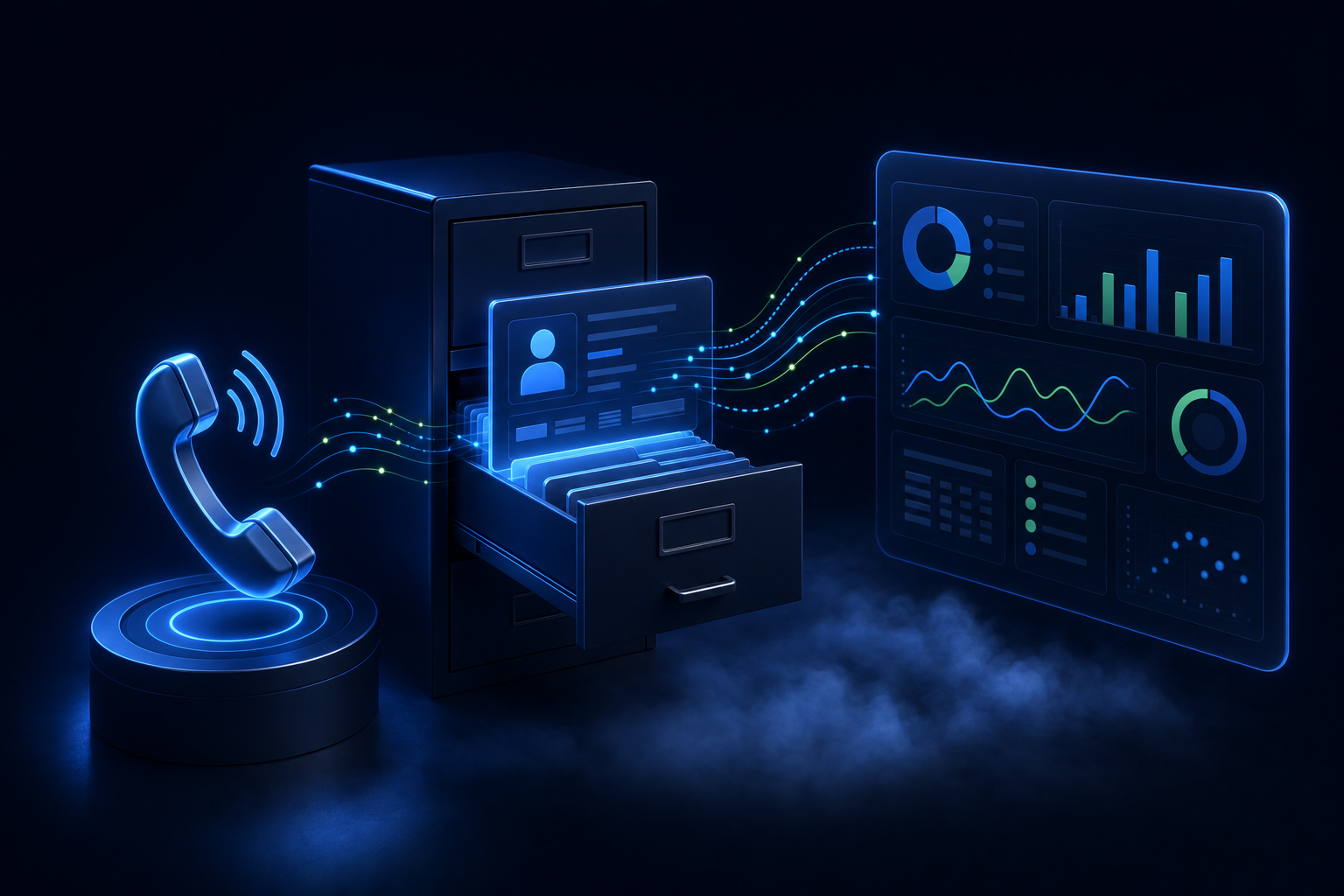
A receptionist’s shift is calls, bookings, confirmations, reschedules and the fear of a double booking. The CRM gathers it into one workspace. An incoming call raises the patient card — the telephony link is our neighboring niche. The schedule physically prevents collisions. Reminders cascade out by themselves. A freed slot is offered to the waitlist. The front-desk head’s review sums it up humanly: “my girls stopped quitting”.
Data, integrations and the medical stack
The personal-data circuit is built for compliance: roles, audit logs, a protected perimeter. The medical part stays in the PMS. The CRM integrates with telephony, the website and messengers — the flow gathers from every channel into one system. Nearby sits our whole medical stack. Clinic websites, SEO, advertising counted to the chair, telephony: the clinic network case is in the trio below. Patient-flow management closes into one circuit.
Related case study
Client reviews
Client reviews
Treatment plan control turned out to be money lying underfoot. A third of patients abandoned treatment halfway, and nobody saw it. Now stalled plans light up, the front desk calls — half return and finish the treatment.
The recall machine outperforms any advertising. The system surfaces patients due for a check-up and queues the calls itself. Doctor load grew by a quarter — with existing patients whose acquisition was already paid for.
My shift used to be a journal, sticky notes and the constant fear of booking two people into one slot. Now it's one screen. A call raises the card, the schedule physically prevents collisions, reminders go out themselves. My girls stopped quitting.
Related solutions
Related solutions
CRM for Beauty Salons
Your own system instead of an eternal subscription. Booking, the base, stylists' pay and client returns built for your chain's processes.
CRM for Auto Repair Shops
A digital work order, per-VIN history and parts without black holes. A CRM where every repair and every dollar leaves a trace.
ERP for Manufacturing
Machine and crew planning, an honest cost price before the order launches and materials without eyeball reserves. Manufacturing that is managed, not firefought.
FAQ
FAQ about crm/erp systems
01How much does a clinic CRM cost?
From $8,000, implementation in 10-16 weeks. That covers scheduling, reminders, treatment plans, recall and the front-desk workspace. The range depends on the locations and integrations: the PMS, telephony, the website. The estimate follows a free process audit.
02We already have a PMS — why a CRM too?
They do different jobs. The PMS stores the medical side — records, protocols, documents — and covers compliance. The CRM runs the flow: bookings from every channel, reminders, plan control, recall, tasks. We integrate them. Medicine stays in the PMS, patient flow and money live in the CRM.
03What is treatment plan control?
The treatment plan becomes a funnel: stages, visits, sums. The system sees who completed two visits of eight and vanished, and queues a front-desk task. Abandoned plans are clinics' classic invisible loss. Patients leave not from dissatisfaction but from life, and a gentle shall-we-continue returns half.
04How does check-up recall work?
By dates from the history. Six months after a cleaning, a year after an exam, a follow-up after treatment. The system builds the month's time-to-invite list itself and starts the touches: a message, then a call task if silent. Load grows with patients whose acquisition is already paid.
05What about patient data protection?
The circuit is built for data-protection compliance. Role-based access, audit logging, a protected perimeter — on your server or a certified cloud. Medical data stays in the PMS, the CRM handles the contact and organizational side.
Let’s discuss your project
Free estimate and a proposed solution within one day.