
ERP for Manufacturing
Machine and crew planning, an honest cost price before the order launches and materials without eyeball reserves. Manufacturing that is managed, not firefought.
Goals we set for the website
- < 5%
- late orders
- 100%
- orders with margin known before launch
- −15-20%
- cash frozen in inventory
Sound familiar?
Planning lives in Excel and the shop foreman's head: orders collide over machines and crews
Cost is calculated after the fact — an order's margin surfaces when nothing can be changed
Materials are bought "with a margin, by eye": the warehouse froze the cash, yet the needed item is still missing
Sales promises dates production physically cannot keep
ERP for Manufacturing
What's included
Planner
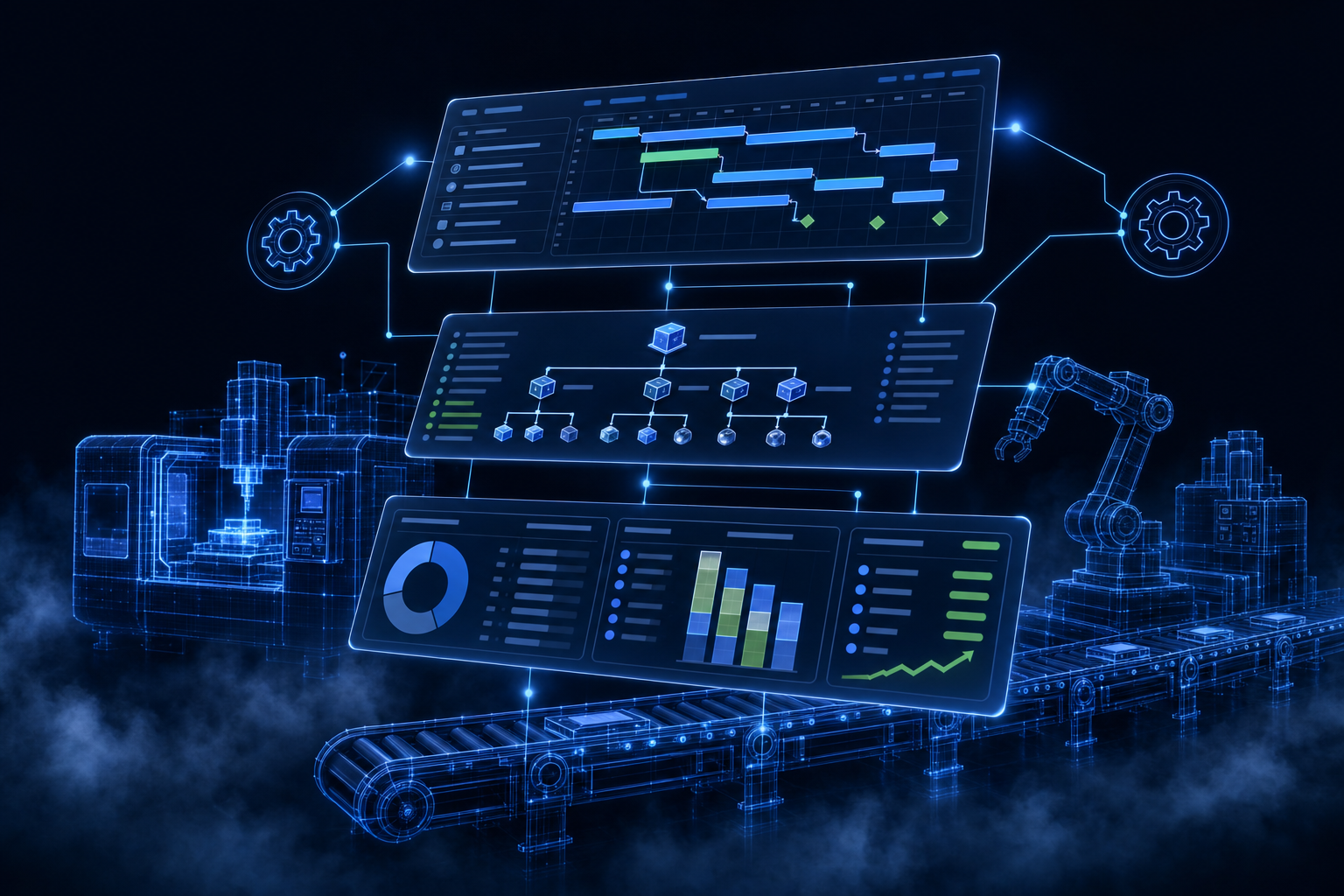
An order breaks into operations with norms — the system builds the machine and crew load schedule
BOMs
Product composition, consumption and operation norms, versions — the base for dates and costing
Costing
Planned before launch, actual along the way: materials, labor, defects — margin visible live
Inventory & purchasing
Order reserves, future-period shortages, supplier requests — without freezing cash
Shop floor & shifts
Tasks at workstations, completion marks, defect logging — the shop in the system, not a notebook
Integrations
Accounting, sales CRM, HR — the production circuit embedded in the company landscape
How the project runs
How the project runs
- 1-2 weeks
Process audit
How the business really runs: bookings, sales, accounting, bottlenecks
- 2-3 weeks
System design
Architecture, role scenarios, data migration and integration plan
- 4-10 weeks
Build & configure
System assembly, integrations, data transfer — alongside the old process
- 1-2 weeks
Launch & training
Team training, playbooks, staged rollout and launch support
Manufacturing without a system is managed by hand — and capped by it
While orders are few, production runs on experience. The shop head knows the load in his head. The buyer knows what to purchase. The owner knows the rough margin. Growth breaks manual management predictably. Orders collide on machines, deadlines slip, the warehouse swells just-in-case, and an order’s profit becomes clear after the fact. The ERP moves management from heads into a system. The ceiling that rested on people’s memory disappears. In our furniture manufacturing case, late orders fell from 30% to 4% exactly through that transition.
Planning: real deadlines at the sales stage
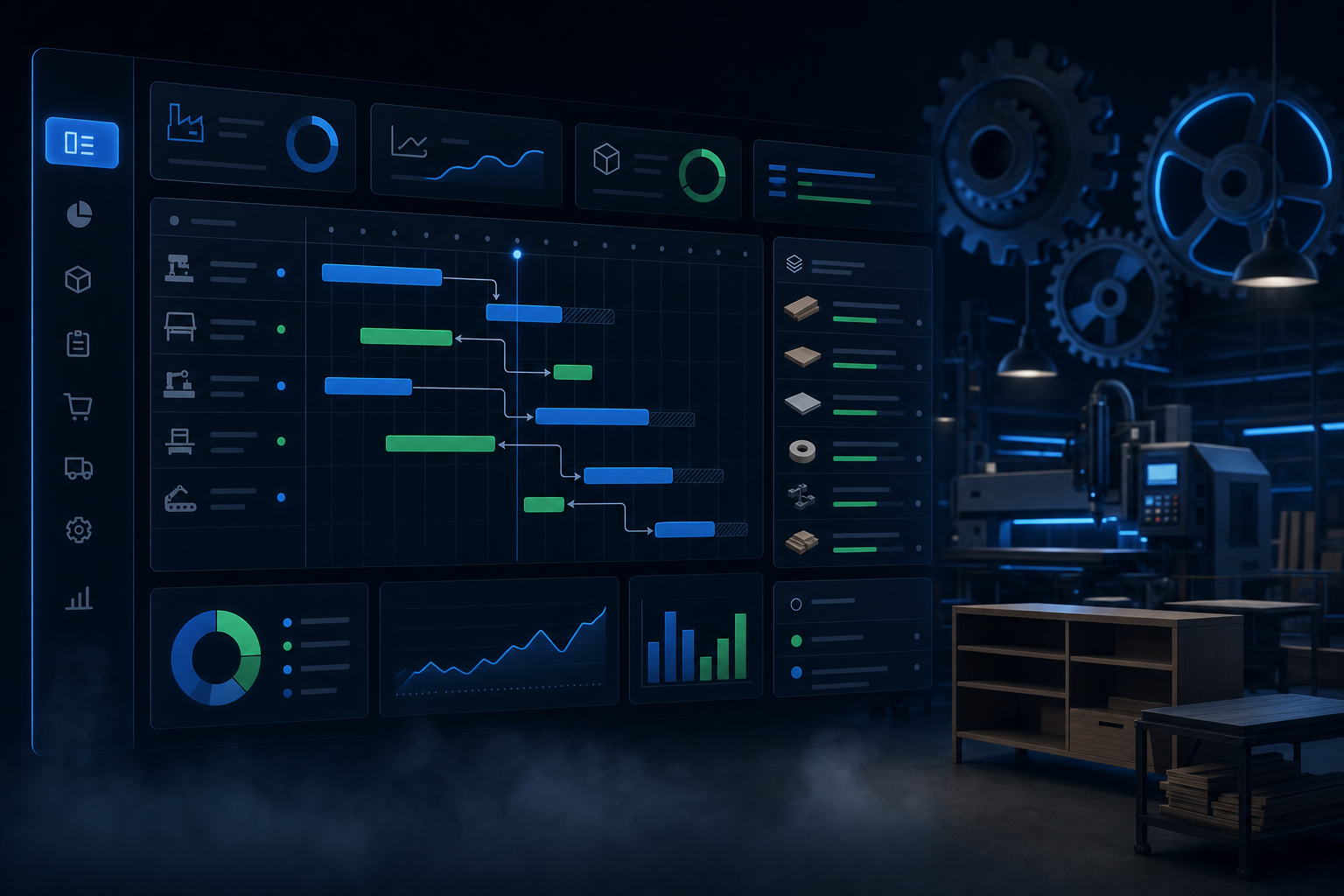
A manufacturing ERP’s core is the planner. An order unfolds into operations with time norms. The system builds the machine and crew load schedule and shows an honest completion date before the contract is signed. Sales stops promising the impossible. Production stops working in a permanent rush mode. Conflicts and bottlenecks show on the schedule in advance. They get solved by rearrangement, not a night shift.
Cost price: the margin before launch, not after shipment
The product’s BOM with material and operation norms gives a planned cost price at the moment the order is quoted. The owner sees the margin before launch and can decline the unprofitable or adjust the price. As production runs, the actual one accumulates: real write-offs, real labor, scrap. The plan-vs-fact difference is the most honest problem indicator. Where the norms lie, where the overrun is, where money is lost.
Warehouse and procurement: money doesn’t sleep on shelves
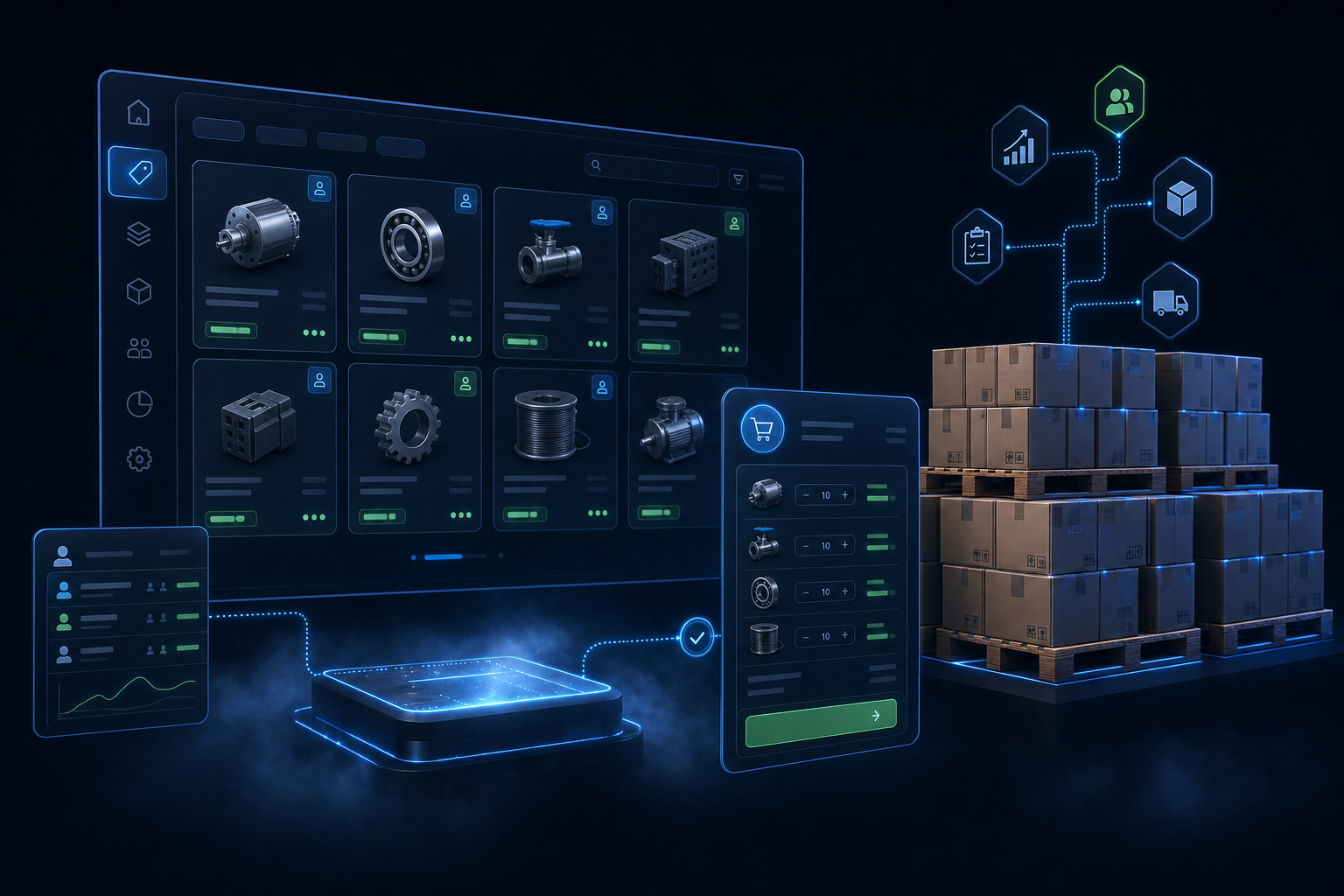
An eyeball reserve is frozen working capital plus a regular the-needed-item-is-still-missing. The system computes demand from the orders. BOMs reserve materials. Future-period deficits turn into supplier requests respecting lead times. Stock slims to the working minimum. Orders stalled over materials disappear. A double effect: on the working capital and on the deadlines.
The shop floor in the system and the accounting link
Shift tasks arrive at the stations. The worker sees their operation. The foreman marks completion and scrap from a tablet. Order progress is visible to the office without shop floor rounds. Shop interfaces are designed for manufacturing’s reality: large, simple, two touches. And the regulated books stay in the accounting system. A two-way exchange of documents and the catalog embeds the ERP into the existing landscape without a revolution in accounting.
Related case study

Client reviews
Client reviews
The main discovery: every order's margin before its launch. Turned out a third of our favorite orders ran at nearly zero. We rebuilt the price list and dropped the unprofitable. Profit grew without a single new machine.
The planner removed my role of a living dispatcher. The load schedule builds itself, machine conflicts show in advance. For the first time in years I went on vacation without leaving the-file-with-the-plan, and nothing collapsed.
The warehouse held more money than a month's revenue, just-in-case. Order reservations and demand calculation cut the stock by a quarter. That's live money returned to circulation.
Related solutions
Related solutions
CRM for Beauty Salons
Your own system instead of an eternal subscription. Booking, the base, stylists' pay and client returns built for your chain's processes.
CRM for Auto Repair Shops
A digital work order, per-VIN history and parts without black holes. A CRM where every repair and every dollar leaves a trace.
CRM for Wholesale
A self-service B2B portal, personal price lists and reserves without overselling. A CRM where managers develop clients instead of retyping orders.
FAQ
FAQ about crm/erp systems
01How much does a manufacturing ERP cost and why is it expensive?
Implementation from $14,000, in 3-6 months. That's the price not of software but of rebuilding management: the process audit, the BOMs, the norms, shop floor training. It pays back in manageability. In our case, late orders fell from 30% to 4%, purchasing by 18%.
02Why is a custom ERP better than boxed products?
A box is strong where processes are typical. Manufacturing rarely is: your own process stages, your own tooling, your own motivation schemes. A custom system is built around your cycle and drags no per-seat licenses. The accounting ERP stays in its place — the books, with the exchange configured.
03Can we roll it out gradually?
You should. We start with the core that hurts most, usually planning and orders. Then the warehouse and cost price, then the shop floor circuit. Each stage delivers its effect on its own, not works-when-everything-is-done.
04How will the system get along with our accounting software?
Routinely. The ERP runs the production circuit, the accounting system runs the regulated books. The exchange is two-way: documents, payments, the catalog. Accounting keeps working in the familiar system without double entry.
05Will shop floor workers cope with the system?
The shop interface is designed for reality. Big buttons, minimal fields, terminals or tablets at the stations, completion marked in two touches. Training and launch come with our on-site guidance. Resistance dissolves because the system simplifies the foreman's life instead of adding reporting.
Let’s discuss your project
Free estimate and a proposed solution within one day.