
CRM for Fitness Clubs
A renewal machine, trainers' pay without spreadsheets and dormant-client revival. A CRM where every club process has a rule.
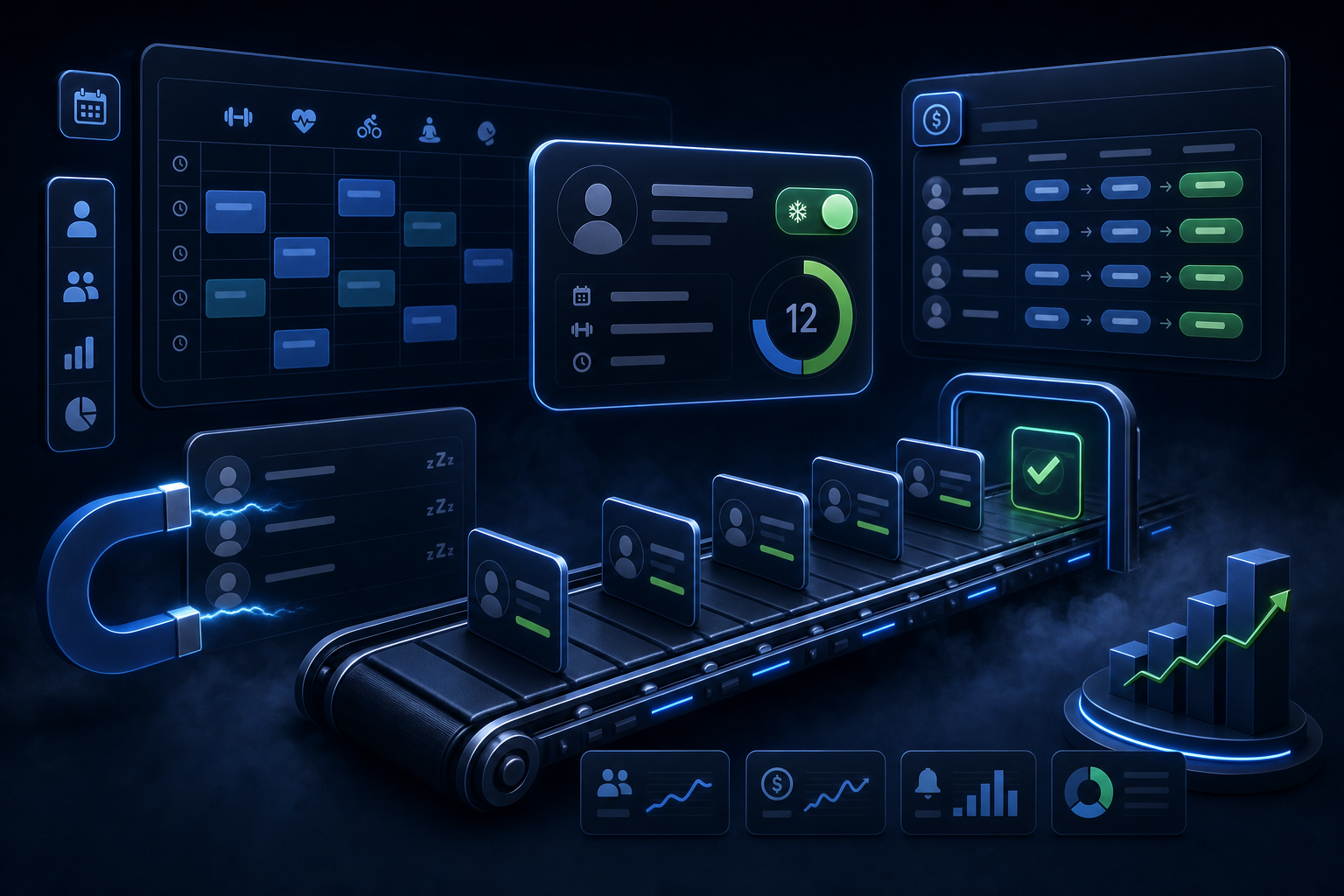
Goals we set for the website
- +20-30%
- renewals with the funnel
- minutes
- for payroll instead of a day
- 100%
- of the base segmented and worked
Sound familiar?
The schedule lives in Excel, memberships in a notebook, freezes "on someone's word" — the records sprawled
Renewals run on autopilot: the client finishes the membership and silently vanishes
Trainer payroll takes half a day by hand: rates, percentages, personal sessions, substitutions
Who "fell asleep" and who could return — nobody knows: the base doesn't exist as an asset
CRM for Fitness Clubs
What's included
The schedule core
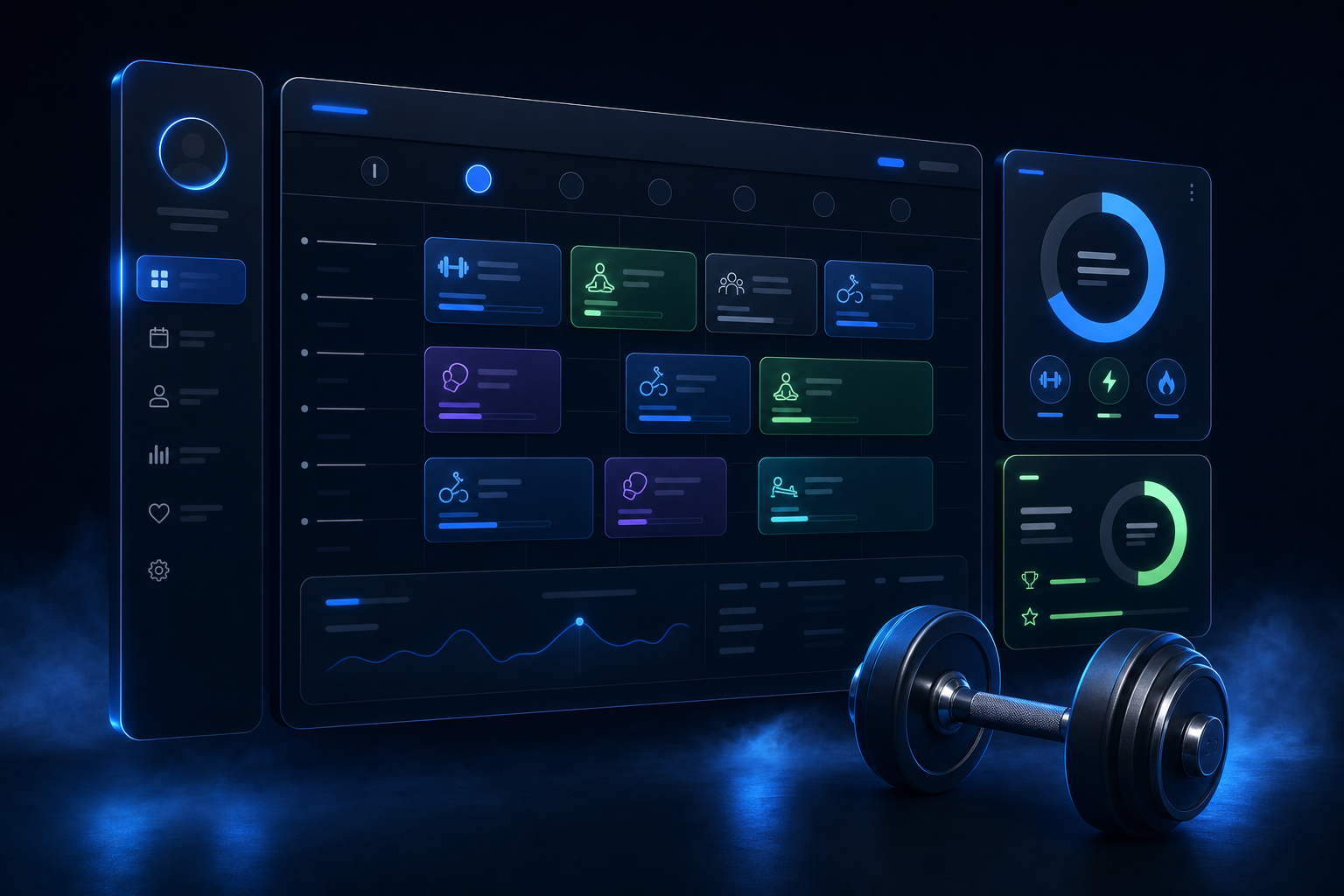
Classes, rooms, trainers, personal sessions — one grid the website and app live from
Rule-based memberships
Freezes, transfers, auto-deduction — "on someone's word" replaced by rules in the system
The renewal machine
The system catches "5 sessions left" itself and fires the chain: a push, a task, an offer
Trainer payroll
Rate + personal-session % + substitutions: minutes to compute, zero "I was shortchanged" disputes
Base reactivation
Sleepers segmented by recency and type — win-back campaigns strike precisely
The owner's panel
Fill, revenue, renewals, churn — the club visible in numbers from a phone
How the project runs
How the project runs
- 1-2 weeks
Process audit
How the business really runs: bookings, sales, accounting, bottlenecks
- 2-3 weeks
System design
Architecture, role scenarios, data migration and integration plan
- 4-10 weeks
Build & configure
System assembly, integrations, data transfer — alongside the old process
- 1-2 weeks
Launch & training
Team training, playbooks, staged rollout and launch support
A club without a CRM runs on memory — and loses at every seam
The schedule in Excel. Memberships in a notebook. Freezes by we-had-an-arrangement. Payroll in manual spreadsheets. That’s how most studios live, and money leaks at every seam. Renewals that never happened. Freeze disputes. The manager’s day spent computing payroll. A client base that doesn’t exist as an asset. The CRM gathers the club into one system where every process has a rule, and every rule executes automatically.
Renewals: the club’s main money goes on a conveyor
A renewal costs several times less than an acquisition, but in most clubs it drifts. The client finishes the membership and quietly dissolves. The renewal machine flips that. The system sees five-classes-left before the client does and launches the chain. A push with an early renewal offer, a task for the manager, a second pass at silence. In the chain owner’s review, that gave +27% renewals in a quarter. Pure money from a process that stopped depending on the administrator’s memory.
Memberships and payroll: rules instead of arrangements
Freezes, transfers, class auto-deduction — the zone of eternal we-had-an-arrangement disputes. The system closes it with a protocol. Rules get described once and execute identically for everyone. The second time-eater is trainers’ payroll: group rates, personal training percentages, substitutions. The CRM counts from the fact of conducted classes. Closing the month takes half an hour instead of a day. The trainer sees the accruals in their dashboard. The they-shortchanged-me arguments die with the manual spreadsheets.
The base as an asset: reviving the dormant
Clients who stopped coming aren’t a loss but deferred income. They already know the club, and returning them is cheaper than acquiring new ones. The CRM segments the base by recency, membership type and history. Return campaigns hit precisely: one personal offer for the three-months dormant, another for the year-long. In the CrossFit studio owner’s review, every fifth came back, at a price below any acquisition channel. Without a system, that vein simply isn’t visible.
The owner’s panel and the fitness stack
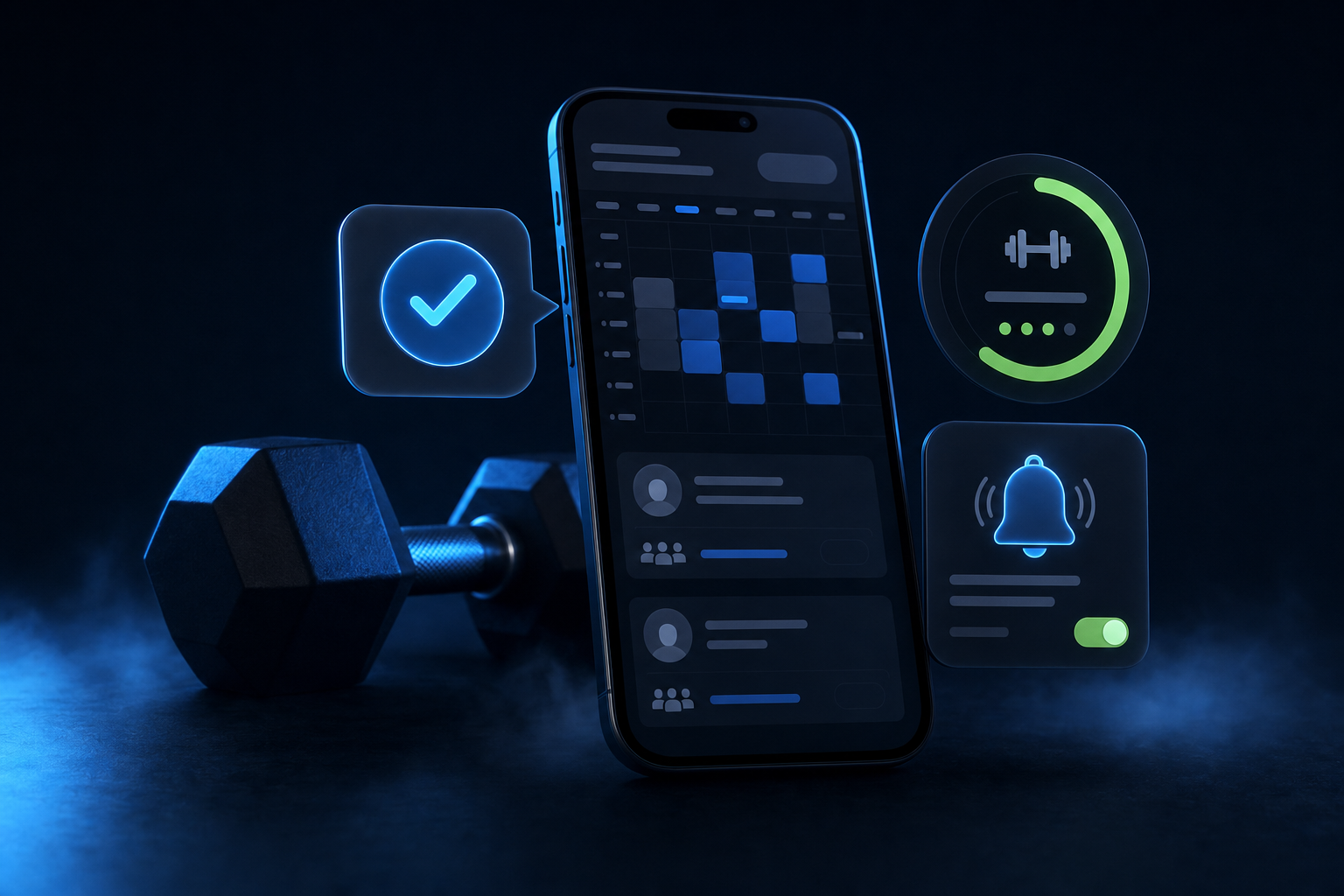
The owner gets the club in numbers from the phone. Group occupancy, revenue by membership type, renewal conversion, churn by cohort. Decisions — which groups to expand, which trainers sell personal training, where it leaks — get made on data. The CRM is our fitness stack’s core. On top sit the app with booking and pushes and the site with trials and sales. The combination’s cases sit nearby: −45% no-shows and 70% of bookings in the app at a studio chain.
Related case study
Client reviews
Client reviews
Before the CRM, renewals were a lottery: some renewed, some dissolved. The renewal machine turned it into a process. The system catches an ending membership before the client does. Plus 27% to renewals in the first quarter, and that's pure money.
Trainers' payroll was my personal hell: a day with spreadsheets, and arguments anyway. Now the rates, percentages and substitutions count themselves. Closing the month takes half an hour, and there wasn't a single argument in half a year.
The dormant segment turned out a gold mine. The system pulled up everyone who vanished within a year, split them by reason, and the return campaign with a personal offer brought back every fifth. Cheaper than any acquisition.
Related solutions
Related solutions
CRM for Beauty Salons
Your own system instead of an eternal subscription. Booking, the base, stylists' pay and client returns built for your chain's processes.
CRM for Auto Repair Shops
A digital work order, per-VIN history and parts without black holes. A CRM where every repair and every dollar leaves a trace.
ERP for Manufacturing
Machine and crew planning, an honest cost price before the order launches and materials without eyeball reserves. Manufacturing that is managed, not firefought.
FAQ
FAQ about crm/erp systems
01How much does a fitness club CRM cost?
From $7,000, rollout in 8-14 weeks. That covers the schedule, memberships, renewals, payroll and segments. The range depends on the number of branches, integrations with turnstiles, the site and the app, and the analytics depth. The quote is free after a process audit.
02Why is a custom CRM better than off-the-shelf fitness services?
Off-the-shelf services suit standard clubs and squeeze non-standard ones. Custom trainer motivation schemes, membership formats, a chain with different rules. A custom system is built around your model, with no per-seat subscription and full base ownership. At the audit we'll say honestly if an off-the-shelf one is enough.
03How does the renewal funnel work?
The system tracks every membership's class balance and term. At a threshold, say 5 classes, a chain launches. A push to the client with an early renewal offer, a task for the manager, and at silence a second pass with a discount. Renewal stops depending on the administrator's memory.
04What about trainers' payroll?
We close it fully. Group class rates, personal training percentages, substitution and time coefficients. The rules get described once, and the calculation runs from the fact of conducted classes. The trainer sees their accruals in the dashboard. Arguments disappear with the manual spreadsheets.
05We already have your app — will the CRM connect to it?
They're made for each other. The CRM is the operational core: the schedule, memberships, money. The app is the client layer above it. One base, live sync. The CRM-plus-app-plus-site combination is our full fitness stack, see the cases nearby.
Let’s discuss your project
Free estimate and a proposed solution within one day.