
Real Estate Developer Website Development
An interactive unit picker, live CRM prices and a mortgage calculator. A website where buyers choose an apartment instead of leaving for an aggregator.
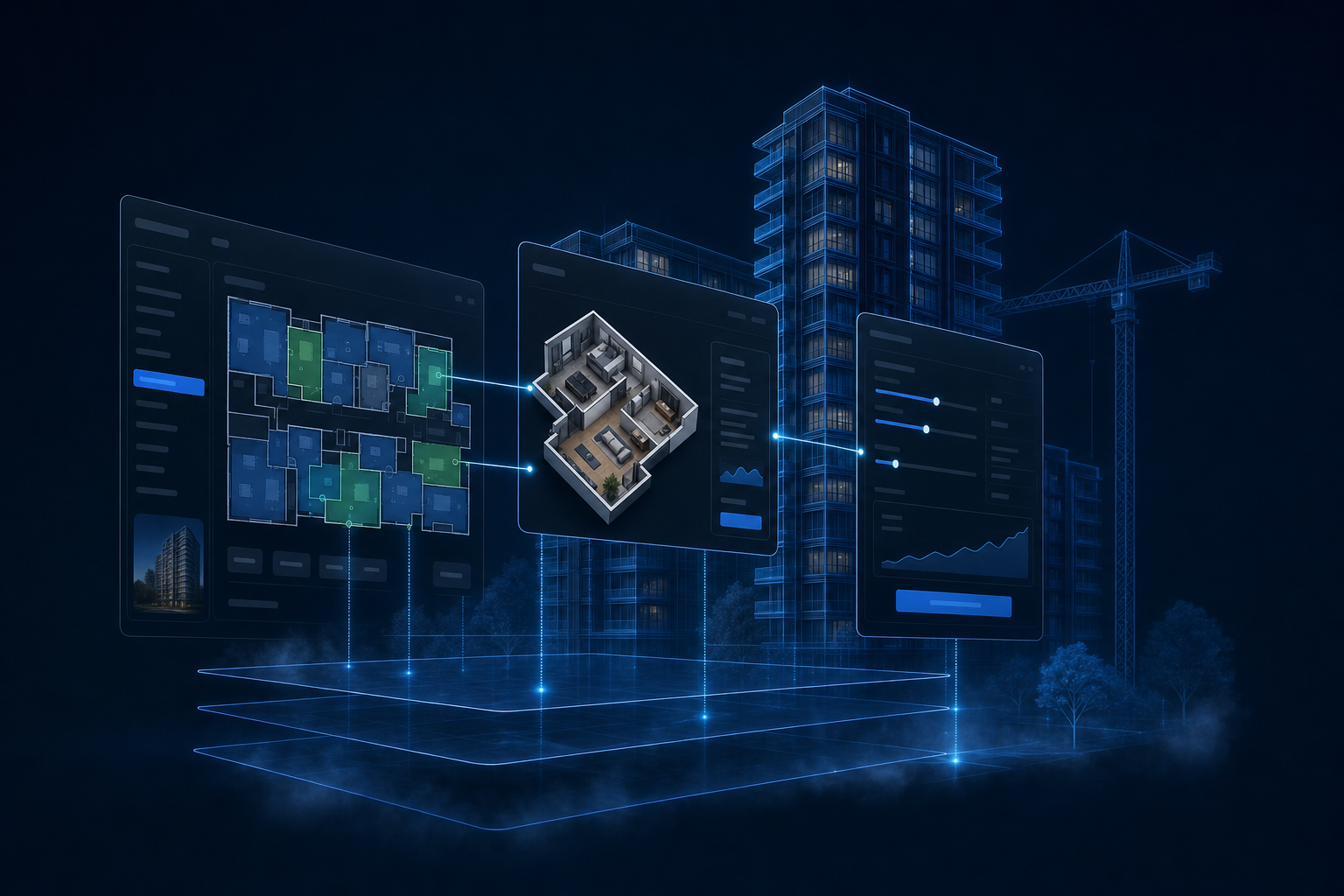
Goals we set for the website
- 100%
- price and availability accuracy
- x2-3
- time on site versus a brochure
- 0
- "how much is this one" calls
Sound familiar?
Buyers view PDF floor plans on the site, then leave to choose on aggregators — where agents intercept them
Price-on-request cuts off half the audience: people want to see a specific unit's cost now
Sold apartments hang on the storefront for days — managers answer "already gone" and anger buyers
Requests arrive as "tell me about the project" — managers spend meetings qualifying instead of selling
Real Estate Developer Website Development
What's included
The unit picker
Visual selection by building and floor with filters — like the best national residential projects
The unit card
Floor plan, price, view, sunlight, the mortgage payment — everything for a decision on one page
CRM sync
Sold — gone from the storefront instantly; repriced — updated on its own
Mortgage calculator
Partner-bank rates, the down payment, the monthly payment — right in the unit card
Construction progress
Monthly photo reports, live cameras, the schedule — it closes the buyer's main fear
Legal documents
Project declarations, permits, amendments — the section banks and lawyers verify
How the project runs
How the project runs
- 1-3 days
Brief & estimate
We dig into the task and give a precise price and timeline
- 1-2 weeks
Prototype & design
Structure, mockups and visual sign-off
- 2-6 weeks
Development
Weekly sprint demos — progress is always visible
- 3-5 days
Launch & support
Testing, production deploy, 6-month warranty
Why buyers leave developer websites
A typical residential project site is a beautiful brochure. Renders, a mission statement, PDF floor plans and a leave-a-request form. A buyer making a six-figure decision wants something else. To see specific apartments. To compare floors and views. To learn the exact price and compute the mortgage. Not finding that, they leave for aggregators, where agents’ listings and competing projects await.
A site with real apartment selection returns the buyer to your channel. Everything they went to the aggregator for is right here. No middlemen and no rival ads alongside.
The unit picker: choosing with the eyes, deciding on the site
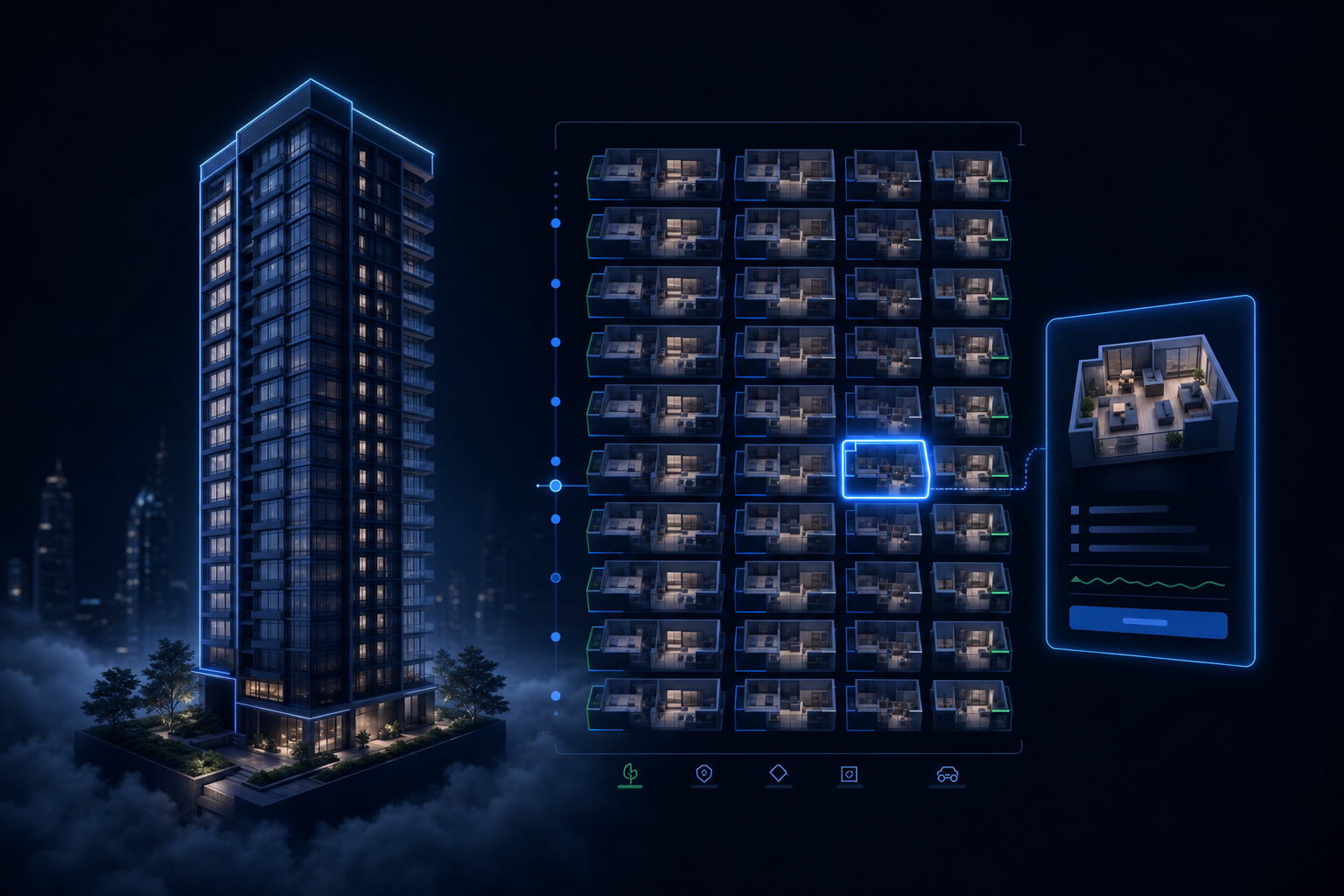
The project’s heart is the interactive unit picker. Buildings, floors, unit statuses in color, filters by area, price, rooms and orientation. Every apartment gets its own page: the floor plan, the exact price, window views, sunlight and the mortgage payment. Buyers spend 2-3 times longer on such a site than on a brochure. And they come to the manager with a chosen apartment, not with a what-do-you-have question.
The mortgage calculator sits inside the card: partner-bank rates, the down payment, the monthly figure. Psychologically it flips the perception. A monthly payment sells better than the full price tag.
A storefront that never lies
The number-one trust killer is a storefront out of sync with reality. The buyer falls for an apartment that was sold a week ago. We sync the site with the sales CRM. A reservation or a deal changes the storefront status instantly, price changes roll out automatically. The sales team manages the inventory from their usual system. No developer tickets, no manual edits.
Buyer trust: construction and documents
Buying at the excavation stage is buying trust. The construction progress section with monthly photo reports, live cameras and the schedule closes the buyer’s main fear. Legal documents get published on time and in an order that passes bank and regulator checks. Project declarations, permits, amendments. We design this section to the letter of the requirements, not however-it-turns-out.
Launch and growth
The core launches in 8-12 weeks: the unit picker, unit cards, CRM sync, documents. Sales get the tool within the current season. The project then grows in modules. An interactive master plan, 3D tours, a buyer dashboard with the deal’s progress, pages for new phases. Delivered buildings switch to a showcase mode with residents’ reviews and work for the developer’s brand on the next projects.
Related case study
Client reviews
Client reviews
Buyers stopped leaving for aggregators. The unit picker and live prices keep them with us. Managers receive requests with a specific apartment, not tell-me-about-the-project. Meetings became sales, not excursions.
CRM sync removed the eternal shame of this-one-is-already-sold. The storefront runs itself. We raised prices on a floor, and the site updated within a minute, with no tasks for developers.
The mortgage calculator in the card is a small thing with a big effect. People see a monthly payment instead of the full price. Requests grew noticeably, precisely from mortgage buyers.
Related solutions
Related solutions
Dental Clinic Website Development
Online booking, doctors, prices and credentials. A website patients trust before their first visit.
E-commerce Website Development
A fast catalog, payments, ERP and shipping sync. A store that works as a sales channel, not a showcase.
Auto Repair Shop Website Development
Online bay booking, prices by make and service pages. A website that books customers while the front desk is busy.
FAQ
FAQ about web development
01How much does a developer website cost?
A residential project site with the unit picker and CRM sync starts at $7,000. The price depends on the number of buildings and phases, integration depth and extra modules like construction progress or a buyer dashboard. The quote is free after a briefing.
02Which developer CRMs do you integrate with?
With popular industry systems and universal CRMs. Prices, statuses and reservations sync both ways. If you run a custom system, we connect via API or file exchange.
03Do you cover the legal requirements for a developer's website?
Yes. Project declarations, permits, amendments and publication deadlines. We design the section to regulatory requirements and make document updates convenient for your lawyer. Bank and regulator checks pass routinely.
04Can you add 3D tours and a master plan?
Yes. An interactive master plan with building selection, courtyard panoramas, floor views, 3D showroom tours. We recommend adding them in phases after the core launches. That way sales get the tool in 8-12 weeks, not in half a year.
05What happens after a phase is delivered?
The site lives on. New phases join the same unit picker. Sold-out buildings switch to a delivered mode with residents' reviews. That works for the developer's brand on the next projects.
Let’s discuss your project
Free estimate and a proposed solution within one day.