
Food Delivery Advertising
Zone polygons, the kitchen's schedule and a first-order offer with a computed LTV. Delivery advertising counted in CPO by zone.
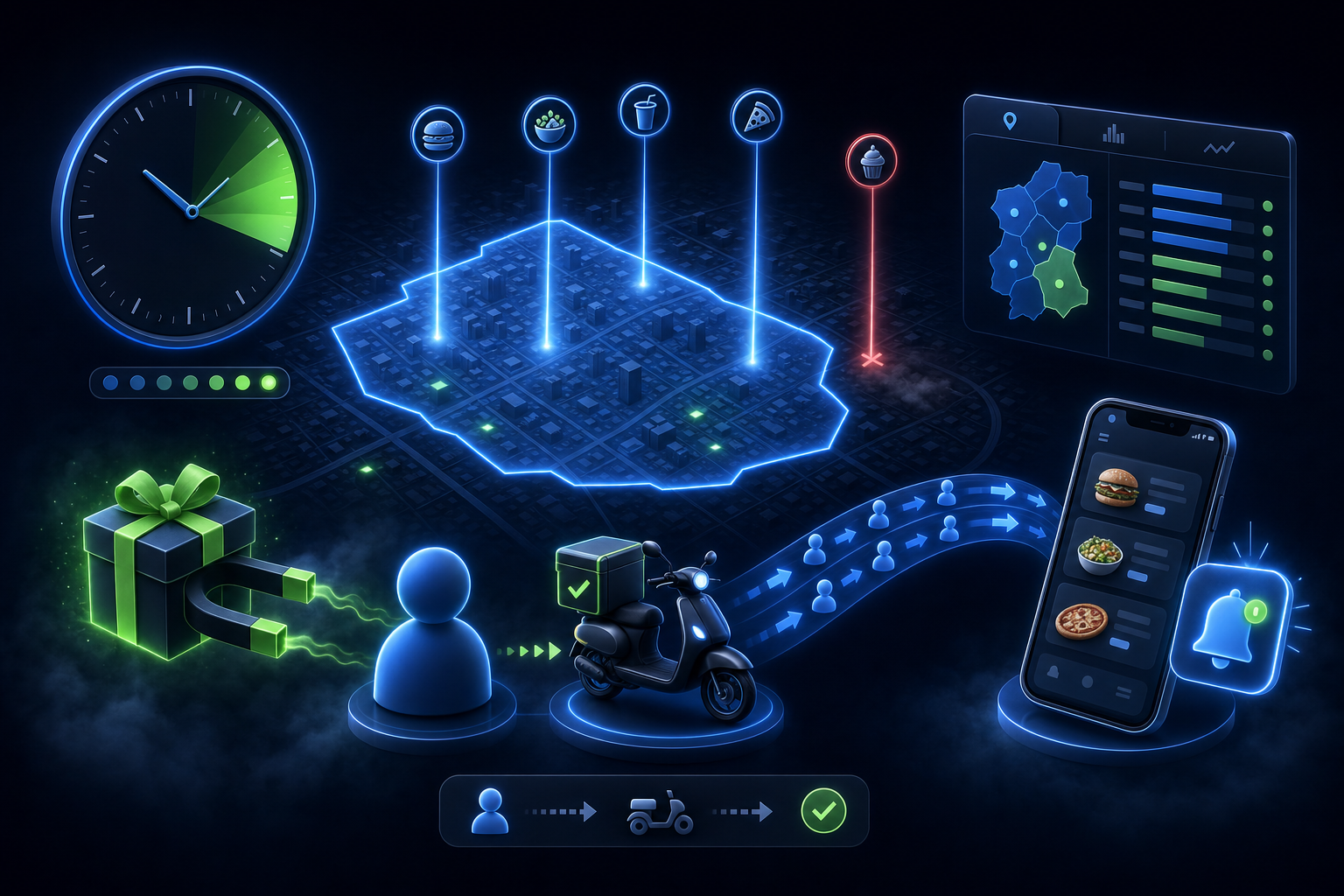
Goals we set for the website
- 3-5 days
- to first orders
- 0
- budget beyond the delivery zones
- LTV
- economics instead of one-off margin
Sound familiar?
Ads pour clicks from districts you don't deliver to — the budget feeds the map, not the kitchen
Campaigns spin at night with the kitchen closed: the click exists, ordering doesn't
First-order acquisition cost scares — while nobody has computed the customer's LTV
Aggregators outbid even brand queries: people search for you — and order through them
Food Delivery Advertising
What's included
Zones as targeting
Delivery-zone polygons inside campaign settings: the budget works only where the courier rides
Hours & peaks
Start at kitchen opening, boosts at lunch and Friday night, stop at the last order
The first-order offer
A discount or gift magnet: the first order is bought at a loss, LTV makes the profit
The brand shield
Intercepting brand queries from aggregators: they searched you — they ordered from you, fee-free
The app bridge
Retargeting drives the install: the customer moves into the free-push channel
CPO analytics
Order cost and revenue by zone and hour — you see which districts feed the kitchen
How the project runs
How the project runs
- 3-5 days
Audit & media plan
Niche, competitors, unit economics — a cost-per-lead forecast before launch
- 2-4 days
Analytics first
Goals, call tracking, a CRM link — we count before we spend
- 3-7 days
Campaign launch
Structure, ads, landing pages — first leads within the first week
- weekly
Optimization & growth
Query and placement cleanup, bid tests — cost per lead falls systematically
Delivery advertising lives by zones and hours — or doesn’t live at all
Delivery has two hard constraints regular advertising ignores. The zones’ geography and the kitchen’s hours. A click from a district the courier doesn’t reach is a pure burn. A 3 am click at a closed kitchen is too. Our circuit is built from these constraints. Delivery zone polygons in the campaign settings. A schedule from opening to the last order. A boost in the demand peaks. In the sushi delivery owner’s review, closing the geo leak alone gave +40% orders on the same budget.
The peaks: lunch, Friday evening and rain
Delivery demand is wavy and predictable. The lunch window, the evenings, the weekends. And the weather spikes, when the city doesn’t want to go out. Campaigns get managed by that rhythm. Bid adjustments by hour and day. Reinforcement in the peaks: yes, the bids there are higher, but conversion is several times higher, and peak CPO falls. Standby campaigns for the off-peak. Delivery advertising is schedule management no less than bid management.
The first order is an LTV purchase, not a one-off deal
The niche’s main mental barrier: an-order-at-that-acquisition-price-is-unprofitable. True, if the client comes once. But a delivery client returns. LTV runs 4-8 times the first check, and the economics change. The first order can be bought at zero or a loss with a generous magnet offer: free-rolls-with-your-first-order. In the dark kitchen founder’s review, that arithmetic — returns six times — turned a scary offer into the main growth tool.
The bridge into the app and the brand shield
Retention isn’t advertising’s job. Paid retargeting gets pricier, app pushes are free. So the ads build a bridge. A client who tried gets led by retargeting to installing the app and then lives in a channel with a zero touch cost. Our app case: 55% of orders, +38% repeats. The brand shield works in parallel. Aggregators buy up even the queries with your name. A brand campaign returns those orders to you, without the middleman’s commission.
The zone report and the full circuit
CPO and revenue get counted by zone, channel and hour. It’s visible which districts feed the kitchen and which should be closed or revised. The delivery stack assembles whole with one vendor. The site with the cart. The app with pushes. Hungry-demand SEO — the neighboring niche, with the cuisine-by-district matrix. And the ads. Four channels under one analytics, cases for two of them in the trio below.
Related case study
Client reviews
Client reviews
The audit showed the hole the budget had leaked into for a year. A third of clicks came from districts outside the delivery zone. Zone polygons in the campaigns closed the leak. The same sum started bringing 40% more orders.
A kitchen-based schedule sounds obvious, but none of the vendors did it: ads spun at night at a closed kitchen. Plus a boost in rain and on Friday evenings. CPO in the peaks fell even though the bids there are higher.
Counting the first order at a loss was scary until we computed the LTV: a client returns six times on average. Now the magnet offer is the main growth tool. And retargeting leads newcomers to installing the app, where they're ours forever.
Related solutions
Related solutions
Google Ads Setup and Management
A demand-driven structure, analytics before launch and weekly cleanup. Search ads counted in leads and money, not clicks.
International PPC Management
Search, PMax and YouTube for your geos. Campaigns in the audience's language, honest conversions and per-market lead reports.
Meta Ads Management: Instagram & Facebook
Lookalike and engagement segments, two-tap lead forms and a creative pipeline. Meta ads counted in leads and deals, not reach.
FAQ
FAQ about paid advertising
01How much does food delivery advertising cost?
Management from $800 a month, the geo circuit and offer setup is included in the first month. The budget from $900-1,500 depending on the city and the zones. A CPO forecast for your zones is free after the audit.
02Which channels work for delivery?
A stack. Search on hot delivery-plus-cuisine-plus-district demand. Social geo targeting by zone polygons. Maps. The roles differ: search reaps the ready, targeting builds recognition in the zone and hands out the first-order offer. The proportions get computed from your unit economics.
03What's the LTV economics and the first-order promo?
A delivery client returns. LTV runs 4-8 times the first check, and the economics change. The first order can be bought at zero or a loss: a generous magnet offer removes the try-someone-new barrier. Retention then does the work — app pushes and repeat orders make the economics. Without a computed LTV this mechanic scares. We compute it together at the audit.
04How do the ads get along with our app?
Retargeting leads those who tried to the install. In the app the client is cheaper forever: pushes are free against paid retargeting. We build delivery apps too, the case runs 55% of orders in the app. The ads and the product get built as one circuit.
05Aggregators eat our brand queries — what do we do?
A brand shield campaign. For queries with your name, you show up with a direct-order offer. A brand click is cheap, and every intercepted order saves the aggregator's commission. Plus SEO brand protection, our neighboring service, where the same gets solved with free traffic.
Let’s discuss your project
Free estimate and a proposed solution within one day.