
Restaurant POS Integration
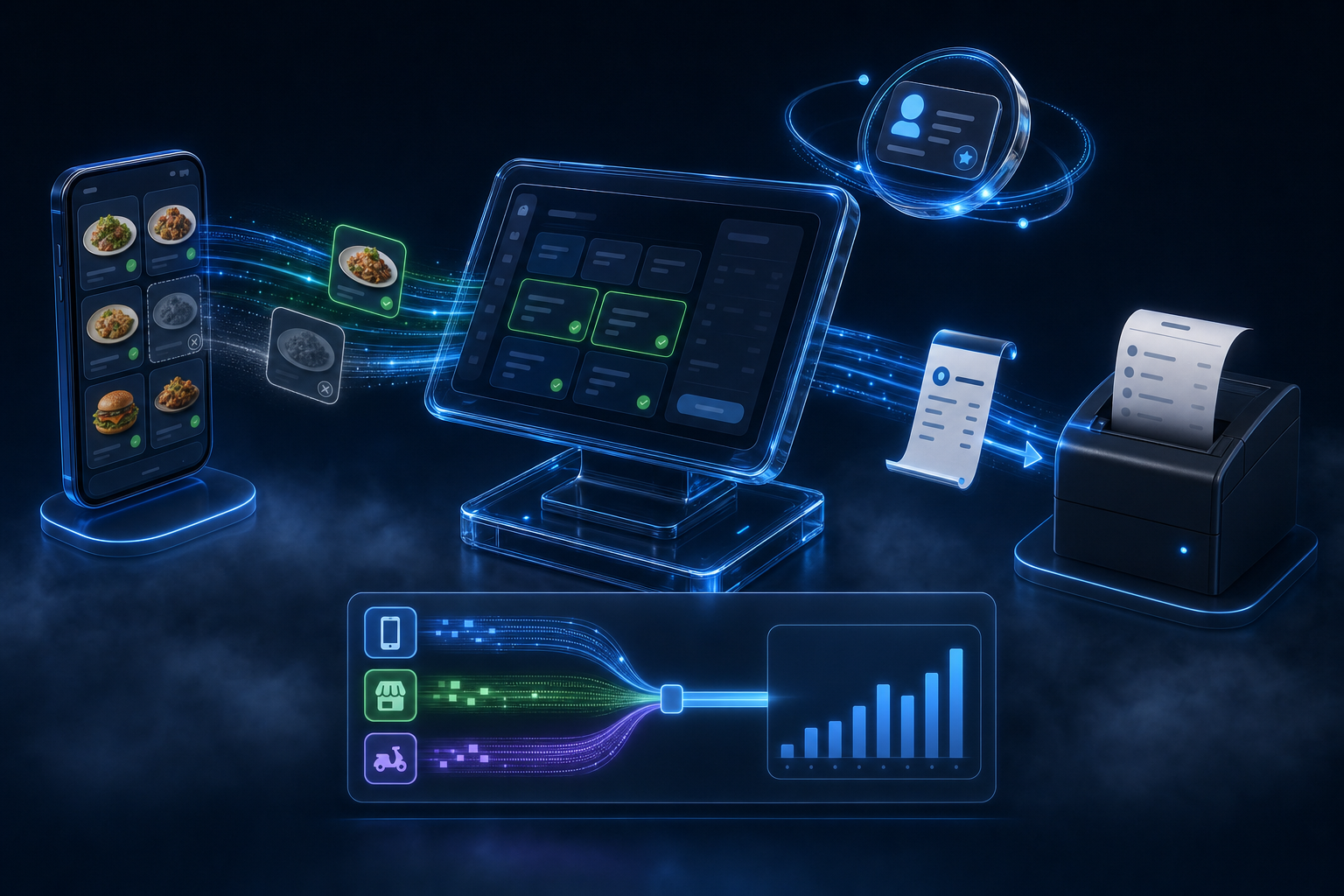
The menu and stop-lists update themselves, orders land in the POS, receipts enrich guest profiles. A POS integration that stitches the restaurant into one circuit.
Goals we set for the website
- 0
- orders retyped by hand
- 100%
- menu and stop-list accuracy
- 4-8 weeks
- to the link's launch
Sound familiar?
The site's menu lives apart from the POS: stale prices, a dead stop-list, guests ordering what's gone
Site and aggregator orders get retyped into the POS by hand: item errors, orders lost at rush hour
Receipts aren't tied to guests: loyalty and the CRM live without data, marketing shoots blind
Channel reports don't reconcile: the site, the floor and the aggregators count in three places differently
Restaurant POS Integration
What's included
Menu sync
The storefront lives off the POS: prices, contents, modifiers, photos — without double upkeep
Live stop-list
An item ran out — the card hid within seconds: the guest won't order what's gone
Direct orders
A site order lands in the POS and the kitchen without an operator: rush hour stops losing orders
Statuses to the guest
Cooking, handed to the courier, delivered: notifications without calls to the venue
Loyalty
The POS computes the guest's points and discounts, profiles enrich with receipts: the CRM runs on live data
Unified analytics
Sales channels merge into one picture: it's visible what feeds you and what commissions eat
How the project runs
How the project runs
- 1-2 weeks
Systems analysis
Studying configurations, both APIs, data structures and exchange scenarios
- 1-2 weeks
Exchange design
Data mapping, sync directions and schedule, conflict handling
- 2-6 weeks
Build & testing
Connectors, queues with retries, runs on both systems' staging circuits
- ongoing
Launch & monitoring
Production launch, error alerts, support through system updates
A restaurant with delivery lives in two worlds — until the POS and the site are stitched
The kitchen and the floor live in the POS. Orders come from the site, the app and the aggregators. While the worlds aren’t stitched, a translator-operator works between them: retypes orders by hand, loses them at rush hour, can’t keep up with the stop-list. The integration removes the translator. The menu flows from the POS to the storefront, orders fall from the storefront into the POS, statuses fly to the guest. In our delivery chain case, lost orders fell from three-four a night to zero.
The menu and stops: the storefront stops lying
Double menu upkeep — the site separately, the POS separately — guarantees divergence: stale prices, forgotten items, dead stop-lists. The integration makes the POS the single source of truth. Dishes, prices, modifiers and photos go to the storefront themselves. The stop-list works in real time: ran out in the kitchen — vanished from the site within seconds. In the restaurant manager’s review, that removed the most painful conflicts: the guest no longer orders what’s gone.
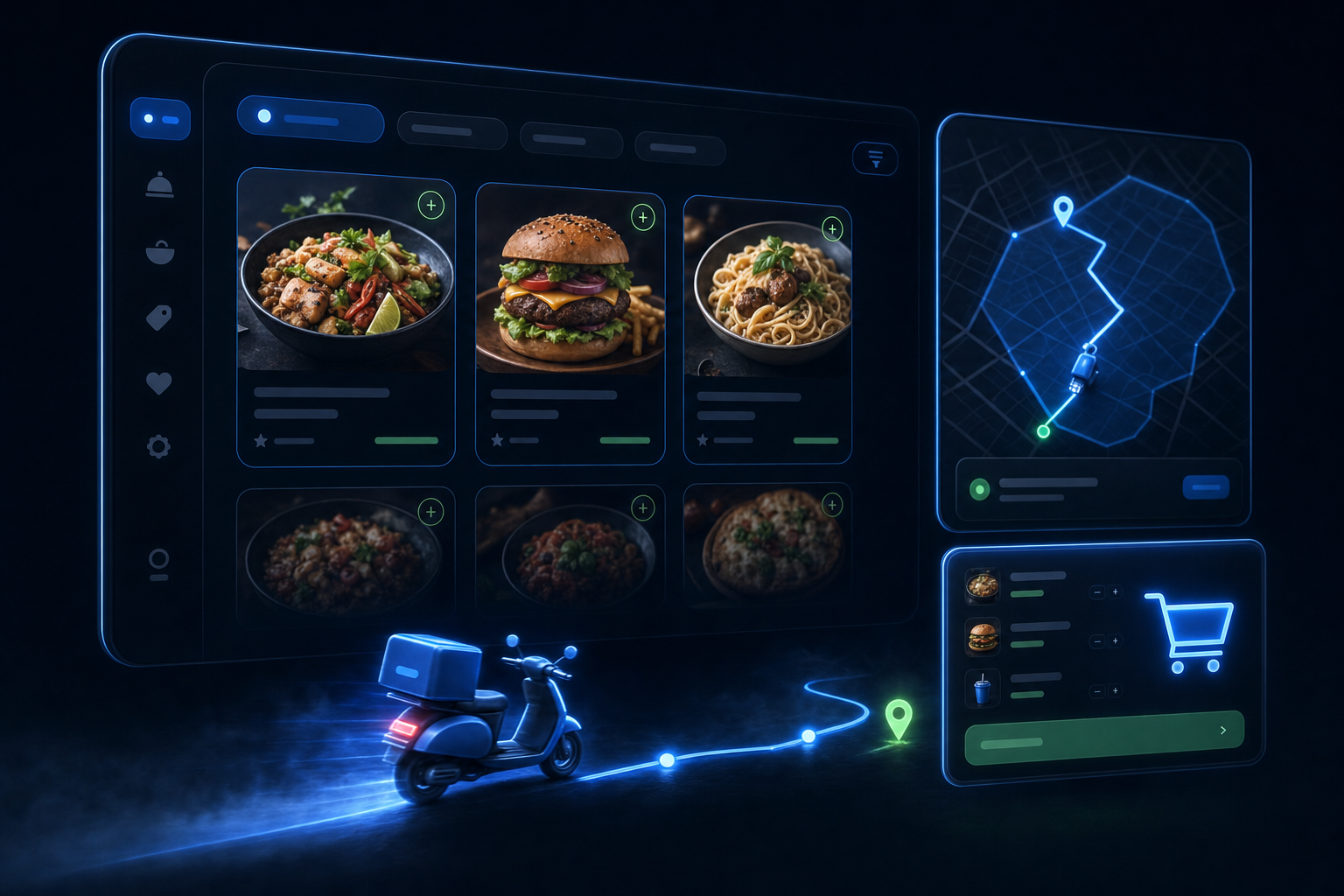
Direct orders: rush hour stops losing money
An operator retyping site orders into the POS is a bottleneck that tears exactly at rush hour, when orders peak. The direct integration removes the link: a site or app order lands in the POS and the kitchen automatically, with modifiers and comments. Statuses return to the guest as notifications: cooking, courier on the way. The where-is-my-order calls melt, and the operator does service instead of data entry.
Loyalty and guests: receipts enrich the profiles
Restaurant loyalty’s correct architecture is POS-side calculation: points and discounts work identically on the floor and in delivery. The integration ties receipts to guests, and the profiles fill with live data: favorite dishes, frequency, the average check. The CRM and campaigns start working on facts. The link with the hospitality CRM — our neighboring niche — gets designed as one: the POS computes, the CRM brings guests back.
Channel reconciliation and the place in the stack
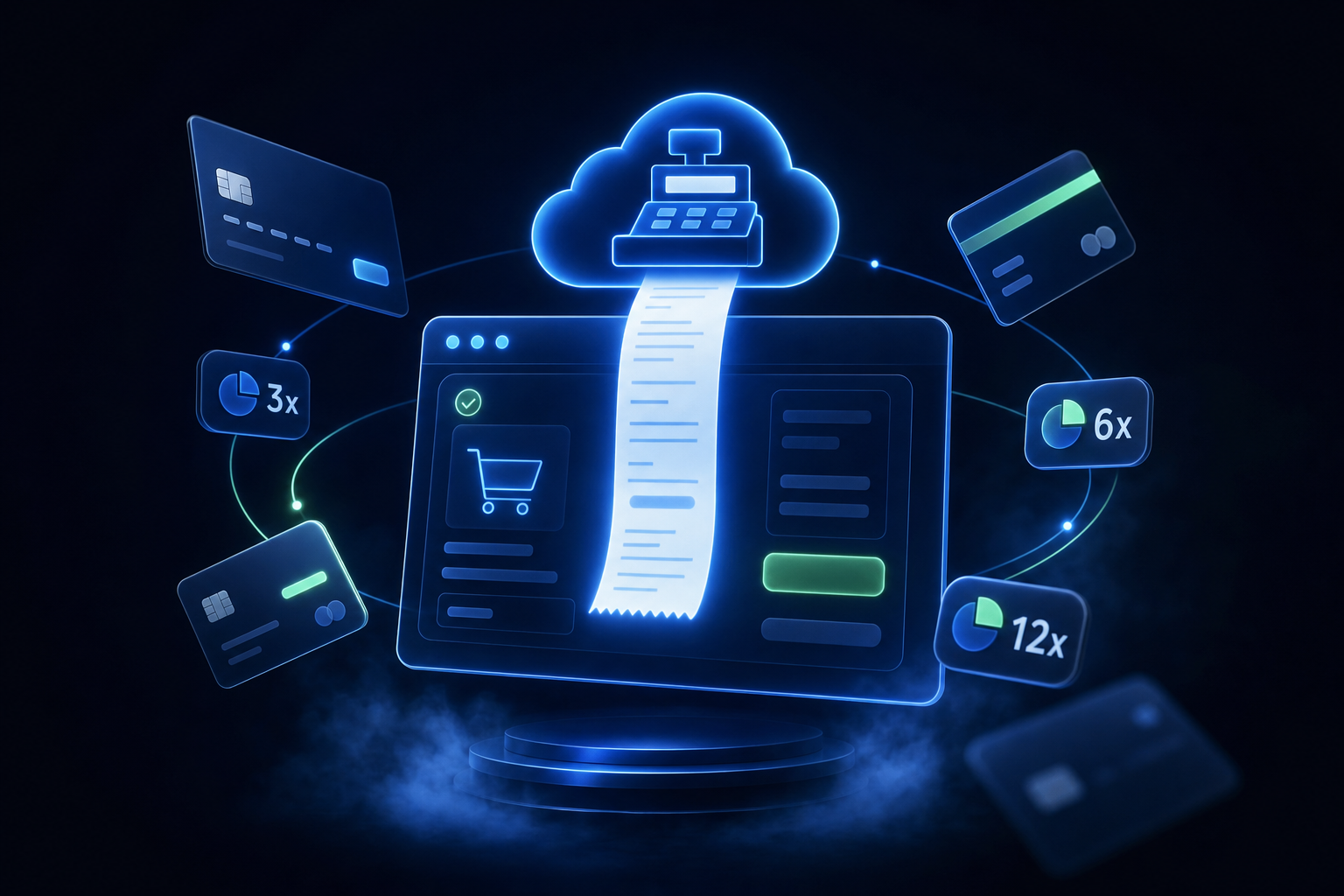
When floor, site and aggregator sales merge into one picture, the channels’ economics becomes visible. In the restaurant group director’s review, the reconciliation showed two aggregators eating the whole margin in commissions — priorities got rebuilt toward the own site, and profit grew without turnover growth. Nearby sits the whole restaurant stack: the delivery website — the case in the trio, the payment circuit with receipts, the guest CRM. The link assembles with one vendor.
Related case study
Client reviews
Client reviews
Before the integration an operator retyped site orders into the POS and lost three-four a night at rush hour. Now orders land straight in the kitchen, zero lost. The operator switched to service quality instead of data entry.
The real-time stop-list removed the most painful conflicts. A guest used to order an item that was gone and learn about it by a call twenty minutes later. Now it runs out in the kitchen — and vanishes from the site within seconds.
Channel reconciliation opened our eyes on the aggregators. When floor, site and platform sales lay in one picture, it showed: two aggregators ate the whole margin in commissions. We rebuilt priorities toward our own site, profit grew without turnover growth.
Related solutions
Related solutions
CRM Platform Integration
Every lead into the pipeline with its source and no duplicates. The site, calls, messengers and the ERP in one circuit around your CRM.
Bitrix24 Integration
Assembling the portal for the company's processes. Lead channels, the ERP, smart processes and the deal-to-project link — Bitrix24 starts working.
Marketplace Integration
Stock without fines, FBS by process and to-the-cent financial reconciliation. A marketplace integration where the system controls the deadlines.
FAQ
FAQ about integrations
01How much does a restaurant POS integration cost?
The basic link — the menu, stops, orders, statuses — from $3,000 in 4-8 weeks. Loyalty, the CRM and channel reconciliation get priced by scope. The quote follows a free review of your configuration.
02Which POS systems and versions do you work with?
The major restaurant POS platforms, cloud and on-premise, through their official APIs and connectors. Plus links with delivery aggregators, CRMs and loyalty. The configuration and version get clarified at the review, and the exchange mechanics gets chosen for them.
03What happens to an order if the POS or network fails?
The order doesn't get lost. The architecture runs on queues: the site keeps taking orders and payments, the accumulated ones arrive in the POS after recovery, in order. A critical failure comes as an alert to us and you. Losing an order is excluded by construction — the niche's main requirement.
04Can loyalty be tied to the POS?
Yes, that's the correct architecture: the POS computes points and discounts so the floor and delivery live by the same rules. Guest profiles enrich with receipts, and the CRM gets live data for segments and campaigns. The hospitality CRM is our neighboring niche — the link gets designed as one.
05Does the menu really update itself?
Yes. Dishes, prices, modifiers and photos get maintained in the POS once and go to the storefront automatically. Stop-lists sync in real time: an item ran out — the card hid. Double menu upkeep disappears along with its divergences.
Let’s discuss your project
Free estimate and a proposed solution within one day.