
Payment Gateway Integration
Payment, receipts, statuses in the books and refunds as one system. Plus recurring charges, holds and instant payments for your business model.
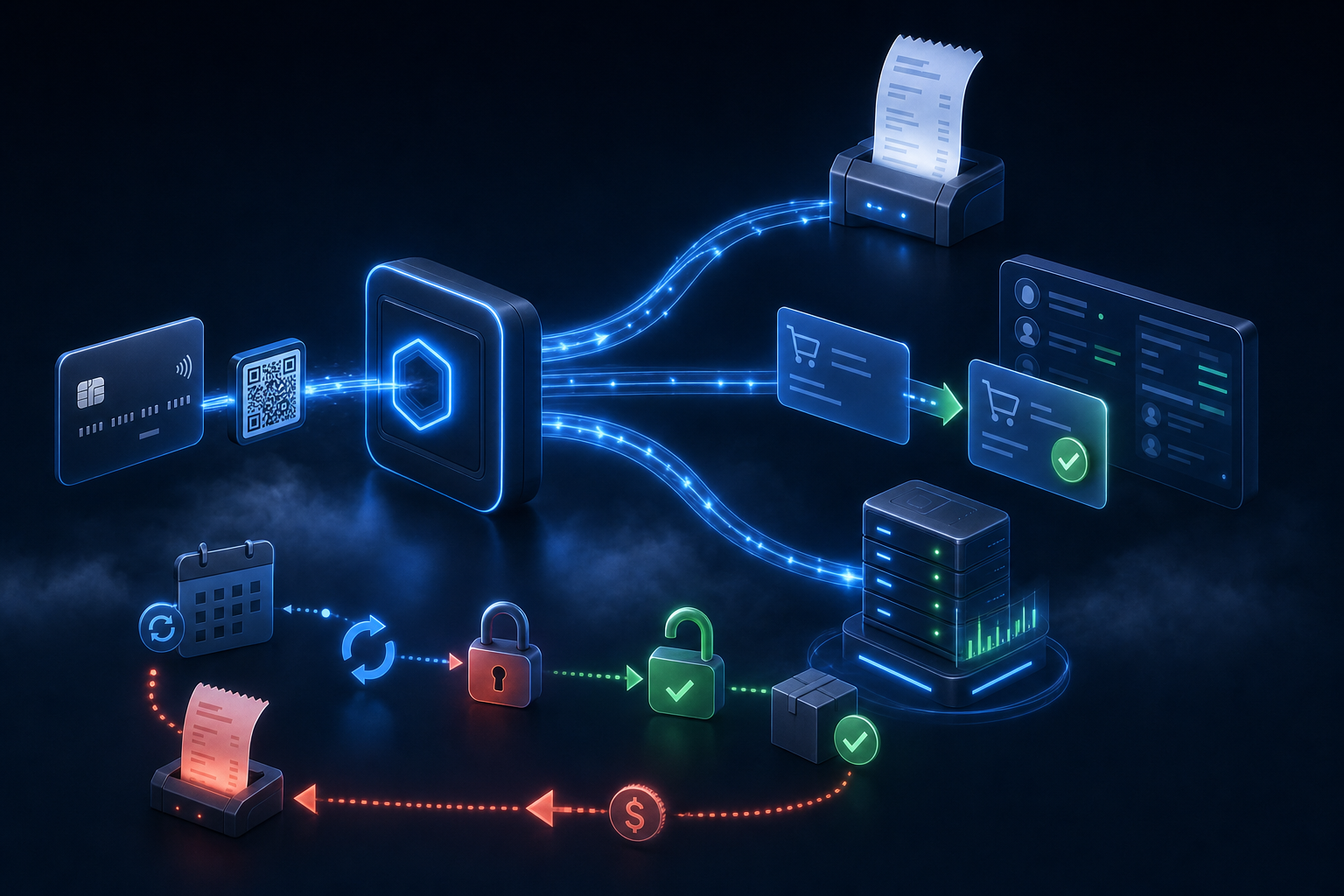
Goals we set for the website
- 100%
- of payments with an automatic receipt
- 0
- manual statement reconciliations
- 2-4 wks
- to the full payment circuit
Sound familiar?
The "pay button" exists, but fiscal receipts are issued by hand — accounting sits on a powder keg
The payment went through, yet the CRM order hangs "unpaid": managers reconcile statements by eye
A subscription model without recurring billing: clients pay manually and forget — churn out of thin air
Instant transfers cost half the acquiring fee, but "nobody got around to it"
Payment Gateway Integration
What's included
Payment methods
Acquiring, instant transfers, payment links and invoices — chosen by fees and audience
The fiscal circuit
A receipt fires itself on every payment and refund — accounting sleeps well
Statuses in the books
Gateway webhooks → CRM and ERP: the order turns "paid" without statement checks
Recurring
Subscriptions and renewals: card binding, retry strategies for failed charges, a management panel
Holds
Pre-authorization for bookings and services: a card guarantee, capture upon delivery
Refunds
Full and partial from the admin panel: the refund receipt, the ledger status, money back by the book
How the project runs
How the project runs
- 1-2 weeks
Systems analysis
Studying configurations, both APIs, data structures and exchange scenarios
- 1-2 weeks
Exchange design
Data mapping, sync directions and schedule, conflict handling
- 2-6 weeks
Build & testing
Connectors, queues with retries, runs on both systems' staging circuits
- ongoing
Launch & monitoring
Production launch, error alerts, support through system updates
A payment is a circuit, not a button
Connect-the-payment sounds like a day’s task. Until the full list unfolds. Fiscal receipts for every operation. Statuses in the CRM and the ERP. Refunds with fiscal documents. Failed charges, holds. Stores with a pay button live in manual chaos: an administrator issues receipts in the evenings, managers reconcile statements, accounting prays. We build the circuit whole. Money, fiscalization, the books and refunds work as one system.
Fiscal receipts: the zone where manual work equals fines
Every online payment requires a fiscal receipt. For a prepayment, an offset, a refund, with the correct settlement attributes. Manually that doesn’t scale and sooner or later ends in a fine. In the school owner’s review — “nearly caught one”. Our circuit: the online cash register and the fiscal operator are built into the chain, the receipt goes out automatically for every operation, partial refunds included. Accounting gets order instead of a powder keg.
Statuses in the books: the end of statement reconciliation
The payment went through, but the order in the CRM says unpaid, and the manager hunts the payment in the statement. Webhooks close the gap. The payment system reports the event instantly. The order’s status changes in the CRM and the ERP by itself. Shipping and delivery start without a human. Eyeball statement reconciliation disappears as a process. Along with the shipped-the-unpaid mistakes.
Recurring, holds, instant payments: scenarios for the business model
Payment logic must mirror business logic. Subscription models get recurring charges. Auto-charges, retries of the failed, a management account — the forgot-to-pay churn disappears, the online school’s review is exactly about that. Bookings and rentals get holds. The card guarantees, the charge happens on the fact: changed-my-mind-last-minute stops being your problem. And nearly everyone gets instant payments. A commission half the card acquiring’s, connection within days. The out-of-thin-air savings from the store’s review.
Refunds and the place in the stack
Refunds are part of the circuit, not a force majeure. Full or partial from the admin panel, an automatic refund receipt, the status in the books, the money to the client by the provider’s regulation. The circuit is one for all storefronts. The site, the app and payment links hit one backend. Adjacent solutions sit nearby. The ERP sync, the case in the trio. Online stores and apps with payment. The payment infrastructure joins one vendor’s shared stack.
Related case study
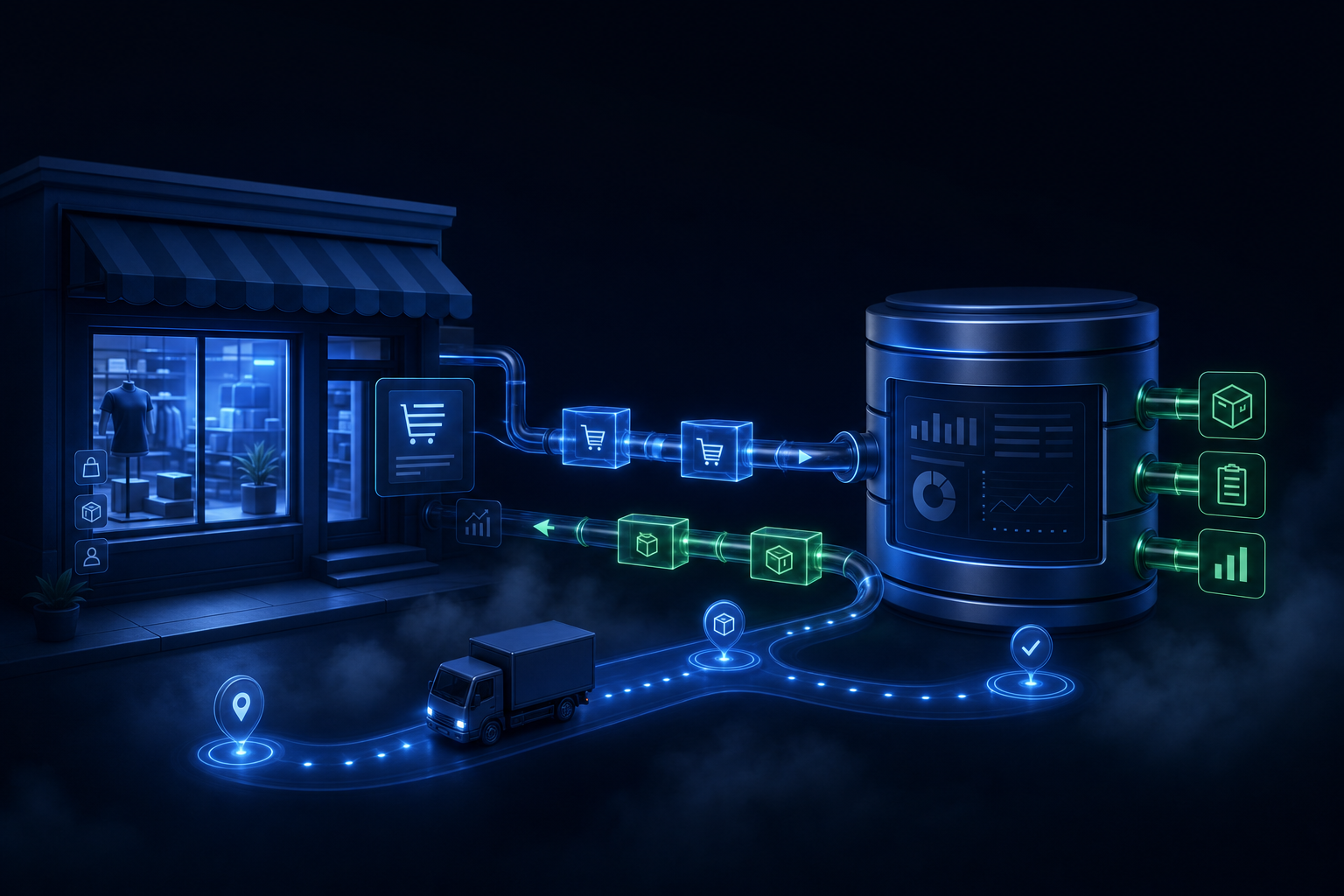

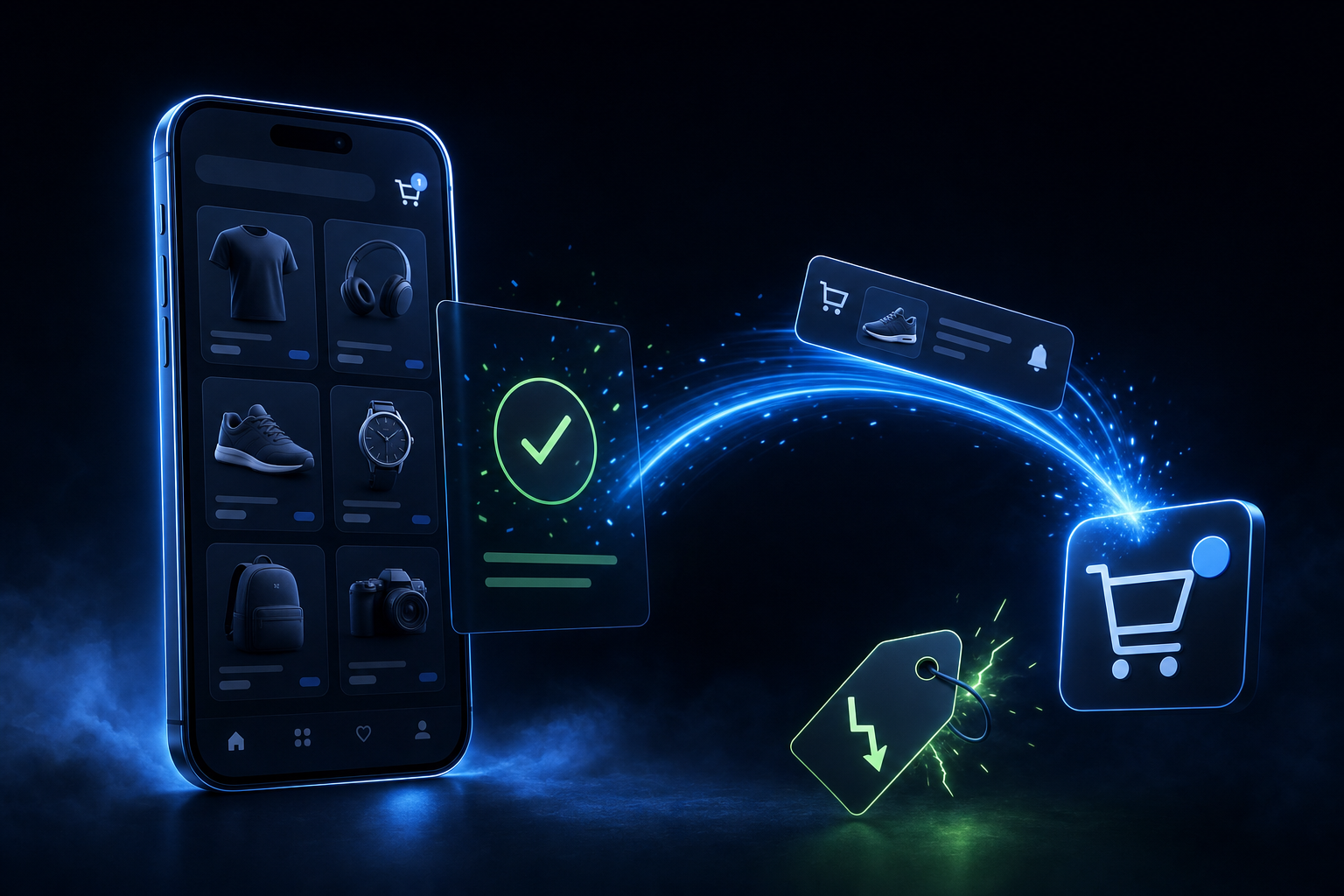
Client reviews
Client reviews
Recurring charges changed the economics. The subscription charges itself, failed payments get retried, the forgot-to-pay churn vanished. Plus the receipts finally go out automatically. Before, an administrator issued them in the evenings, and once we nearly caught a fine.
Instant payments got connected within a week, and a third of buyers moved to them on their own. For us that's a commission half the card acquiring's. Real monthly savings out of thin air.
Holds closed the rental's eternal hole. The card guarantees the booking, the charge happens on the fact. No-shows and changed-my-mind-last-minute stopped being our problem. The payment logic now mirrors the business logic.
Related solutions
Related solutions
CRM Platform Integration
Every lead into the pipeline with its source and no duplicates. The site, calls, messengers and the ERP in one circuit around your CRM.
Bitrix24 Integration
Assembling the portal for the company's processes. Lead channels, the ERP, smart processes and the deal-to-project link — Bitrix24 starts working.
Marketplace Integration
Stock without fines, FBS by process and to-the-cent financial reconciliation. A marketplace integration where the system controls the deadlines.
FAQ
FAQ about integrations
01How much does payment integration cost?
The basic circuit — payment + fiscal receipts + statuses in the CRM — from $2,500 in 2-4 weeks. Recurring charges, holds and split scenarios add to the quote. The audit of the current setup and the estimate are free.
02Which payment provider should we choose?
We compute it for you. Commissions on your volumes, support of the needed scenarios — recurring, holds, instant payments, — payout reliability. The pair often wins: card acquiring plus instant payments in parallel. The buyer chooses, you save on the lower commission.
03What about fiscal receipts and compliance?
We close it fully. An online cash register, cloud or yours, the fiscal operator, an automatic receipt for every payment, prepayment and refund, with the correct settlement attributes. Manual issuing and the fine risk leave the process.
04How do recurring payments work?
The client links a card at the first payment, then charges run on schedule. Subscriptions, installments, auto-renewals. Failed payments get retried by a strategy, the client manages the subscription in their account. For subscription models that's the difference between growth and the churn of the forgetful.
05Payment in the app and on the site — one circuit?
Yes, we build a single one. The site, the app and payment links hit one backend. Receipts, statuses and refunds get processed identically. If we build the app — the neighboring service — the circuit is laid shared from day one.
Let’s discuss your project
Free estimate and a proposed solution within one day.