
Android App Development
Kotlin where the platform matters, and stability across the whole device zoo. Android development with publication to Google Play and alternative stores.
Goals we set for the website
- 99.5%
- crash-free sessions across the zoo
- 2 stores
- from the release day
- 10-16 weeks
- to the release
Sound familiar?
The app crashes on half the devices: the Android zoo tested on-the-developer's-phone
Everything lags on budget phones: the audience is mass-market, the optimization is flagship-only
Publication stalls: Google Play policies broken, the account under blocking risk
Alternative stores ignored: part of the audience left without the app
Android App Development
What's included
Native or cross
Kotlin where platform depth and hardware matter, Flutter where both platforms share the logic. We compute
The zoo under control
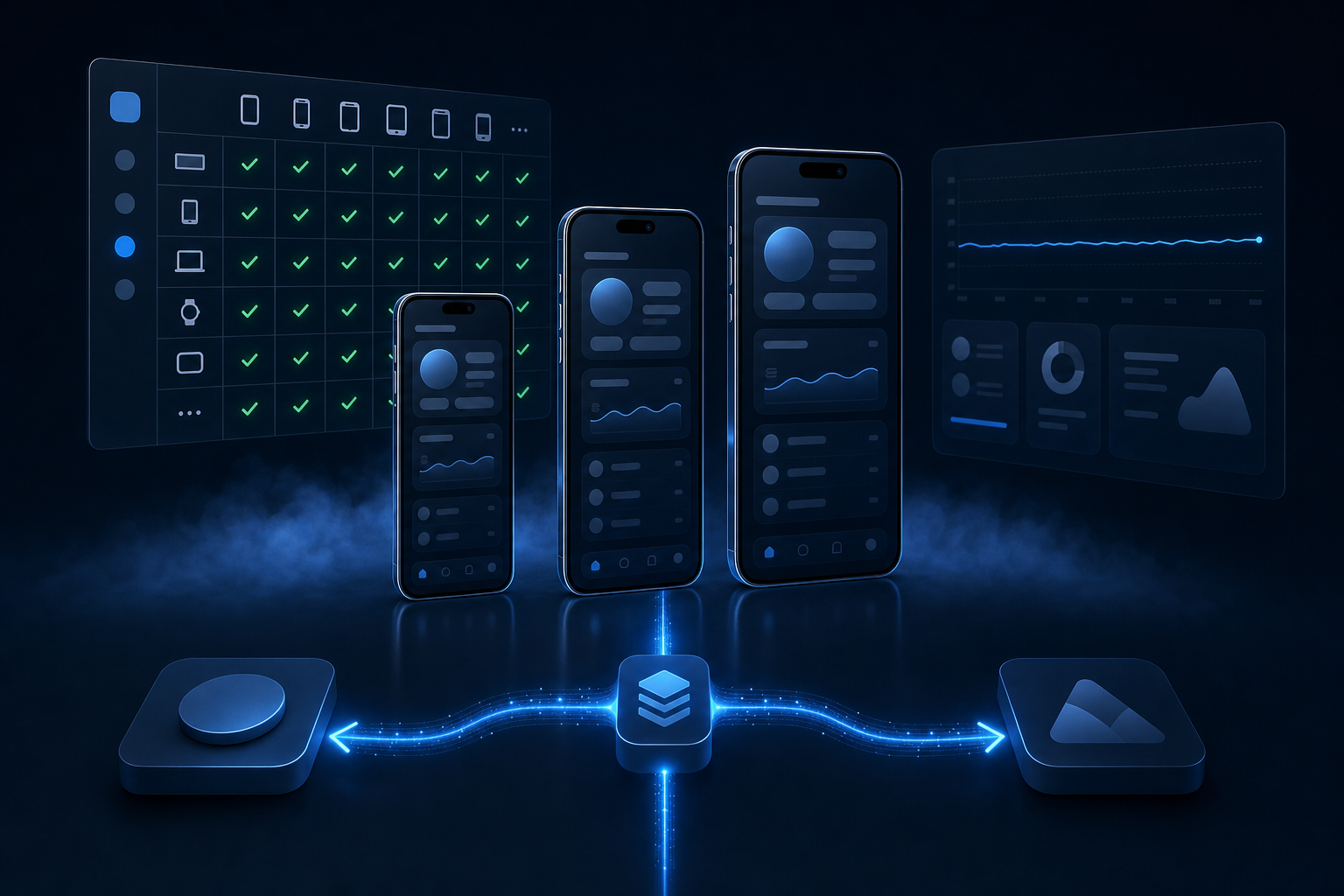
A matrix of real devices and versions: the app works for the audience, not just the developer
Fast on budget phones
Memory and render profiling: Android's mass segment gets smoothness, not a slideshow
Material design
Native Android patterns: navigation, gestures, adaptivity across screen sizes
Two stores
Google Play and the alternative store from one build: both policies closed by checklists before submission
Life after release
Per-device crash monitoring, Android betas in advance, SLA updates
How the project runs
How the project runs
- 1-2 weeks
Discovery & prototype
User flows, a clickable prototype, an estimate and release plan
- 2-3 weeks
UI design
Screens per iOS and Android guidelines, the app design system
- 6-14 weeks
Build & testing
Sprints with demo builds every two weeks; backend and integrations in parallel
- ongoing
Release & growth
App Store and Google Play publication, monitoring, metric-driven updates
Android is scale and a zoo: whoever works for everyone wins
Android gives the widest audience reach and the most motley reality: thousands of models, a decade of system versions, gigabyte-memory budget phones beside flagships. An app tested on-the-developer’s-phone crashes for a third of users and collects one-star ratings. We develop for the real fleet: a device matrix, profiling for weak hardware, per-model crash monitoring. In our marketplace case, the rating grew from 3.2 to 4.6 — on reliability alone.
Native Kotlin or cross: computation instead of religion
The technology choice is an economic decision. Native Kotlin with Jetpack Compose wins where platform depth matters: background services, hardware work, specific integrations. Cross-platform wins where both platforms share the logic and the budget is bounded. We compute both options for your task and speak honestly, even when the cheaper option is the right one. A vendor selling nativeness to everyone sells hours, not solutions.
Fast on budget phones: smoothness as a retention feature
A flagship forgives everything, a budget phone — nothing. Memory and render profiling, adaptive animations, a light cold start — the mass segment gets a smooth app, not a slideshow. In the retail product manager’s review, weak-device optimization gave more retention than any new function: time in the app grew by a third. The audience votes with a finger: it lags — they delete.
Two stores: distribution without double work
Distribution’s reality changed: part of the audience lives in alternative stores. We publish to Google Play and the regional store from one build: both policies run on checklists, metadata and updates stay in sync, push and payments configured for each store’s constraints. In the delivery CTO’s review — a year of weekly releases without a single block. The developer account is an asset, and we treat it accordingly.
Support, monitoring and the place in the stack
The Android fleet updates non-stop: new system versions, new devices, new store policies. SLA support keeps the app alive: per-model crash monitoring, Android betas in advance, updates without fires. Nearby sits the mobile stack: an iOS version from the same codebase with cross-platform, the backend, integrations with your systems. The mobile product cases are in the trio below — from delivery to field teams.
Related case study

Client reviews
Client reviews
The previous app crashed on every third budget phone — and that's exactly our audience. After the rework, crashes sit below half a percent across the whole device matrix. The store rating grew from 3.2 to 4.6 in a quarter.
Optimization for weak devices turned out the main feature. Our shoppers are the mass segment, and smoothness on a budget phone gave more retention than any new function. Time in the app grew by a third.
Publishing to two stores from one build saved us an eternal headache. Both stores update in sync, both policies run on a checklist. Not a single block in a year — at weekly releases.
Related solutions
Related solutions
Food Delivery App Development
A client app plus a courier circuit. A one-minute order, map tracking and pushes instead of retargeting. Your own channel instead of aggregator commissions.
Beauty Salon App Development
A two-tap booking with a specific stylist, pushes against no-shows and points instead of a stamped card. A salon app that brings clients back.
E-commerce Mobile App Development
One-tap checkout, pushes instead of expensive retargeting and the catalog from the same ERP. The app as the repeat-purchase channel.
FAQ
FAQ about mobile development
01How much does Android app development cost?
From $11,000, released in 10-16 weeks. The total depends on the complexity and the technology choice: native Kotlin or cross-platform when an iOS version is also needed. We'll compute both options honestly at the briefing. The quote is free.
02How do you solve the device zoo problem?
With a matrix: real devices from budget models to flagships, the key Android versions, different resolutions. Tests run on the matrix, not the developer's phone. Plus per-model crash monitoring after the release: degradation on a specific line shows at once.
03Why does budget device optimization matter?
Because Android's mass segment is budget phones, and often that's exactly where your audience lives. We profile memory and rendering, trim heavy animations on weak hardware, optimize the cold start. In the case above, smoothness on budget phones gave more retention than new features.
04Do you publish to alternative stores?
Yes, Google Play plus the regional alternative store from one build is our release standard, with other stores on request. The stores' policies differ, and we run both on checklists. Push and payments get configured for each store's constraints.
05What about support after the release?
SLA support: per-device crash monitoring, compatibility with new Android versions — we test the betas in advance — and feature development. The Android fleet changes constantly, and an unsupported app degrades within a year. We stay close.
Let’s discuss your project
Free estimate and a proposed solution within one day.