
Food Delivery App Development
A client app plus a courier circuit. A one-minute order, map tracking and pushes instead of retargeting. Your own channel instead of aggregator commissions.
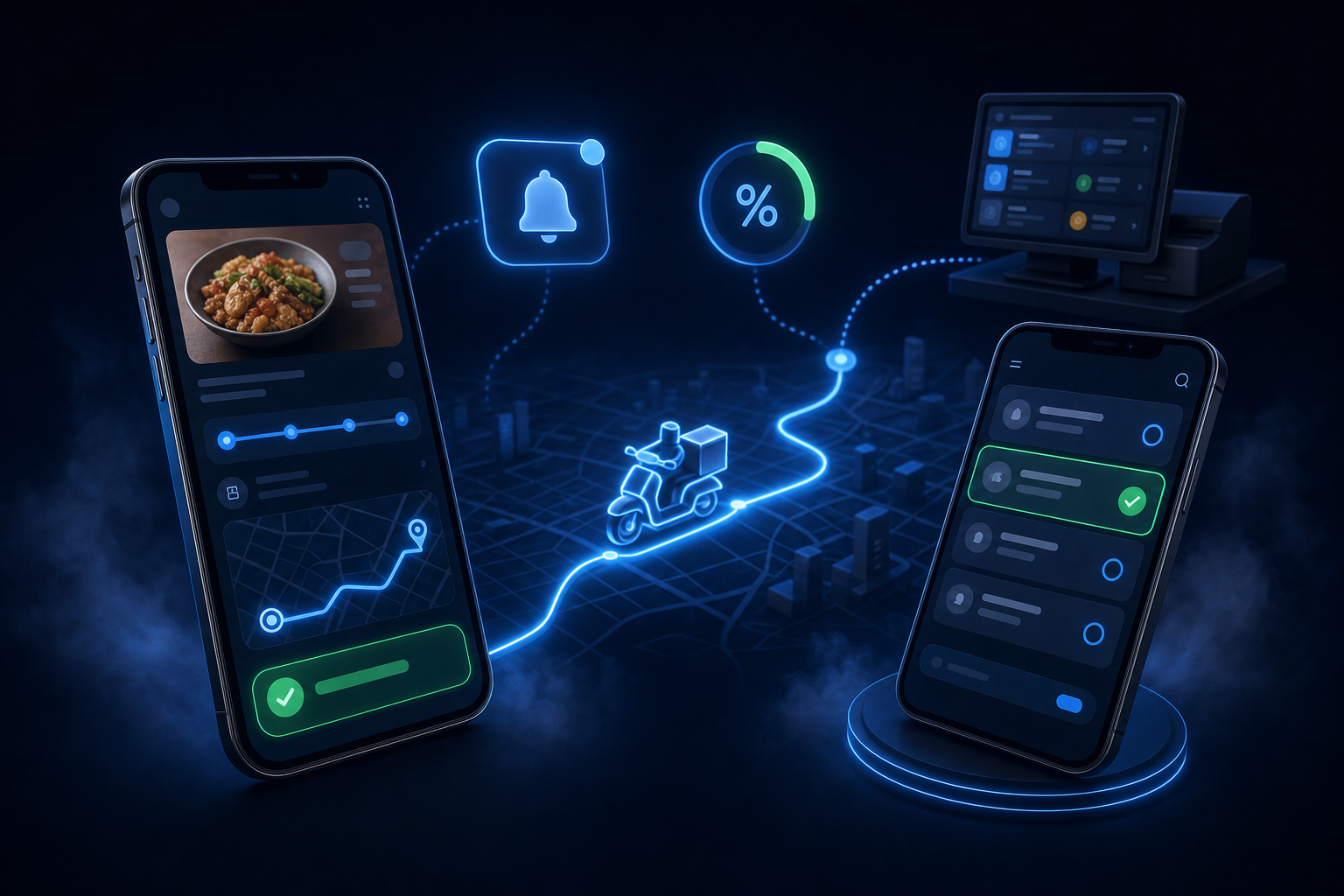
Goals we set for the website
- 50%+
- orders via the app
- +30-40%
- repeat orders
- $0
- fees per in-app order
Sound familiar?
Loyal customers order through aggregators — with fees and competitors' promos one screen away
A website can't match the habit: people order food from an app, in two taps
Winning a customer back costs as much as acquiring one: retargeting rises, audiences burn out
Couriers run on phone calls and chats: dispatch can't see who's where, clients call asking "where's my order"
Food Delivery App Development
What's included
Storefront & cart
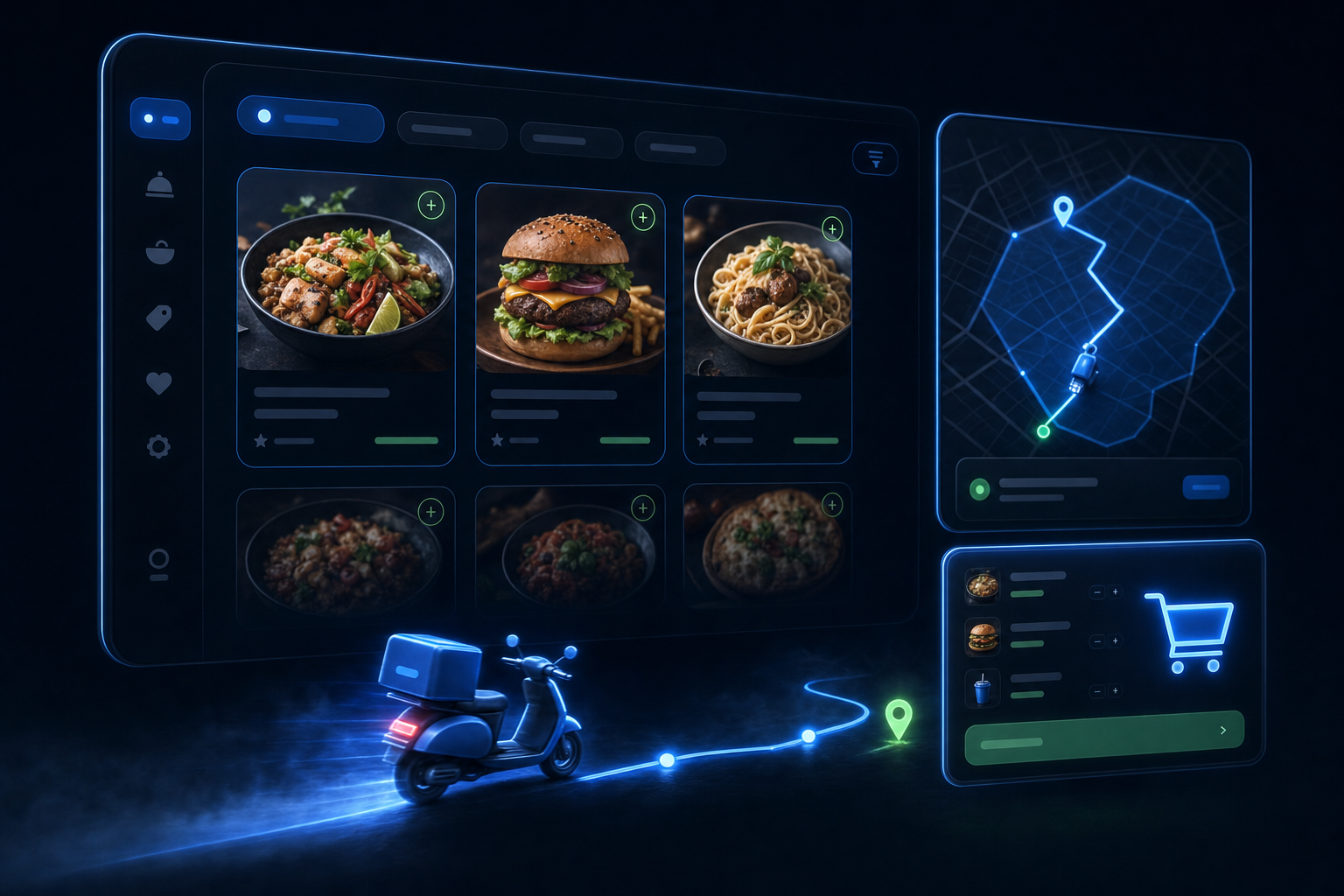
A POS-synced menu with stop-lists, a two-screen cart, payment and one-tap reorder
Map tracking
The client watches the courier live — the app's most addictive screen, minus the calls
Courier circuit
Queue, route, statuses; dispatch sees everyone on a map — logistics without chats
Pushes & segments
Order statuses, "we miss you", birthdays — a return channel at zero cost per touch
Loyalty & promo
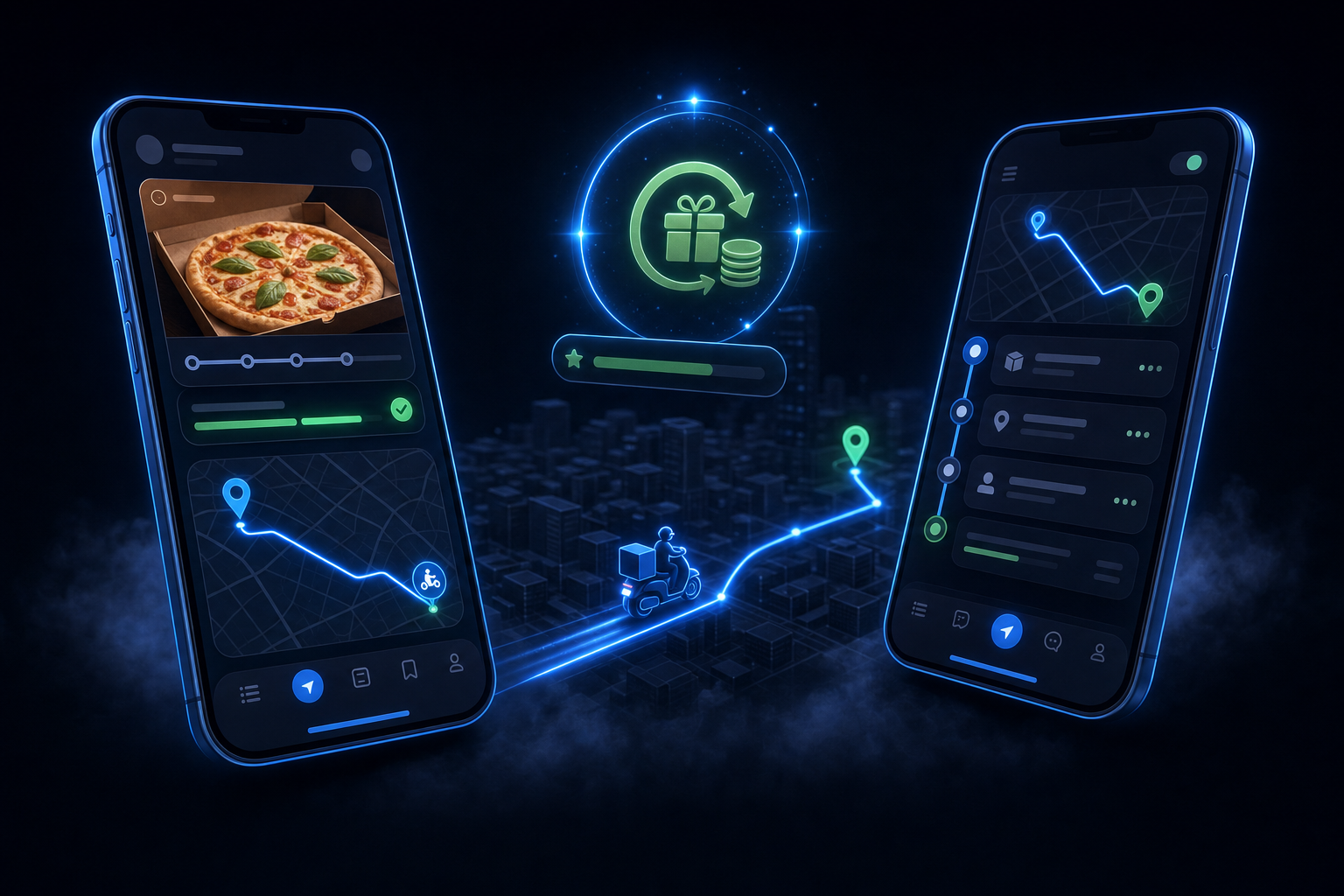
Cashback for direct orders, promo codes, offers — the economics of leaving aggregators
POS integration
Menu and prices in sync, orders land on the kitchen screen with no operator
How the project runs
How the project runs
- 1-2 weeks
Discovery & prototype
User flows, a clickable prototype, an estimate and release plan
- 2-3 weeks
UI design
Screens per iOS and Android guidelines, the app design system
- 6-14 weeks
Build & testing
Sprints with demo builds every two weeks; backend and integrations in parallel
- ongoing
Release & growth
App Store and Google Play publication, monitoring, metric-driven updates
Delivery lives in the phone — better if in yours
Food ordering has finally moved into apps. That’s where the saved addresses, the card, the favorite items and the two-tap order live. If you don’t have your own app, that habit works for the aggregators. With their commission and your competitors’ promos on the next screen. Your own app returns the channel to you. A commission-free order. The client’s base and history are yours. Every push touch costs zero against ever-pricier retargeting.
A one-minute order: a path polished down to taps
The client circuit is built around repeat-order speed. A menu with photos and POS stop-lists. A two-screen cart. Saved addresses and cards. Repeat-my-last-order in one button. Map tracking is the app’s most addictive screen: the client watches the courier drive instead of calling the operator. The bonus program makes a direct order more profitable than an aggregator one. The clients’ move becomes a matter of time.
The courier circuit: logistics without chats and radios
The product’s second half is the courier app. The order queue, the address and route, picked-up-driving-delivered statuses in one tap. The dispatcher sees all couriers on the map and assigns orders by proximity, not by memory. It’s the courier circuit that feeds the client tracking. Where-is-my-order turns from a call into a glance at the screen.
Pushes: a return channel with a zero touch cost
Push notifications are the app’s economic heart. Transactional ones walk the order: accepted, cooking, the courier is near. Marketing ones bring people back. We-missed-you with a promo code. A birthday. The favorite item is back on the menu. Segmentation by order history makes the touches precise, and each one’s cost — zero. In our delivery case, pushes raised repeat orders by exactly 38%.
Integrations and the launch
The app connects to your kitchen instead of living apart. The menu, prices and stop-lists sync with the POS, orders land on the kitchen screen without an operator. If you already run a delivery website — we build those too — the app sits on the shared backend. One base, one bonus program, a single client history. Launch in 14-20 weeks, turnkey store publication. Rejections and review are our concern.
Related case study
Client reviews
Client reviews
I saw the app as a status toy. Turned out it's a retention machine. A push with a promo code returns a client for pennies where retargeting took real money. Half the orders now run through the app.
The courier circuit brought the order we'd dreamed of. The dispatcher sees everyone on the map, statuses flow by themselves, clients watch the order on the screen, not over the phone. The where-is-my-food calls died as a genre.
We feared app orders would fall past the kitchen. The POS integration removed the question. The menu and stop-lists are synced, an order appears on the kitchen screen within seconds. The operator is no longer needed.
Related solutions
Related solutions
Beauty Salon App Development
A two-tap booking with a specific stylist, pushes against no-shows and points instead of a stamped card. A salon app that brings clients back.
E-commerce Mobile App Development
One-tap checkout, pushes instead of expensive retargeting and the catalog from the same ERP. The app as the repeat-purchase channel.
MVP App Development
A scope session with metrics, the core in 8-12 weeks and analytics from day one. An MVP that answers the hypothesis instead of eating the budget.
FAQ
FAQ about mobile development
01How much does a food delivery app cost?
The client-app-plus-courier-circuit pair with tracking and the POS integration — from $19,000, launched in 14-20 weeks. The client app alone without the courier part — from $14,000. The quote is free after a briefing.
02iOS and Android — is that two apps and a double price?
No. We build on Flutter: one codebase runs on both platforms. That's half the development and support cost against two native teams. And for a delivery user's speed and feel — indistinguishable.
03We already have a website you built — will the app get along?
The ideal scenario. The app sits on the same backend and POS integration as the site. The menu, prices, zones and bonuses are shared. The client starts on the web, continues in the app, the history is one.
04How do we move clients from aggregators into the app?
The economics allow paying for the move. A raised cashback on the first order, QR inserts in every box, social promos. In our pizzeria case, that mechanic moved 55% of orders into the app in four months.
05Who handles the App Store and Google Play publication?
We do, turnkey. Developer accounts, the page materials, the privacy policy, passing review. Store rejections are our concern. We carry it to publication within the project.
Let’s discuss your project
Free estimate and a proposed solution within one day.