
E-commerce Mobile App Development
One-tap checkout, pushes instead of expensive retargeting and the catalog from the same ERP. The app as the repeat-purchase channel.
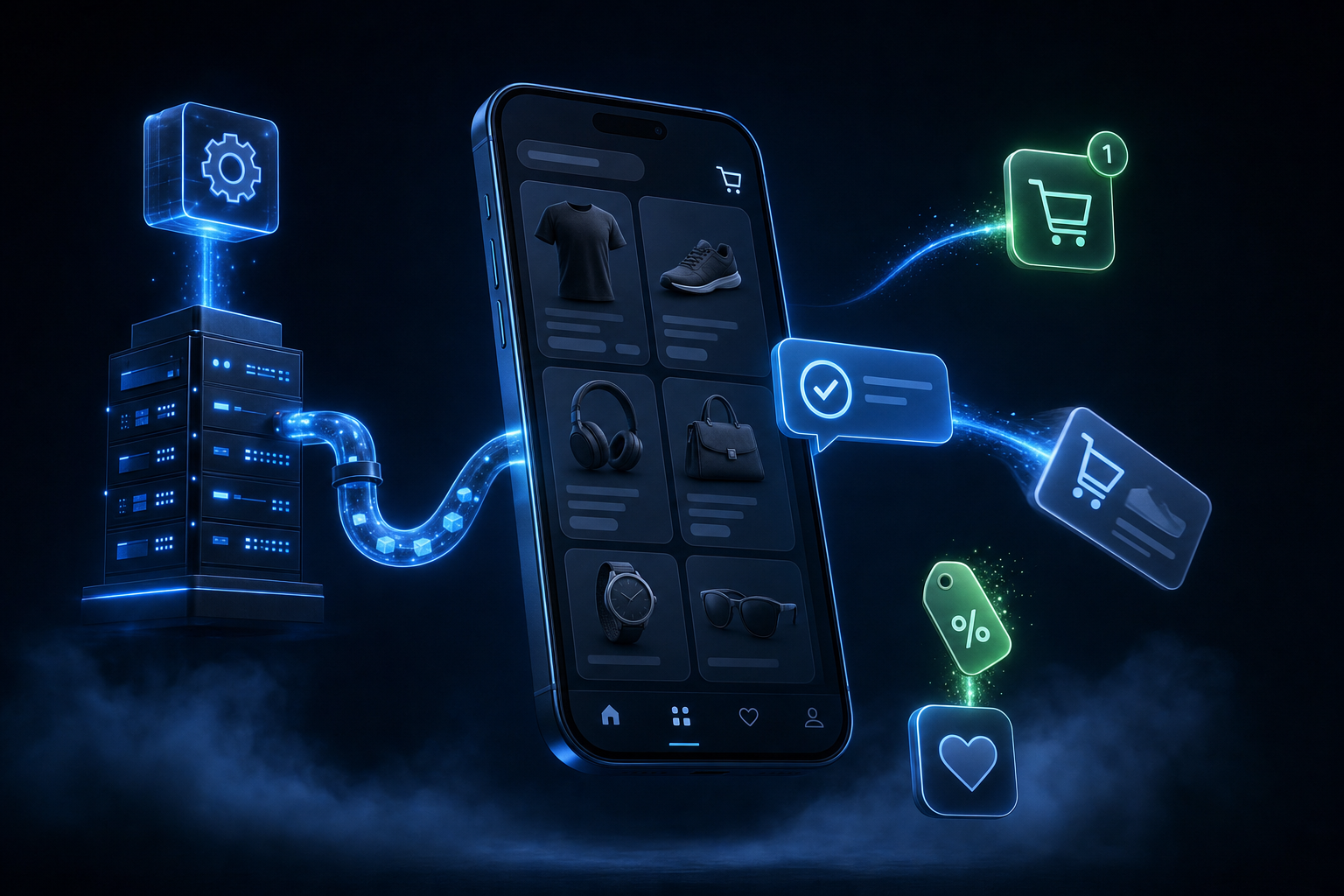
Goals we set for the website
- ×2-3
- conversion vs the mobile site
- 25-35%
- of revenue via the app within a year
- 15-20%
- of abandoned carts saved by pushes
Sound familiar?
The mobile site converts half as well as desktop: logins, card entry, lost carts
Retargeting gets pricier every quarter, yet buyers still need bringing back
Loyal customers walk the newcomer's path every time — no saved cards, no history at hand
You dropped the price on someone's wishlisted item — and have no way to tell them
E-commerce Mobile App Development
What's included
Catalog & search
ERP-driven products with filters and live search — no second database, no manual sync
One-tap checkout
Saved cards and addresses: cart to payment in seconds, not screens
Trigger pushes
Cart, price, stock, order status — return automation at zero cost per touch
Loyalty
Points and personal offers — the reason to install the app and come back
Deep links & analytics
Emails and ads land in product cards; every push and screen is measurable
Site & ERP sync
One backend: orders, stock, prices and points unified across channels
How the project runs
How the project runs
- 1-2 weeks
Discovery & prototype
User flows, a clickable prototype, an estimate and release plan
- 2-3 weeks
UI design
Screens per iOS and Android guidelines, the app design system
- 6-14 weeks
Build & testing
Sprints with demo builds every two weeks; backend and integrations in parallel
- ongoing
Release & growth
App Store and Google Play publication, monitoring, metric-driven updates
The app is the repeat-purchase channel — and that’s the whole economics
The mistake is expecting new clients from an app. Search and ads bring those. The app does something else: it turns one-time buyers into regulars. Saved cards and addresses remove the friction. Pushes bring people back without a budget. Loyalty gives a reason to open you specifically. So the time-or-early decision gets counted from the base. Thousands of buyers and expensive retargeting — the app pays off fast. A store fighting for its first clients — it’s more honest to start with the site and ads.
One tap to payment: where the mobile site dies
The mobile site loses the buyer on routine. Login, card entry, confirmations. The app stores everything: the card, the addresses, the history. From cart to payment — seconds. Repeat-my-order in one button closes the regular purchases — pet food, consumables, cosmetics — almost without a human. Exactly that produces the multiple conversion gap against the mobile site. In our electronics store case it was 3x.
Trigger pushes: return automation
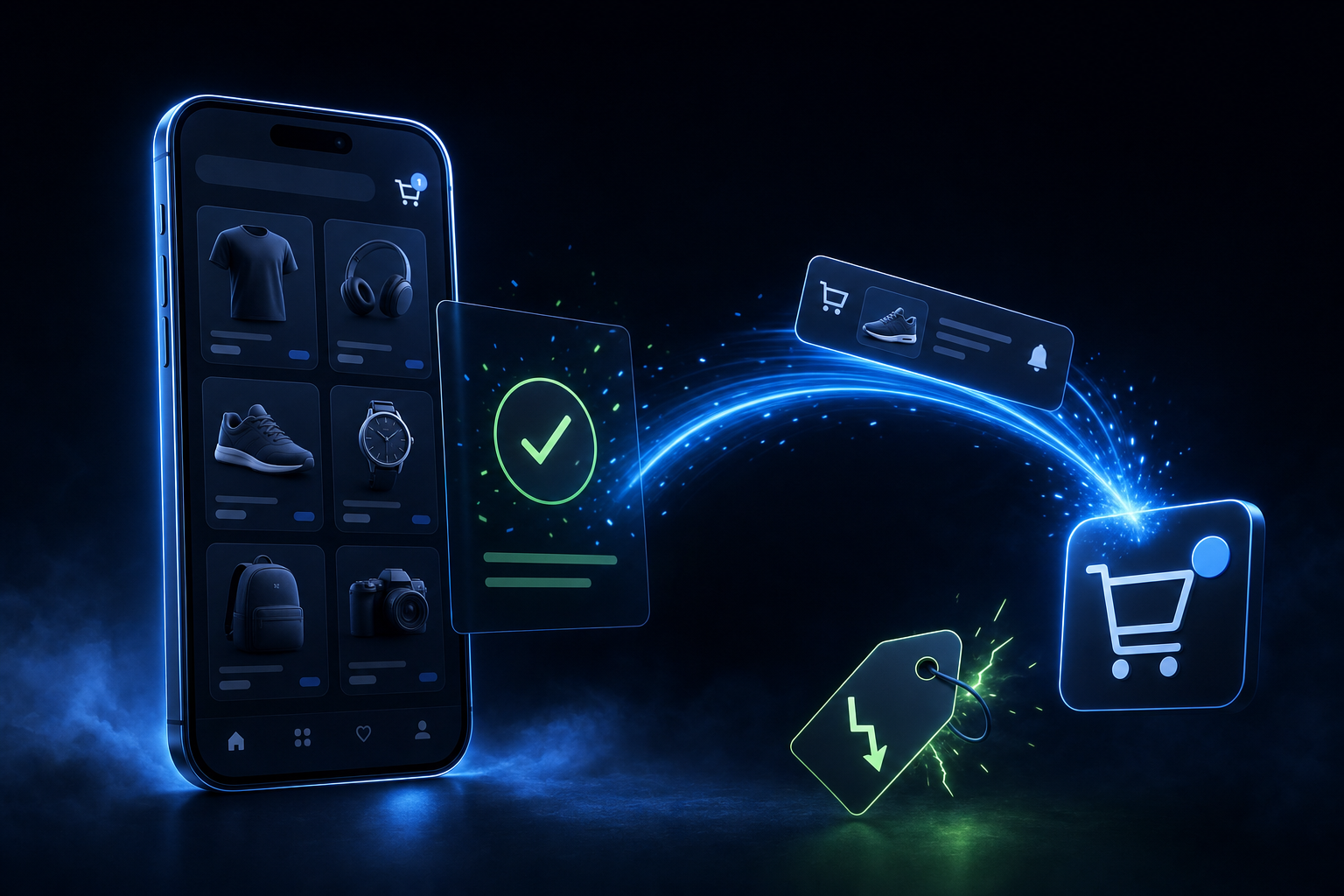
A push is a channel with a zero touch cost and open rates email can only dream of. Event triggers do the work. A cart abandoned — a reminder in two hours, a promo code in a day. A wishlist item’s price dropped — an instant notification, and such pushes open at record rates. An item back in stock — the one waiting learns first. Transactional pushes walk the order and remove the where-is-my-package calls. All of it is event automation, not manual newsletters.
A storefront without a second base
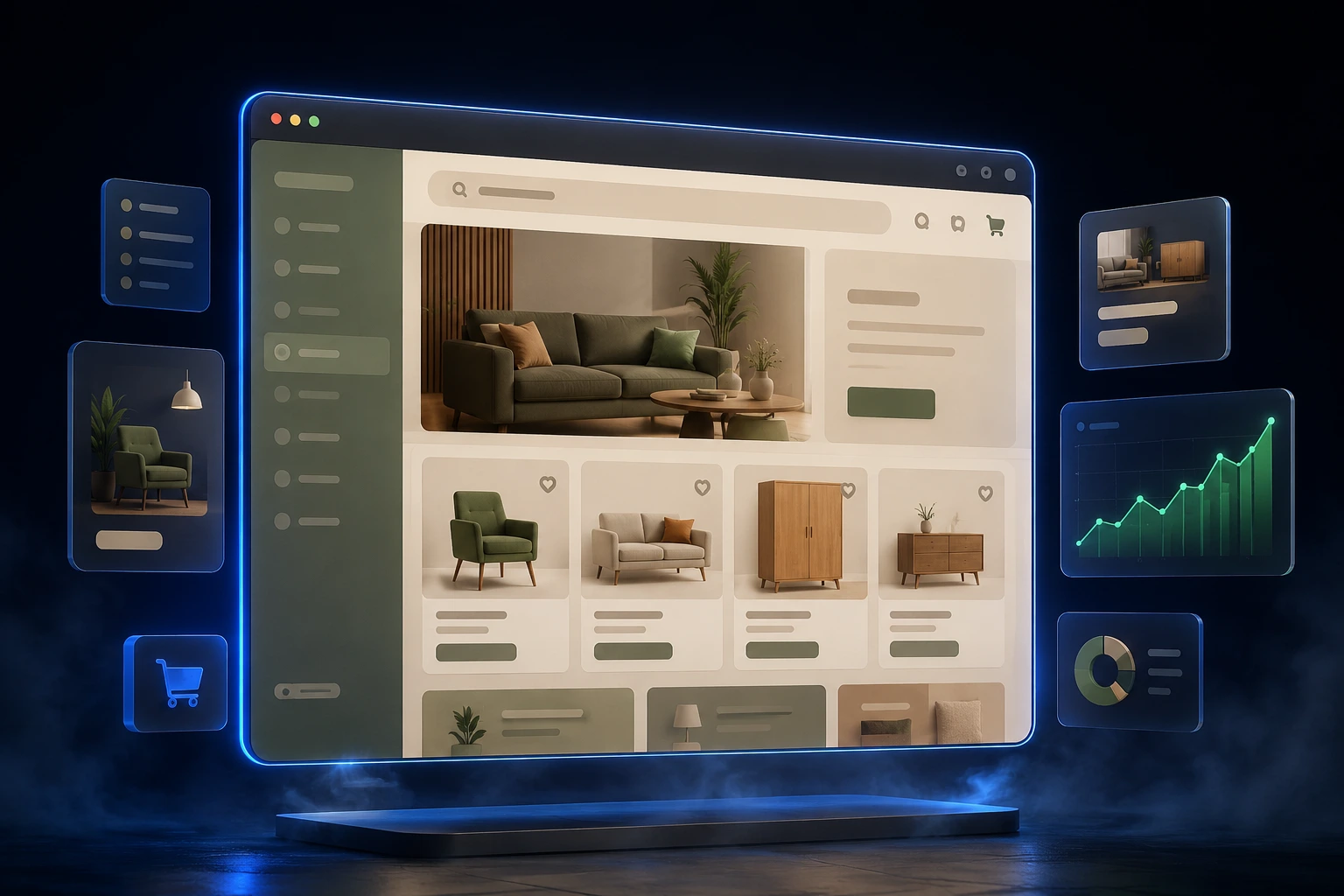
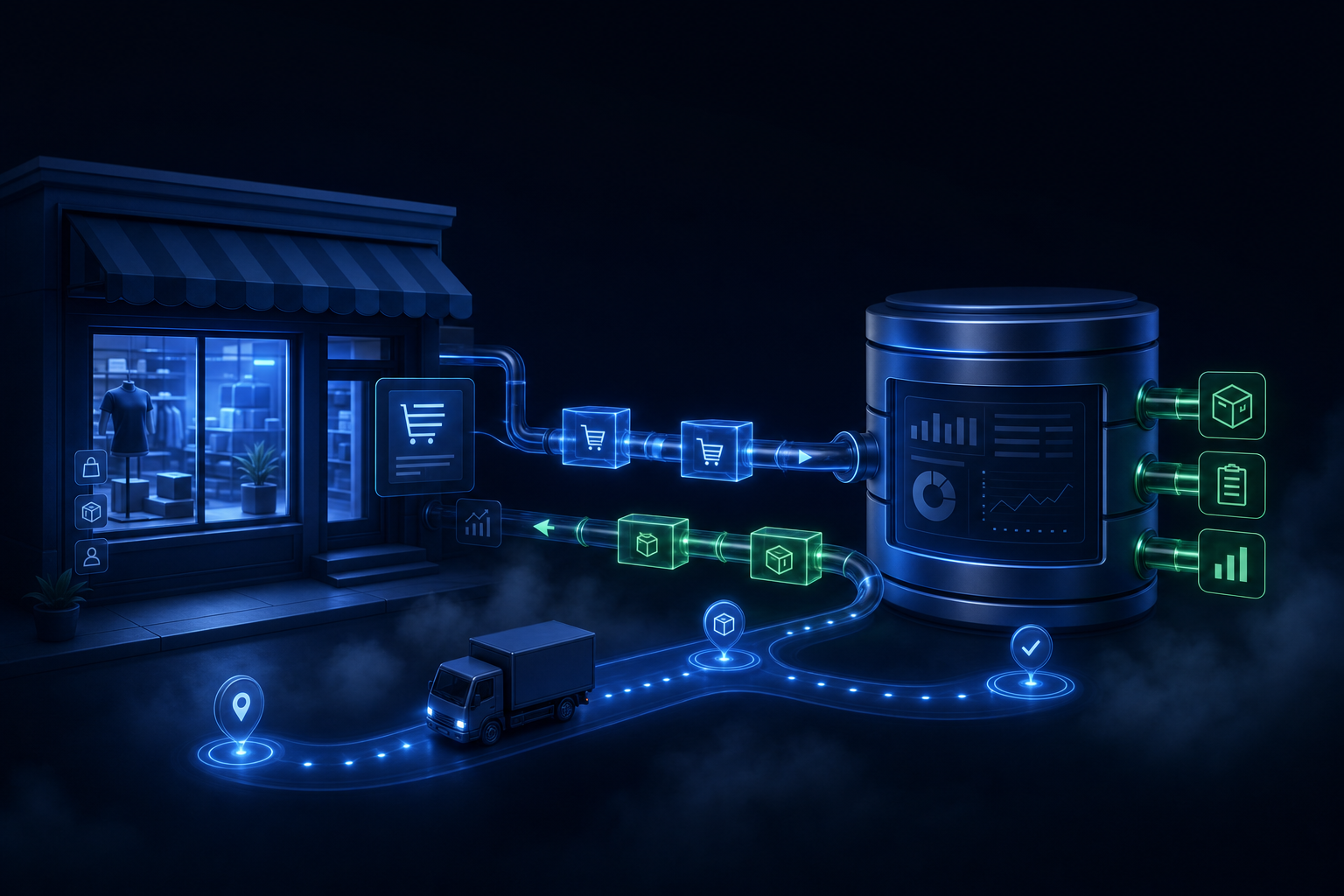
The fear of maintaining another store is removed by architecture. The app is a storefront over the same backend as the site. The catalog, stock, prices and promos flow from your ERP. Orders land in the shared circuit. Bonuses and the cart stay synced between screens. Large catalogs of 10,000+ SKUs are the standard mode: pagination, caching, index search. Deep links carry people from newsletters and ads straight into the product card.
The launch and the combinations
The project takes 12-18 weeks. The ERP integration, the storefront, the checkout, the push circuit, loyalty — and turnkey store publication. If we built the store’s website, the app sits on the ready backend faster and cheaper. Then the channel stack closes. Ads and SEO bring the new to the site. The app takes them into the repeat base. Both sides of the funnel in one place.
Related case study
Client reviews
Client reviews
The app paid for itself with one mechanic. An abandoned-cart push after two hours and a promo code after a day. What we'd paid retargeting hundreds of thousands a month for now happens free and converts better.
I feared the app would become a second store with its own headache. The opposite happened. The same catalog from the ERP, the same stock and orders. Just another storefront on the shared backend that needs no separate upkeep.
The price-drop push on wishlist items is a cheat-code mechanic. Open rates near 40%, conversion like hot search. Plus deep links from newsletters lead straight into the product card. The buyer's path shrank to two taps.
Related solutions
Related solutions
Food Delivery App Development
A client app plus a courier circuit. A one-minute order, map tracking and pushes instead of retargeting. Your own channel instead of aggregator commissions.
Beauty Salon App Development
A two-tap booking with a specific stylist, pushes against no-shows and points instead of a stamped card. A salon app that brings clients back.
MVP App Development
A scope session with metrics, the core in 8-12 weeks and analytics from day one. An MVP that answers the hypothesis instead of eating the budget.
FAQ
FAQ about mobile development
01How much does an e-commerce app cost?
An app with the catalog, checkout and pushes — from $16,000, launched in 12-18 weeks. One codebase for iOS and Android. The price depends on the catalog's size, the loyalty program and the ERP integration depth. The quote is free after a briefing.
02When is it time for a store to build an app, and when is it early?
The app is a retention tool, not an acquisition one. It pays off on the repeat-purchase base. The it's-time markers: a notable share of returning buyers, a live base of several thousand clients, retargeting eating a tangible budget. If the store is still fighting for its first buyers, we'll say honestly it's early and suggest starting with the site and ads.
03A catalog of 10,000+ products — will the app handle it?
Yes, the architecture is built for it. The catalog flows from your ERP with pagination and caching, search and filters run on an index. No separate app upkeep needed. The storefront lives off the same base as the site.
04Why are pushes better than email and retargeting?
Deliverability and speed. A push is visible on the screen the moment it's sent, open rates run several times above email, and the touch cost is zero against retargeting's growing rates. Trigger scenarios — the cart, the price, the stock — fire automatically on events, not on a marketer's schedule.
05Won't the app and the site compete with each other?
They split roles. The site catches the new from search and ads, the app retains and returns the existing. The shared backend makes the flow seamless. The cart, bonuses and history are one, the buyer simply picks the convenient screen.
Let’s discuss your project
Free estimate and a proposed solution within one day.