
Auto Repair Shop Mobile App
Booking in two taps, repair statuses with photos and a garage with the car's history. A repair shop app that brings the client back for every service.
Goals we set for the website
- +40%
- returns for scheduled service
- −70%
- how-is-my-car calls
- 12-16 weeks
- to the store release
Sound familiar?
The client comes once — and dissolves: anyone reminds them about the next service except you
How-is-my-car calls all day: the service advisor works as an information desk
Service history lives in paper work orders: the client doesn't remember what was changed and when
Upsells don't work: the mechanic's recommendations get forgotten in the parking lot
Auto Repair Shop Mobile App
What's included
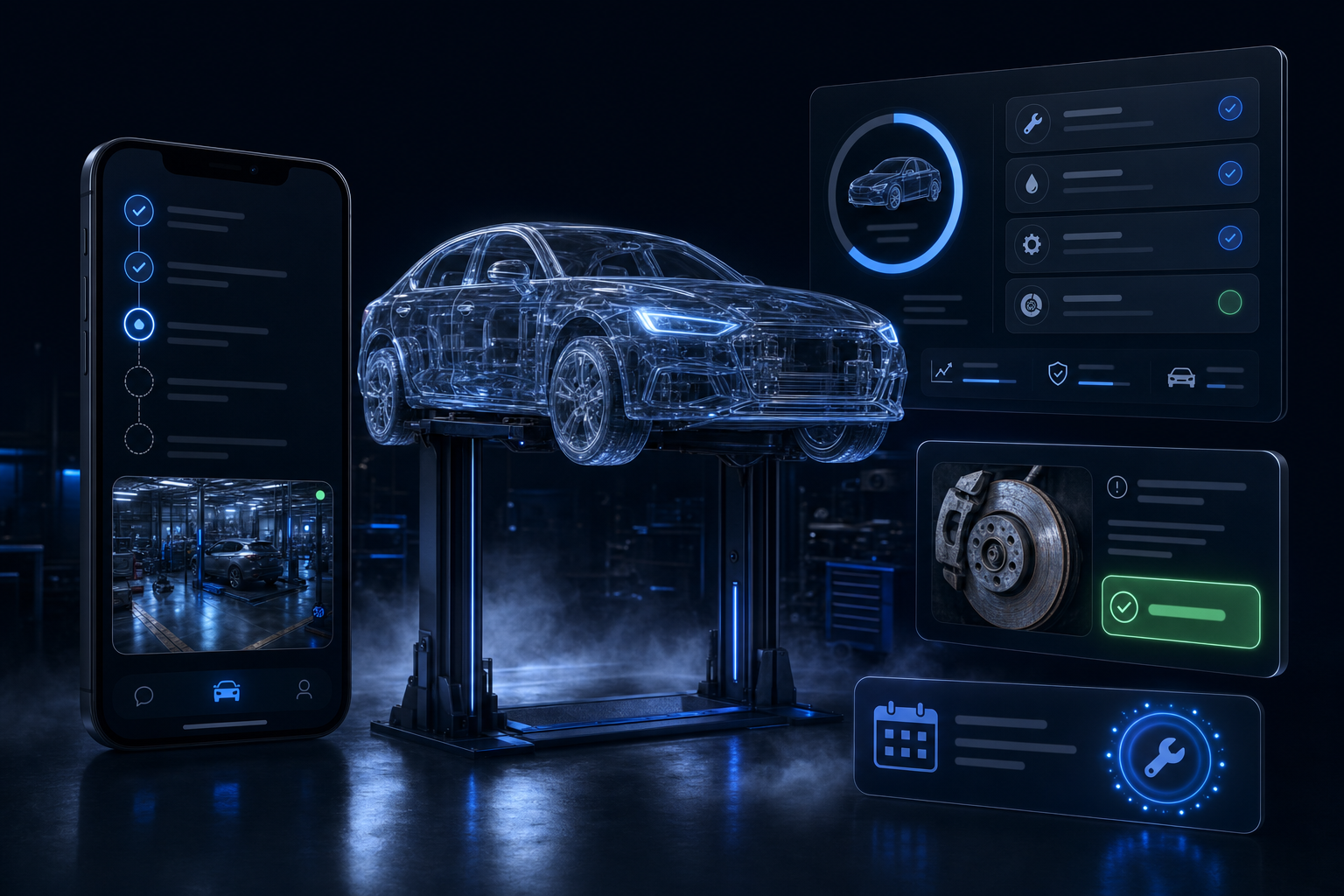
Booking in two taps
Bay and mechanic slots in real time: booking is easier than calling
Repair with statuses
A push at every stage, photos from the shop floor: how-is-it-going dies as a call genre
The client garage
Cars, mileage, work order history, documents: the service book in the phone
Return for service
Mileage and season reminders with a booking button: the next service — yours again
Extra work with photos
The mechanic found a defect — the client gets the photo and price: approval in a tap, the ticket grows honestly
Loyalty
Points for visits and referrals: switching shops becomes unprofitable
How the project runs
How the project runs
- 1-2 weeks
Discovery & prototype
User flows, a clickable prototype, an estimate and release plan
- 2-3 weeks
UI design
Screens per iOS and Android guidelines, the app design system
- 6-14 weeks
Build & testing
Sprints with demo builds every two weeks; backend and integrations in parallel
- ongoing
Release & growth
App Store and Google Play publication, monitoring, metric-driven updates
A repair shop earns on returns — and the client returns where they’re remembered
A shop’s economics rests on repeat visits: scheduled maintenance, seasonal tire swaps, the mechanic’s recommendations. But after handover the client dissolves, and anyone reminds them about the next service — an aggregator, a competitor, a dashboard light. The app makes the return systemic: the garage remembers the mileage and work, reminders call at the right moment, booking takes two taps. In our chain case, client LTV nearly doubled in a year.
Statuses with photos: how-is-it-going dies as a genre
A car in repair means an anxious client, and the front desk drowns in how-is-it-going calls. The app answers before the question: stage statuses with push, photos from the floor — the car on the lift, the assembly in work. In the shop manager’s review, the calls nearly vanished and the NPS grew: people like watching the process. The advisors return to intake. The client’s anxiety turns into observation — and into trust.
Extra work with photos: an honest ticket increase
The mechanic’s recommendations are the shop’s main revenue reserve, and traditionally they get lost: a spoken recommendation gets forgotten in the parking lot, and a we-found-another-problem call sounds like a scam. A photo changes everything. The mechanic shoots the worn part, the client gets a push with the photograph, the description and the price, and approves in a tap. In the service center director’s review, recommendation conversion grew from a third to 70%. The decision is fixed in writing — the disputes vanish along with the distrust.
The garage and reminders: a service book that sells
The garage holds the client’s cars whole: mileage, work order history, installed parts, documents. For the client it’s a service book in the phone. For the shop it’s return data: mileage and schedule reminders, seasonal tire campaigns, personal offers. In the chain owner’s review, 40% of reminders convert into a one-tap booking. Loyalty locks the habit: points for visits make switching shops unprofitable.
Integrations, the stores and the place in the stack
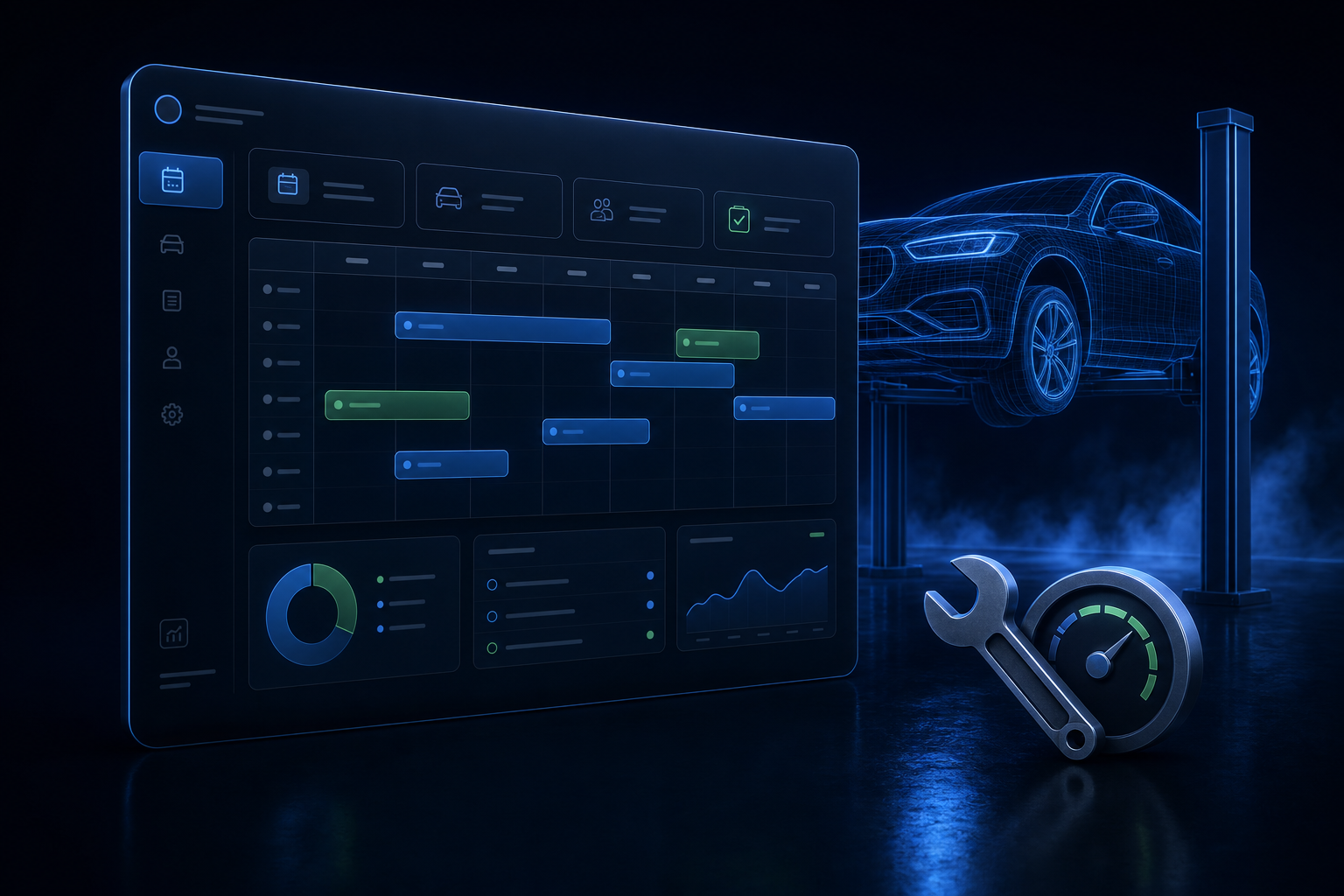
The app is a storefront of your processes: slots sync with bay planning, work orders and statuses pull from the system of record, history lands in the garage. iOS and Android build from one codebase, and we run the store publication turnkey. Nearby sits our auto stack: the repair shop CRM, the website, advertising — the auto service case is in the trio below. The shop’s digital circuit assembles with one vendor.
Related case study
Client reviews
Client reviews
Mileage reminders changed the economics. The client used to vanish after a repair, now the app calls them in for service — and 40% book from the push in one tap. Client LTV nearly doubled in a year.
Extra work approval with photos is the most profitable feature. The mechanic shoots the worn brake pad, the client sees the photo and price, taps approve. Recommendation-to-work conversion grew from a third to 70%: a photo persuades better than words on the phone.
Statuses with photos unloaded the front desk radically. The client sees the car on the lift and the work stage in the app — the how-is-it-going calls nearly vanished. Advisors do intake, and the NPS grew: people like watching the process.
Related solutions
Related solutions
Food Delivery App Development
A client app plus a courier circuit. A one-minute order, map tracking and pushes instead of retargeting. Your own channel instead of aggregator commissions.
Beauty Salon App Development
A two-tap booking with a specific stylist, pushes against no-shows and points instead of a stamped card. A salon app that brings clients back.
E-commerce Mobile App Development
One-tap checkout, pushes instead of expensive retargeting and the catalog from the same ERP. The app as the repeat-purchase channel.
FAQ
FAQ about mobile development
01How much does a repair shop app cost?
From $11,000, released in 12-16 weeks, iOS and Android from one codebase. That covers booking, statuses with photos, the garage, maintenance reminders, extra work approval and loyalty. The range depends on the integrations with your system of record. The quote follows a free briefing.
02We run an ERP or shop software — do you integrate?
Yes, it's a mandatory part: slots and bookings sync with your planning, work orders and statuses pull from the system, work history lands in the client's garage. The app is a storefront of your processes, not a parallel system. Integrations are our profile.
03How do maintenance reminders work?
From the garage's data: mileage since the last visit, the manufacturer's schedule, seasonality — tire swaps, air conditioning. The push arrives specific — time-for-an-oil-change — with a one-tap booking button. In the case above, 40% of reminders convert into a booking. The cheapest repeat visits possible.
04Extra work approval — how does it go?
The mechanic finds a defect, photographs it right on the floor, adds the line with a price. The client gets a push: the photo, the description, the cost, approve/decline buttons. The decision gets fixed in writing, the I-never-agreed dispute vanishes, and recommendation conversion grows severalfold: the photo persuades.
05Will repair shop clients really install an app?
They will if it delivers value from the first visit: booking without a call, repair statuses, the car's history. The advisor offers the install at intake — track-your-repair-here. Then the maintenance reminders and points hold them. For chains the app pays back on retention: switching shops becomes unprofitable.
Let’s discuss your project
Free estimate and a proposed solution within one day.