
Loyalty Program Mobile App
A virtual card, points with tiers and push that brings people back. A loyalty app: your brand's place in the client's phone.
Goals we set for the website
- +30%
- repeat purchases among members
- ×5
- cheaper than SMS: the push channel
- 10-14 weeks
- to the store release
Sound familiar?
Plastic cards get left at home, and the loyalty program gets forgotten with them
There's a client base but no channel to it: SMS costs climb, email goes unopened
The discount goes to everyone equally: the margin melts, and loyalty doesn't grow
What happens in the program is a mystery: who earns, who spends, does it work at all
Loyalty Program Mobile App
What's included
The card in the phone
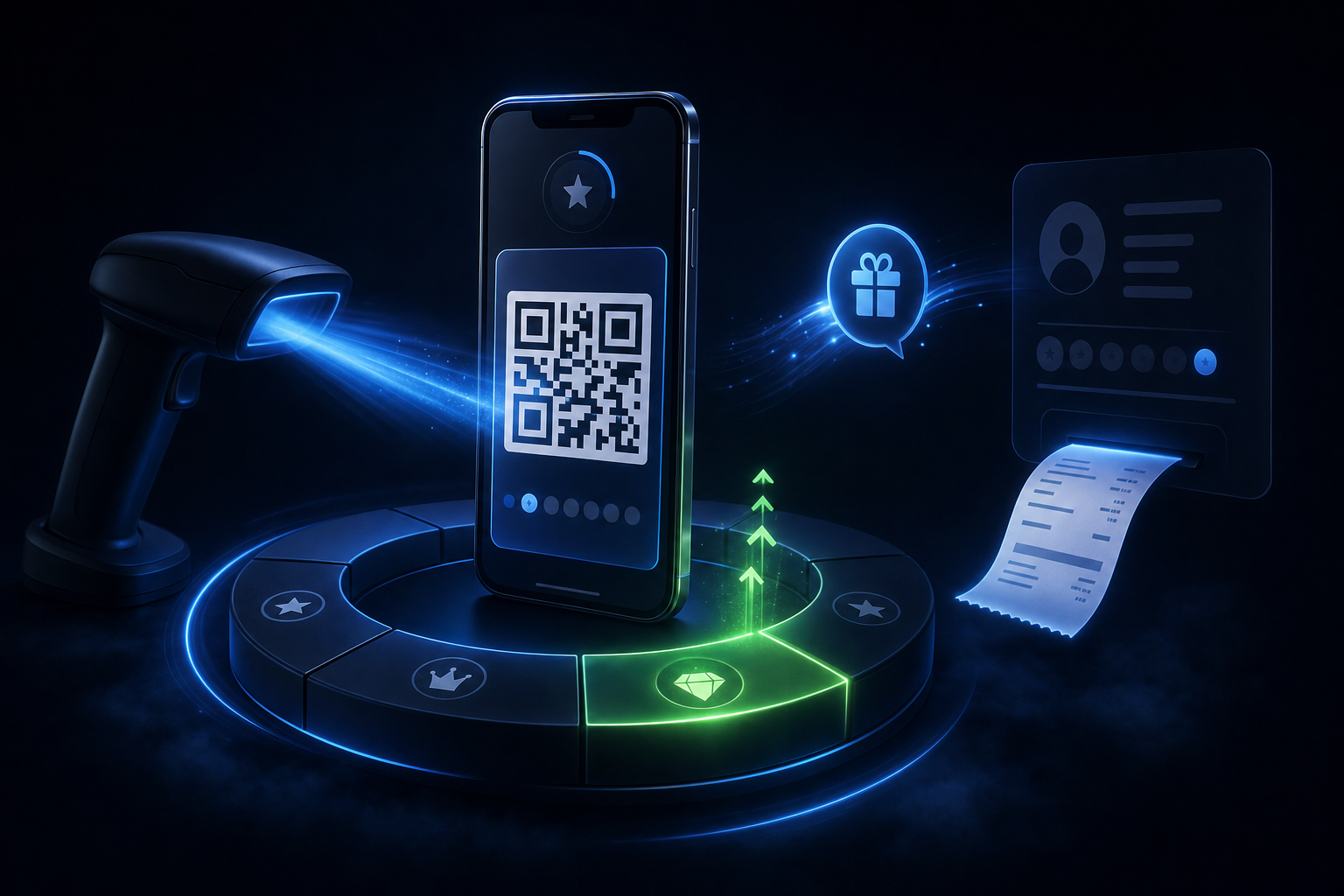
A QR from the lock screen in two taps: a card impossible to leave at home
The points engine
Percentages, tiers, multipliers, expiration: any mechanic programs to your economics
Push by segment
Absent-a-month, birthday, favorite-category: a free channel against climbing SMS costs
Personal offers
An offer from the purchase history: the discount works pointedly, the margin isn't handed to everyone
The POS link
Receipts attach to the client, points redeem at the till: the program lives on live data
The program's economics
A dashboard: activation, returns, incremental revenue — loyalty visible in money
How the project runs
How the project runs
- 1-2 weeks
Discovery & prototype
User flows, a clickable prototype, an estimate and release plan
- 2-3 weeks
UI design
Screens per iOS and Android guidelines, the app design system
- 6-14 weeks
Build & testing
Sprints with demo builds every two weeks; backend and integrations in parallel
- ongoing
Release & growth
App Store and Google Play publication, monitoring, metric-driven updates
Loyalty lives in the phone — because the client lives in the phone
The plastic card stayed in the other jacket, email goes unopened, SMS costs a fortune. The one reliable channel to the client is their smartphone, and a loyalty app takes your brand’s place there. A card that can’t be left at home. Push that’s free. Data plastic never had. In our convenience chain case, 60% of receipts became identified — the retailer saw its shoppers for the first time.
The virtual card and the engine: mechanics for your economics
The card opens from the lock screen in two taps, the cashier scans the QR — the client identified, the points accrued. Registration takes a minute and needs no till-side forms. The points engine programs to your model: percentages and tiers, dead-hour multipliers, expiration that stimulates a visit, referral points. The mechanic isn’t a template but a behavior-changing tool: every rule’s job is an extra visit or a bigger receipt.
Push instead of SMS: the channel that pays for the app
An SMS blast across the base costs a fortune monthly and keeps climbing. Push is free and lives in the same phone. In the cafe chain marketing director’s review, the mailing savings paid for the development in half a year — before the campaigns’ own effect. Segments make the channel precise: absent-a-month, birthday-this-week, buys-category-X. The your-cappuccino-waits campaign returns every fifth dormant guest. SMS never could.
Personal offers: the discount stops burning the margin
A discount for everyone is a tax on the margin without loyalty growth: it also goes to those who’d buy anyway. Personal offers work pointedly: the offer assembles from purchase history, the discount’s depth from the client’s value. In the retail manager’s review, campaigns’ incremental revenue tripled at a shallower discount. Loyalty’s salt isn’t handing out points but changing behavior — and it gets measured with control groups in the dashboard.
The POS, the stores and the place in the stack
The POS integration is mandatory: the receipt attaches to the client, points redeem at payment, the program lives on live data. iOS and Android build from one codebase, we run the store publication turnkey, and wallet passes get added for non-installers. The stack sits nearby: the CRM with win-back mechanics, the POS integrations — the cases are in the trio below. The retention circuit assembles with one vendor.
Related case study
Client reviews
Client reviews
Plastic died: cards got forgotten, the program abandoned. The app changed everything — the QR is always in the phone, 60% of receipts are now identified. We see our shoppers and their baskets for the first time.
Push replaced SMS and paid for the app in half a year on mailing savings alone. And segment campaigns lifted the effect: absent-two-weeks-your-cappuccino-waits brings back every fifth. SMS never could do that.
Personal offers saved the margin. A 10% discount used to go to everyone in a row, now the offer assembles from history: coffee for one, cat food for another. Campaigns' incremental revenue tripled at a shallower discount.
Related solutions
Related solutions
Food Delivery App Development
A client app plus a courier circuit. A one-minute order, map tracking and pushes instead of retargeting. Your own channel instead of aggregator commissions.
Beauty Salon App Development
A two-tap booking with a specific stylist, pushes against no-shows and points instead of a stamped card. A salon app that brings clients back.
E-commerce Mobile App Development
One-tap checkout, pushes instead of expensive retargeting and the catalog from the same ERP. The app as the repeat-purchase channel.
FAQ
FAQ about mobile development
01How much does a loyalty app cost?
From $10,000, released in 10-14 weeks, iOS and Android from one codebase. That covers the virtual card, the points engine, push campaigns, personal offers, the POS integration and analytics. The range depends on the POS system and the mechanics. The quote follows a free briefing.
02Which POS systems do you integrate with?
The popular retail and hospitality POS platforms through their APIs: client identification by QR at the till, the receipt into the profile, points redeemed and accrued at payment. A custom POS — we integrate with it too. The POS link is mandatory: without it loyalty is blind.
03Why is an app better than a wallet pass or plastic?
The channel and the data. Plastic and a wallet pass are passive number carriers. An app is an active channel: push campaigns, personal storefronts, promos, the points history. Plus behavioral data for segments. We build the wallet pass too — as an addition for those who don't install apps.
04Which loyalty mechanics are supported?
Any programmable ones: a percentage of the receipt, tiers with statuses, happy hour multipliers, expiration stimulating visits, referral points, date-based gifts. We pick the mechanic for your economics at the briefing — the goal isn't handing out points but changing behavior.
05How will we know the program works?
By incremental revenue, not install counts. The dashboard compares members with non-members: frequency, the average receipt, the return rate. Campaigns get measured with control groups. Loyalty is an investment with a measurable return, and we build the measurement from the start.
Let’s discuss your project
Free estimate and a proposed solution within one day.