
CRM for Wholesale
A self-service B2B portal, personal price lists and reserves without overselling. A CRM where managers develop clients instead of retyping orders.
Goals we set for the website
- 60-80%
- orders via the portal, no manager
- ×2+
- clients per manager
- −90%
- price and order errors
Sound familiar?
Managers are operators: the day goes to price checks, stock checks and re-keying orders into the ERP
Every client has custom prices and discounts — invoice errors are weekly, disputes eternal
Receivables sprawl: who owes, how much and since when — assembled in Excel before each meeting
Clients with declining volumes leave silently — the loss is noticed when it's too late
CRM for Wholesale
What's included
B2B portal
Client accounts: their price list, stock, one-click reorders, documents
Prices & discounts
Price types, personal terms, promotions — the system calculates, errors vanish
Receivables
Debts and due dates per client, credit limits, shipment blocks by rules
Reserves & stock
Booking to orders, an honest free balance — overselling excluded by architecture
ERP exchange
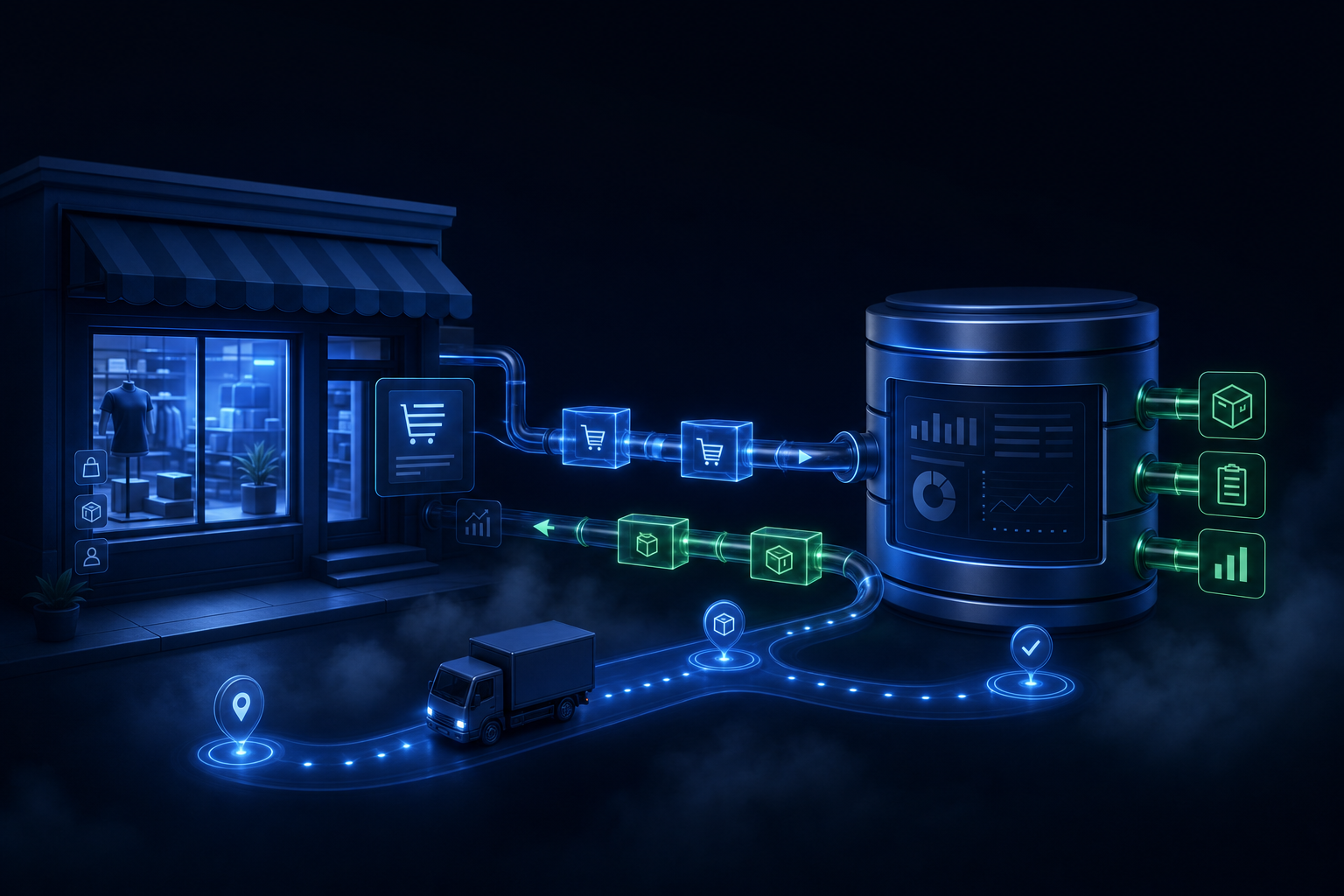
Two-way sync: orders into the books, statuses and documents back
Client radar
RFM signals: who's declining, who abandoned a cart, whom to call — managers act ahead
How the project runs
How the project runs
- 1-2 weeks
Process audit
How the business really runs: bookings, sales, accounting, bottlenecks
- 2-3 weeks
System design
Architecture, role scenarios, data migration and integration plan
- 4-10 weeks
Build & configure
System assembly, integrations, data transfer — alongside the old process
- 1-2 weeks
Launch & training
Team training, playbooks, staged rollout and launch support
Wholesale is capped not by demand but by manager throughput
The wholesale company’s classic trap. There are enough inquiries, but every order is manual labor. The manager checks the personal price list, verifies stock, retypes line items into the ERP, fixes mistakes. Sales growth demands hiring, hiring eats the margin. The company grows linearly with the payroll. A wholesale CRM breaks that link. The routine moves into the system and the self-service portal. Managers turn from operators into client developers. In our case, the same people handled 2.4 times more clients.
The B2B portal: the client serves themselves
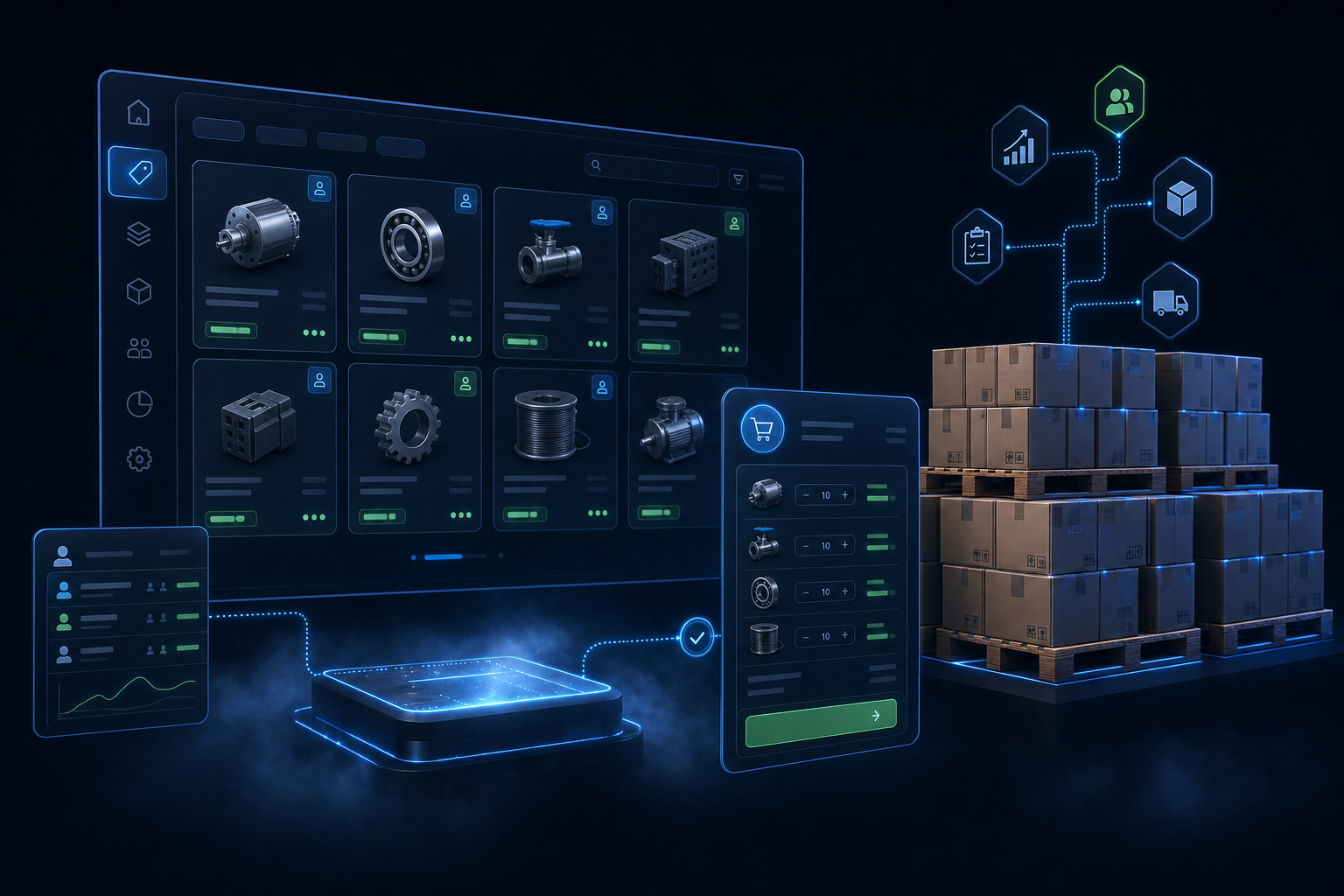
The system’s core is the portal. The client logs in and sees the catalog with their prices and live stock from the ERP. Assembles an order with a cart, repeats the last one in a click, downloads documents. No send-the-current-price-list and is-it-in-stock. The order lands in the books structured, without retyping and line-item mistakes. The portal works at night and on weekends, exactly when clients’ procurement people finish their requests.
Prices and receivables: rules instead of manual control
Wholesale pricing is a minefield. Price types, personal discounts, promos, volume specials. The system computes it itself, and invoices stop diverging from the agreements. The second circuit is receivables. Each client’s debt and term show at the order. Credit limits enforce automatically: exceeding one means a shipment block or an approval route. The unpleasant rules get executed by the system, preserving the manager’s relationship with the client.
Reserves: one stock item can’t be sold twice
Overselling is the chronic disease of multi-channel wholesale. Two managers sold the same stock, and the client was left holding it. Order-based reservation solves it architecturally. A confirmed order books the goods. The free stock on the portal and at the managers’ desks is always honest. The turns-out-it’s-not-in-stock cancellations disappear. And with them the blows to a reliable supplier’s reputation.
The client radar: working ahead
A wholesale client rarely leaves with a scandal. They quietly reduce volumes and dissolve. The radar catches it before people do. Turnover falling against past periods, abandoned carts, dropping out of the order rhythm — the signals arrive as manager tasks. The time freed by the portal goes exactly there. Not order entry but calls to those who can still be kept. That’s the role change: from operators to base developers.
Related case study
Client reviews
Client reviews
For years the managers were expensive order-entry operators. The portal took the routine, and the same people started handling twice the clients, doing development instead of retyping. Growth without hiring — what it was all started for.
The falling-turnover radar is the best module. The system highlighted clients quietly leaving for competitors while the managers served the loud ones. Half came back with one we-lost-you call.
Receivables stopped being the planning meeting's surprise. Debts and limits show at every order, shipping over the limit requires an approval. Overdue debt shrank by a third without a single conflict. The system enforces the rules, not the people.
Related solutions
Related solutions
CRM for Beauty Salons
Your own system instead of an eternal subscription. Booking, the base, stylists' pay and client returns built for your chain's processes.
CRM for Auto Repair Shops
A digital work order, per-VIN history and parts without black holes. A CRM where every repair and every dollar leaves a trace.
ERP for Manufacturing
Machine and crew planning, an honest cost price before the order launches and materials without eyeball reserves. Manufacturing that is managed, not firefought.
FAQ
FAQ about crm/erp systems
01How much does a wholesale CRM cost?
A rollout with the B2B portal and the ERP exchange — from $8,000, in 10-16 weeks. The range depends on the number of clients and warehouses, the pricing complexity and the integration depth. The quote is free after the audit.
02Why is this better than a universal CRM?
Universal CRMs are strong at the sales pipeline, but wholesale lives on other things. Individual price lists, reserves, receivables, a B2B portal. Reworking a universal one for that comes out pricier and more fragile than building the system around wholesale processes. And it covers the pipeline and communications too.
03How does receivables control work?
Each client's debt and term flow from the ERP and show at order entry. Credit limits get configured per client or segment. Exceeding one means a shipment block or an approval route. The system enforces the rules, so the manager doesn't quarrel with the client personally.
04Clients are used to ordering by email and messengers — will they move to the portal?
They move when the portal beats email. Their own price list without requests, live stock, one-click reorder, documents in the account. We help with the migration: mailings, a bonus for the first portal order, managers demoing the account. In our case, 73% of orders moved to the portal in half a year.
05What about the ERP exchange — won't the data diverge?
The exchange is two-way and queued. The catalog, prices and stock come from the ERP, orders and payments go back, statuses sync. If the ERP is down, data isn't lost, it gets delivered after recovery. It's our profile integration, done dozens of times.
Let’s discuss your project
Free estimate and a proposed solution within one day.