
Restaurant App Development
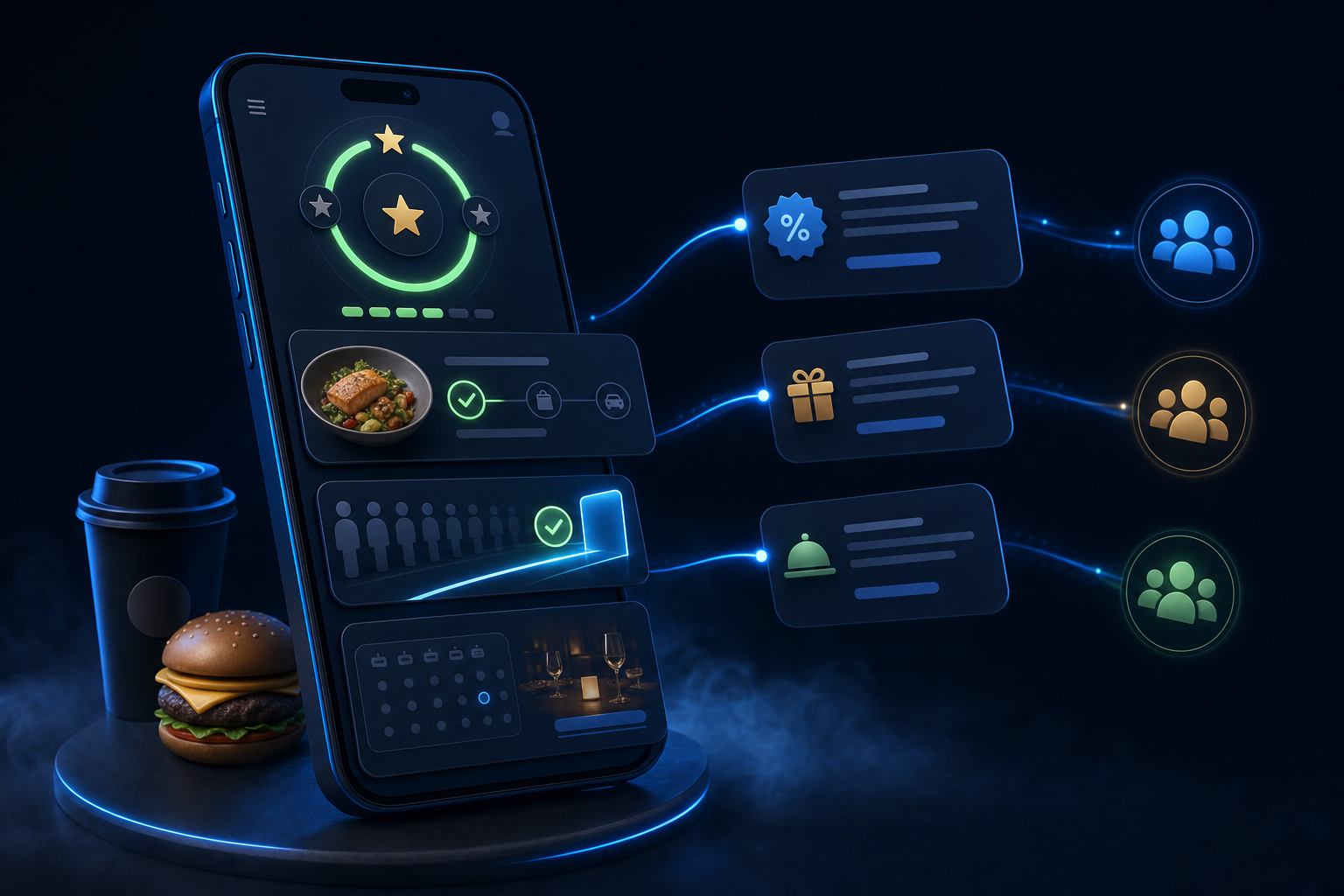
Loyalty wired into the till, preorder without the line and pushes by guest segment. A restaurant app that brings people back to the dining room.
Goals we set for the website
- ×2-3
- visit frequency of loyalty members
- 0 min
- waiting with pre-orders
- $0
- cost per push touch of the base
Sound familiar?
A guest eats and vanishes: no return channel except hoping they remember
Loyalty cards are plastic — lost, forgotten, and the base behind them can't be segmented
The lunch queue scares people off: those unwilling to wait go next door
Promos and new dishes get announced on social media, where one follower in ten sees them
Restaurant App Development
What's included
The loyalty core
Points for visits and orders, tiers, gifts — the reason to open your app specifically
Pre-ordering
Order en route, pay in-app, ready on arrival — the lunch queue disappears
Table booking
Open tables and times — booking without a call, instant confirmation
The live menu
Dishes, prices and the stop-list from the POS — a storefront that doesn't lie and sells with photos
The push channel
Segments by history: steak news for meat lovers, the new menu for vegetarians
POS integration
Orders to the kitchen, points on the receipt, one guest base
How the project runs
How the project runs
- 1-2 weeks
Discovery & prototype
User flows, a clickable prototype, an estimate and release plan
- 2-3 weeks
UI design
Screens per iOS and Android guidelines, the app design system
- 6-14 weeks
Build & testing
Sprints with demo builds every two weeks; backend and integrations in parallel
- ongoing
Release & growth
App Store and Google Play publication, monitoring, metric-driven updates
A restaurant’s profit is in returning guests — and the app works exactly on that
Bringing a new guest is expensive. Ads, aggregators, first-visit discounts. The economics reconcile on repeats, and most venues have no return channel. Social shows posts to a fraction of followers. Plastic cards get lost. The guest base doesn’t exist as an asset. The app closes the gap. Loyalty lives in the phone, every push touch is free, and the base segments by real order history.
Loyalty that moves revenue across weekdays
Points, tiers and gifts aren’t perks, they’re a behavior management tool. Double points on quiet days level the load: in the coffee chain owner’s review, Wednesday beats Saturday. A birthday gift brings a group. Tiers hold guests back from a competitor. The key is the till integration. Points accrue and get spent in the POS receipt automatically, without a manual promo-code circus. The guest base becomes visible and manageable for the first time.
Preorder: the lunch line disappears
The lunch hour is the revenue peak and the loss peak. Whoever won’t stand in line walks to the neighbors. Preorder solves both sides. The guest orders on the way, pays in the app and picks up the ready order without the line. The kitchen gets orders more evenly and cooks without the rush. The bonus restaurateurs note: the preorder’s average check is higher. In the app’s calm, the guest adds the dessert and the drink they’d skip at the counter.
Pushes by segment: the channel where reach isn’t bought
Order history turns pushes from spam into precise touches. Spice lovers hear about the jalapeño novelty. Coffee people about the fresh roast. Families about the kids’ combo. Segmented pushes open several times better than newsletters and stories, and the reach costs zero. Reactivation runs through the same channel. We-miss-you-here’s-a-treat to a guest gone for a month returns them cheaper than any ads.
Booking, the menu and the launch
The core is completed by a two-tap table booking — free tables and times without a call — and a live POS menu: photos, current prices, the stop-list. Launch in 12-16 weeks with turnkey store publication. The adjacent solutions sit nearby. If the business is delivery first — the neighboring niche with the courier circuit, our case: 55% of orders in the app. The restaurant website with booking and banquets covers new guest acquisition. The restaurant stack — with one vendor.
Related case study
Client reviews
Client reviews
Plastic cards lived with 200 guests, the app got installed by 4,000 in half a year. We finally see the base: who comes, what they take, who vanished. The double-points-until-Friday push makes Wednesday's revenue beat Saturday's.
Preorder saved the lunch service. Office guests order on the way and pick up without the line. The kitchen gets orders more evenly, guests don't crowd. And the preorder's average check is higher: in the app's calm, people add a dessert.
Segmented pushes are magic. Spice lovers hear about the new jalapeño burger, families about the kids' combo. Open rates are three times above newsletters, and not a ruble for the reach.
Related solutions
Related solutions
Food Delivery App Development
A client app plus a courier circuit. A one-minute order, map tracking and pushes instead of retargeting. Your own channel instead of aggregator commissions.
Beauty Salon App Development
A two-tap booking with a specific stylist, pushes against no-shows and points instead of a stamped card. A salon app that brings clients back.
E-commerce Mobile App Development
One-tap checkout, pushes instead of expensive retargeting and the catalog from the same ERP. The app as the repeat-purchase channel.
FAQ
FAQ about mobile development
01How much does a restaurant app cost?
From $12,000 for 12-16 weeks. That covers loyalty, preorder, table booking, the POS menu and pushes. One codebase for iOS and Android. The delivery circuit with couriers is a separate block, see the neighboring delivery niche. The quote is free after a briefing.
02How does this differ from a delivery app?
In focus. A delivery app is about ordering home and the courier circuit. A restaurant one is about returning the guest to the dining room: loyalty, preorder for arrival, booking. Delivery can be added as a module, but the core is different. If your business is delivery first, the neighboring niche is yours.
03How do guests learn about the app and why install it?
The motivation is built into the mechanics. Welcome points for installing, a raised cashback against the plastic card, QR codes on tables and receipts, waiters offering it at checkout. In the coffee chain's review, the app got installed by 20 times more guests in half a year than ever carried plastic.
04Will the loyalty connect to the till?
Yes, through the POS. Points accrue and get spent right in the receipt. The guest base is one: a dining room visit, a preorder and delivery stack into a single history. Without the till integration, loyalty turns into a manual circus. We don't do it that way.
05What does push segmentation give?
Precision instead of spam. Pushes by order history — coffee lovers about new beans, families about the kids' menu — open several times better than generic newsletters. Plus reactivation: we-miss-you-here's-a-treat for whoever hasn't come in a month. The channel is free, the return economics are incomparable with ads.
Let’s discuss your project
Free estimate and a proposed solution within one day.